



Zoom
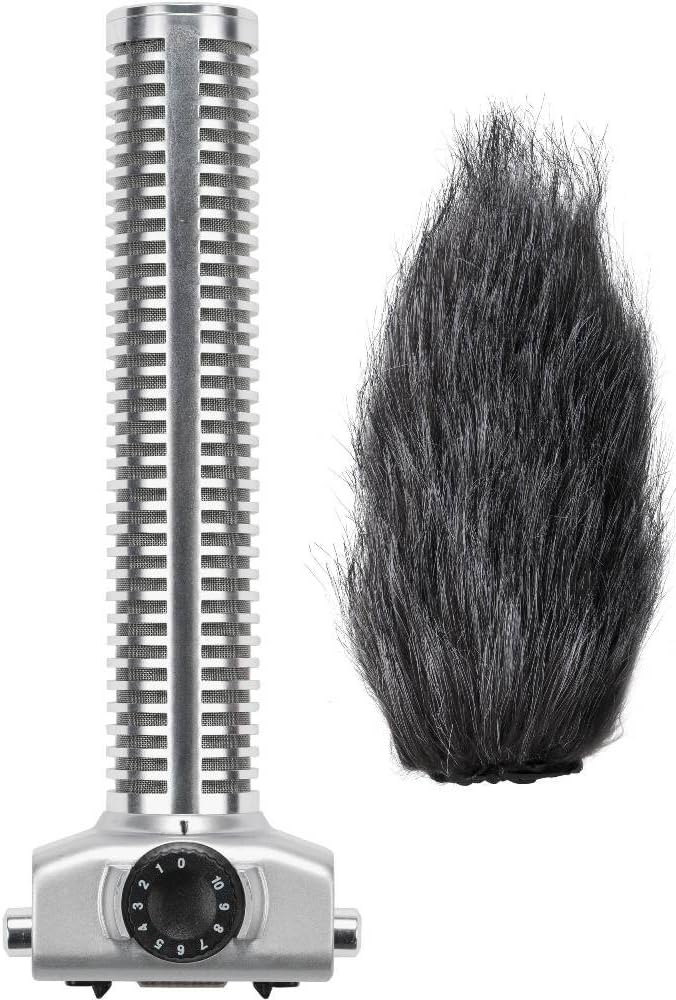
Zoom SGH-6 Shotgun Microphone Capsule Recorder Accessory
A hyperdirectional capsule that locks onto your subject and rejects the room — built for Zoom's pro field recorder ecosystem.
$149.99*
Check availability
*Price sourced from Amazon.com. Last updated:Sep 05, 2026.Price and availability are subject to change — details.
Affiliate Disclosure: As an Amazon Associate, Studio Supplies earns from qualifying purchases made through links on this page, at no additional cost to you. This helps support our editorial team.
Notice a mistake? Let Us Know
Overview
Key Features
Fits Zoom H5 and H6 Handy Recorders, the Q8 Handy Video Recorder, U-44 Handy Audio Interface, as well as F4 and F8 MultiTrack Field Recorders
Includes: SGH-6 Shotgun capsule and Hairy Windscreen
Specifications
Type
Shotgun Microphone Capsule (Accessory Module)
Polar Pattern
Hyperdirectional
Signal-to-Noise Ratio
78 dB
Compatible Devices
Zoom H5, H6, Q8, U-44, F4, F8
Included Accessories
Hairy Windscreen
Model
SGH-6
Recommended Use
Film, video, live theater, ENG
Frequently Asked Questions
Does the SGH-6 require phantom power, and does it draw power from the host recorder?
The SGH-6 is a passive capsule accessory — it draws its operating power directly from the host Zoom recorder's capsule port, with no separate power supply or phantom power required. Power draw and bias voltage are managed entirely by the H5, H6, F4, F8, Q8, or U-44 host unit.
What is the signal-to-noise ratio of the SGH-6, and what does that mean for quiet-environment recording?
The SGH-6 specifies a 78dB SNR. In practice, this means the capsule introduces minimal self-noise, making it suitable for dialogue recording in moderately quiet environments — ambient nature sound, corporate interviews, ENG work — without audible hiss at normal recording levels.
How does the hyperdirectional polar pattern affect off-axis rejection compared to a standard cardioid capsule?
Hyperdirectional (supercardioid/lobar) patterns offer significantly tighter front pickup and deeper side rejection than cardioid. The SGH-6 will attenuate off-axis sounds — crowd noise, HVAC, camera operator movement — more aggressively than the standard cardioid capsule modules in the Zoom lineup. The trade-off is that rear null is shallower than a supercardioid, meaning some rear bleed is present.
Can the SGH-6 handle high-SPL sources like stage performances or loud ambiences?
The product data does not specify a maximum SPL rating for this capsule. It is intended for dialogue, ENG, and theatrical sound capture rather than close-miking high-SPL instruments. For high-SPL sources, verify the host recorder's input pad settings as the primary protection.
Does the included hairy windscreen adequately handle outdoor wind noise?
The hairy windscreen provides meaningful attenuation of light-to-moderate wind — sufficient for walking shots and outdoor interviews in calm-to-breezy conditions. For sustained high-wind shooting, a blimp/zeppelin system over the capsule will provide more reliable rejection.
Related Products


