



Behringer
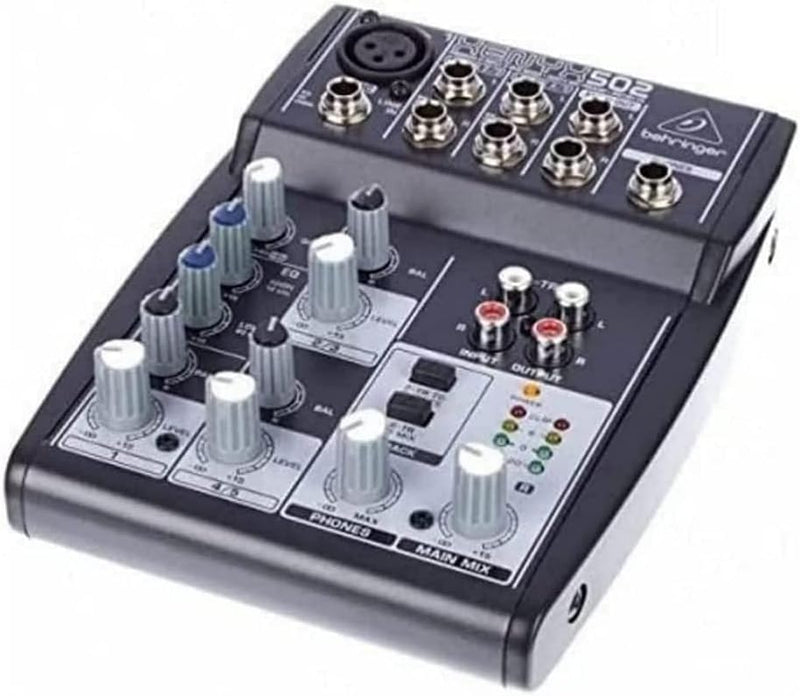
Behringer 502 XENYX 5-Input Premium Mixer with Mic Preamp
A clean, low-noise preamp and British EQ in a pocket-sized mixer — the XENYX 502 brings studio signal chain discipline to compact setups.
$55.55*
Check availability
*Price sourced from Amazon.com. Last updated:Oct 21, 2026.Price and availability are subject to change — details.
Affiliate Disclosure: As an Amazon Associate, Studio Supplies earns from qualifying purchases made through links on this page, at no additional cost to you. This helps support our editorial team.
Notice a mistake? Let Us Know
Overview
Key Features
Premium ultra low-noise, high headroom analog mixer
State-of-the-art Xenyx mic preamp comparable to standalone boutique preamps
Neo-classic "British" 2-band EQ for warm and musical sound
Main mix, stereo CD/tape plus separate headphone outputs
CD/tape inputs assignable to headphone output or main mix outputs
Specifications
Channels
5
Mic Preamp
XENYX (1 channel, XLR)
Phantom Power
48V
EQ
Neo-classic British 2-band
EQ Frequency
12 kHz (high shelf)
Outputs
Main mix, stereo CD/tape, headphone
Connectors
3-pin XLR (mic), 1/4" TRS (line/headphone)
USB Audio
No
Power Consumption
13W
Dimensions
6.97 × 5.28 × 1.85 inches
Weight
3.25 lbs
Frequently Asked Questions
Does the XENYX 502 supply phantom power for condenser microphones?
Yes — the XENYX mic preamp channel provides 48V phantom power, making the 502 compatible with condenser microphones that require it. This is essential for anyone using a large-diaphragm condenser for podcast voiceover, interview work, or studio tracking. Engage phantom power before connecting the mic and verify your microphone's phantom power requirements.
How does the XENYX preamp perform for gain staging with dynamic microphones at low-output sources?
The XENYX preamp delivers enough gain for most dynamic microphone applications — handheld dynamics for vocals or instrument miking, for example. However, ribbon microphones or very low-output dynamics (like the SM7B used without a cloudlifter) may approach the upper end of the gain range before reaching an ideal signal level. For higher-gain demands, an inline preamp booster ahead of the 502 is a practical solution.
What is the "British" 2-band EQ and how is it useful in a real recording or mixing context?
The neo-classic British EQ is modeled on the shelving EQ topology used in classic UK console designs — characterized by a musical, broad-curve response at the high and low shelves rather than a surgical cut/boost. In practice it means boosting highs adds presence and air without harshness, and boosting lows adds warmth without muddiness. It's a tone-shaping tool, not a corrective surgical EQ, and works best when used to complement a good source signal.
Can the 502 route a CD/tape input to the headphone output independently from the main mix?
Yes — the CD/tape inputs are assignable to either the headphone output or the main mix outputs, or both. This makes the 502 useful for monitor mixing scenarios where a playback source needs to feed headphones for reference without going to the main outputs, or for simple mix-minus setups in broadcast and interview recording workflows.
What connectors does the 502 use for its microphone input and main outputs?
The microphone input is a 3-pin XLR connector, and the main outputs and line inputs use 1/4-inch TRS phone connectors. The headphone output is also 1/4-inch TRS. There is no USB audio interface functionality — the 502 outputs analog signal only and requires a separate audio interface or recording device downstream if you need to capture to a DAW.
Related Products


