



Behringer
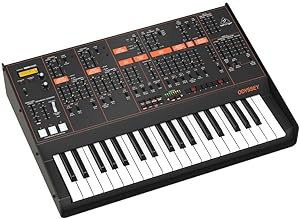
Behringer ODYSSEY Analog Synthesizer 37-Key
The iconic ARP Odyssey architecture reborn in an affordable analog synthesizer built for serious sound design and hands-on performance.
$659.00*
Check availability
*Price sourced from Amazon.com. Last updated:Oct 23, 2026.Price and availability are subject to change — details.
Affiliate Disclosure: As an Amazon Associate, Studio Supplies earns from qualifying purchases made through links on this page, at no additional cost to you. This helps support our editorial team.
Notice a mistake? Let Us Know
Overview
Key Features
37-key Duophonic Analog Synthesizer with Dual VCOs
3-way Multi-Mode VCF
32-Step Sequencer
Klark Teknik FX
Arpeggiator
Specifications
Keys
37 Full-Size Keys
Synthesis Type
Analog
VCOs
Dual VCOs
VCF
3-Way Multi-Mode (Low-Pass, High-Pass, Band-Pass)
Sequencer
32-Step Sequencer
Effects
Klark Teknik FX
Arpeggiator
Yes
Brand
Behringer
Model
ODYSSEY
Frequently Asked Questions
How does the Odyssey's dual VCO architecture affect how it tracks pitch and stays in tune?
Dual VCOs give you genuine two-voice duophony — two notes can sound simultaneously, each on its own oscillator — but analog oscillators require warm-up time before they track reliably. Budget 15–20 minutes before critical recording sessions, and use the tuning controls to dial in the interval between oscillators before you commit to a take.
What does the 3-way multi-mode VCF actually offer in terms of tonal range?
The three filter modes — low-pass, high-pass, and band-pass — cover the fundamental tonal palette of the original ARP design. Switching between them on the same patch changes the character dramatically: low-pass for warm, fat bass tones; high-pass for cutting, thin leads; band-pass for nasal, resonant mid-focused textures that cut through a mix.
Does the 32-step sequencer sync to external MIDI or DAW tempo?
Yes — the sequencer can be clocked externally via MIDI, allowing you to lock it to your DAW's tempo or a hardware clock source. This makes it practical for live performance and studio use where tight rhythmic synchronization matters.
How does the built-in Klark Teknik FX integrate into the signal chain?
The effects are applied post-synthesis, so they process the full synthesizer output without affecting the core analog signal path. You can use them for performance textures and recording convenience, but for purist signal chain work, bypassing them keeps the analog path clean.
Is this synthesizer suitable for live performance or primarily a studio instrument?
The Odyssey is genuinely suited to both. The 37 full-size keys, hands-on control layout, and built-in arpeggiator make it a capable live instrument. The sequencer and MIDI connectivity integrate it into studio setups. The main live consideration is the warm-up time the analog oscillators need before they're reliably in tune.
Related Products


