



Behringer
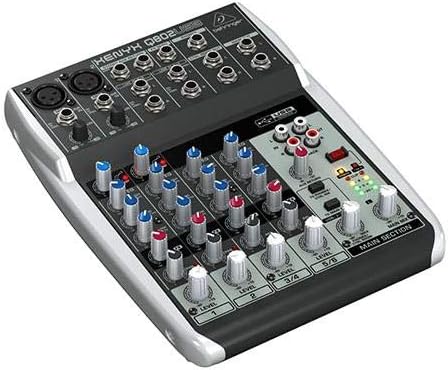
Behringer Q802USB Premium 8-Input Mixer XENYX Preamps
Two XENYX preamps, onboard compression, and a USB interface in one compact analog mixer — studio-quality signal chain at a price that doesn't fence out first-time recordists.
Check availability
Affiliate Disclosure: As an Amazon Associate, Studio Supplies earns from qualifying purchases made through links on this page, at no additional cost to you. This helps support our editorial team.
Notice a mistake? Let Us Know
Overview
Key Features
Color: Silver/Gray
Premium Ultra-Low Noise, High Headroom Analog Mixer
2 State-Of-The-Art Xenyx Mic Preamps Comparable To Stand-Alone Boutique Preamps
Studio-Grade Compressors With Super-Easy “One-Knob” Functionality And Control Led For Professional Vocal And Instrumental Sound
Built-In Stereo Usb/Audio Interface To Connect Directly To Your Computer. Free Audio Recording, Editing And Podcasting Software Plus 150 Instrument/Effect Plug-Ins Downloadable At Behringer.Com
Specifications
Model
Q802USB
Total Inputs
8
Mic Preamp Channels
2 (XENYX)
Phantom Power
48V (global)
Compressors
One-knob (per mic channel)
USB Interface
Stereo (2-channel) USB/Audio
Headphone Output
Yes (main mix source)
Color
Silver/Gray
Frequently Asked Questions
How many mic inputs does the Q802USB have, and do both channels have preamps and compression?
Two XLR mic inputs are equipped with XENYX mic preamps — one on each of the first two mono channel strips. Both mic channels also have access to the one-knob compressor. The remaining inputs are line-level stereo channels without mic preamp stages.
Does the Q802USB supply phantom power for condenser microphones?
Yes, the Q802USB provides 48V phantom power. It is applied globally — when engaged, phantom power is active on both XLR mic inputs simultaneously. If mixing dynamic and ribbon microphones alongside condensers, verify that your specific ribbon mic is phantom-safe before engaging the switch.
How does the built-in USB audio interface work, and what sample rates does it support?
The USB interface routes the mixer's stereo main bus directly to a connected computer for recording. It appears as a class-compliant USB audio device on Mac and Windows, meaning no driver installation is required for basic operation. Check Behringer's documentation for confirmed sample rate specifications, as the Q802USB targets 44.1/48 kHz operation.
Can I use the Q802USB as a monitor mixer for headphone cue feeds during recording?
The Q802USB includes a headphone output fed from the main mix bus. It does not have a dedicated cue bus or independent monitor mix, so headphone monitoring reflects the main stereo mix — there is no pre-fader or IFB-style independent monitoring available.
What does the "one-knob" compressor actually do to the signal, and when should I use it?
The one-knob compressor applies a fixed ratio and threshold curve that tightens dynamic range as you turn the control clockwise. The LED indicator confirms gain reduction is occurring. It is most useful for vocal sources with wide dynamic swings — it catches peaks without requiring manual threshold and ratio setup. It is not a transparent mastering-grade compressor, but it meaningfully smooths signal delivery to the USB bus and main outputs.
Related Products


