

Behringer
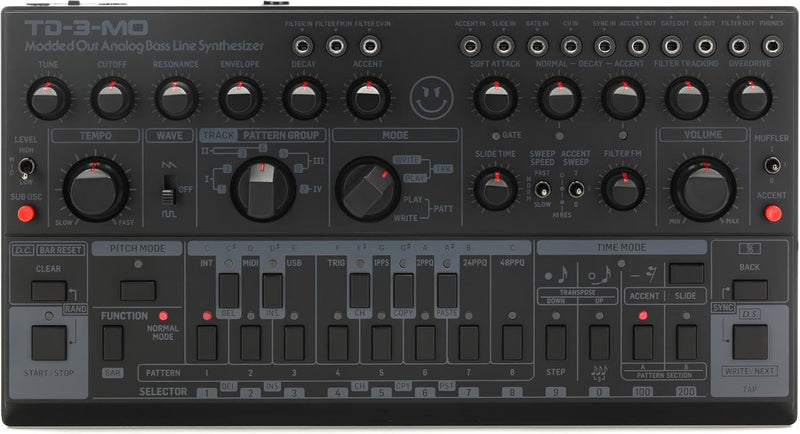
Behringer TD-3-MO-BK Analog Bass Synthesizer
Dive into the Analog Bass Experience The Behringer TD-3-MO-BK is an authentic analog bass line synthesizer and sequencer that captures the throbbing rhythms and bass sounds that defined electro-funk, acid, techno, and house music. The TD-3-MO features an all-analog signal path, a 16-step sequenc...
$199.00*
View on Amazon
✓ In Stock on Amazon.com
*Price sourced from Amazon.com. Last updated:Oct 21, 2026.Price and availability are subject to change — details.
Affiliate Disclosure: As an Amazon Associate, Studio Supplies earns from qualifying purchases made through links on this page, at no additional cost to you. This helps support our editorial team.
Notice a mistake? Let Us Know
Overview
Dive into the Analog Bass Experience
The Behringer TD-3-MO-BK is an authentic analog bass line synthesizer and sequencer that captures the throbbing rhythms and bass sounds that defined electro-funk, acid, techno, and house music. The TD-3-MO features an all-analog signal path, a 16-step sequencer, transistor wave-shaping circuitry, a built-in arpeggiator, a 4-pole resonant lowpass filter, and killer mods.
Key Specifications:
- Type: Analog Bass Synthesizer
- Sequencer: 16-Step Sequencer
- Filter: Four-Pole Resonant VCF
- Body Material: Bass Wood
Key Features
Poly Chain Capability - Black
All-analog Bass Synthesizer
with 16-step Sequencer
Four-pole Resonant VCF
Arpeggiator
Specifications
Synthesizer Type
Analog Bass Synthesizer
Sequencer
16-step
Filter Type
Four-pole Resonant VCF
Color
Black
Connectivity Feature
Poly Chain Capability
Feature
Arpeggiat
Frequently Asked Questions
What type of sounds can the Behringer TD-3-MO-BK produce?
The Behringer TD-3-MO-BK is an all-analog bass synthesizer, specifically designed to produce classic bass sounds with its four-pole resonant VCF.
Does this synthesizer include a sequencer for creating patterns?
Yes, the TD-3-MO-BK features a built-in 16-step sequencer, allowing users to program and store bass lines and rhythmic patterns.
Can I connect multiple Behringer TD-3-MO-BK units together?
Yes, this synthesizer includes Poly Chain capability, which allows you to connect multiple units to create a more extensive polyphonic setup.
What is the purpose of the four-pole resonant VCF?
The four-pole resonant VCF (Voltage Controlled Filter) allows for expressive sound shaping and dynamic filter sweeps, which are characteristic of classic analog synthesis.
Does the TD-3-MO-BK have an arpeggiator?
Yes, the Behringer TD-3-MO-BK is equipped with an arpeggiator, which can generate dynamic melodic sequences automatically from held notes.
Is this synthesizer purely analog or does it incorporate digital components?
The Behringer TD-3-MO-BK is described as an all-analog bass synthesizer, indicating its sound generation and signal path are entirely analog.
Related Products


