
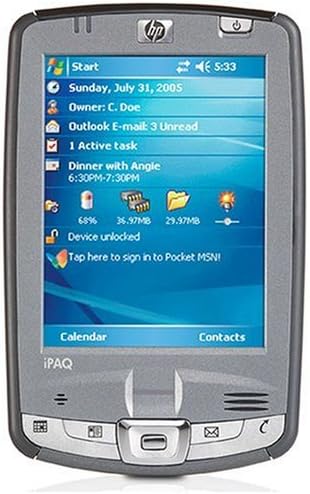
HP FA677B iPAQ hx2790 Pocket PC Windows Mobile
Stay Connected and Productive On-The-GoThe HP iPAQ hx2790 Pocket PC delivers performance, connectivity, and security for your business and personal needs. Featuring Windows Mobile 5.0, wireless internet, and a range of connectivity options, this handheld device keeps you connected wherever you ar...
*Price sourced from Amazon.com. Last updated:Oct 27, 2026.Price and availability are subject to change — details.
Notice a mistake? Let Us Know
Overview
Stay Connected and Productive On-The-Go
The HP iPAQ hx2790 Pocket PC delivers performance, connectivity, and security for your business and personal needs. Featuring Windows Mobile 5.0, wireless internet, and a range of connectivity options, this handheld device keeps you connected wherever you are.
Specifications:
- Operating System: Windows Mobile 5.0 Premium Edition
- Processor: Intel PXA270 624MHz
- Memory: 64MB RAM
- ROM: 320MB
- Display: 3.5" color TFT (240 x 320)
- Wireless: IEEE 802.11b Wi-Fi, Bluetooth 1.2
- Interfaces: 1 x IrDA Infrared, 1 x USB 1.1, 1 x RS-232, 1 x DC Power Input, 1 x Cradle Connector, 1 x Mini-phone Headphone
- Expansion Slots: 1 x SDIO, 1 x CompactFlash (CF) Card
- Dimensions: 4.71" x 3" x 0.65"
- Weight: 5.80 oz
Key Features
HP (Hewlett-Packard) iPAQ hx2790 Pocket PC Intel PXA270 624MHz - 64MB RAM/ - 320MB ROM - 3.5" - MPN: FA677B
Specifications
Frequently Asked Questions
Related Products


