



Korg
Korg MICROKORG-CR Crystal 20th Anniversary Synthesizer
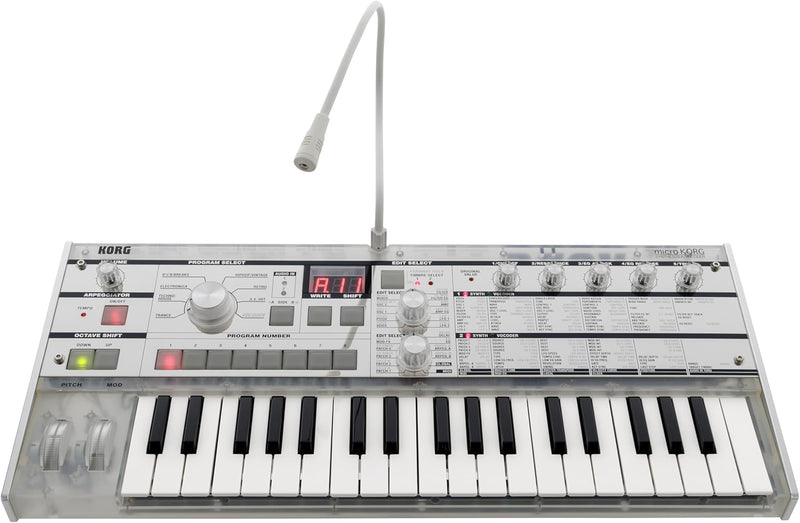
Celebrate 20 years of analog modeling synthesis with the Korg microKORG Crystal's stunning semi-translucent design.
$524.99*
View on Amazon
✓ In Stock on Amazon.com
*Price sourced from Amazon.com. Last updated:Aug 28, 2026.Price and availability are subject to change — details.
Affiliate Disclosure: As an Amazon Associate, Studio Supplies earns from qualifying purchases made through links on this page, at no additional cost to you. This helps support our editorial team.
Notice a mistake? Let Us Know
Overview
Key Features
Celebrates the 20th anniversary of the original microKORG with a special edition model
Features a semi-translucent chassis that showcases the internal electronics and controls
Equipped with matching semi-transparent knobs, dials, and wheels for a unique visual appeal
Stainless mirror-finish front panel blends perfectly with the semi-translucent controls
Sleek aluminum side panels replace the original wooden panels for a modern look
Includes a dedicated transparent vinyl carry bag to showcase the transparent body
Retains the classic microKORG sound engine with authentic analog modeling synthesis
Comes with a built-in vocoder for unique vocal effects and transformations
Ideal for musicians who want a powerful and versatile synthesizer with a distinctive appearance
Portable design for easy transport and use in various settings
Specifications
Brand
Korg
Model
MICROKORG-CR
Edition
20th Anniversary Crystal
Synthesis System
Analog Modeling
Polyphony
4 Voices
Programs
128
Arpeggiator
6 Types
Keyboard
37 Mini-Keys (Velocity Sensitive)
Vocoder
Built-in
Chassis
Semi-Translucent with Stainless Mirror-Finish Front Panel
Side Panels
Aluminum
Included Accessory
Transparent Vinyl Carry Bag
Frequently Asked Questions
Is the microKORG Crystal sonically different from the original microKORG?
No, the Crystal edition retains the same analog modeling synthesis engine and vocoder as the original microKORG. The differences are purely cosmetic, including the semi-translucent chassis and updated panel materials.
How many voices of polyphony does the microKORG Crystal offer?
The microKORG Crystal offers 4 voices of polyphony, which is the same as the original model.
Does this synthesizer include a vocoder?
Yes, it features a built-in vocoder that allows you to apply vocal effects and transformations using an external microphone input.
Is the keyboard velocity-sensitive?
Yes, the 37 mini-keys are velocity-sensitive, allowing expressive playing dynamics despite the compact keyboard size.
Does the microKORG Crystal come with a carrying case?
Yes, it includes a dedicated transparent vinyl carry bag designed to showcase the semi-translucent body while protecting the instrument during transport.
Related Products


