



Peavey
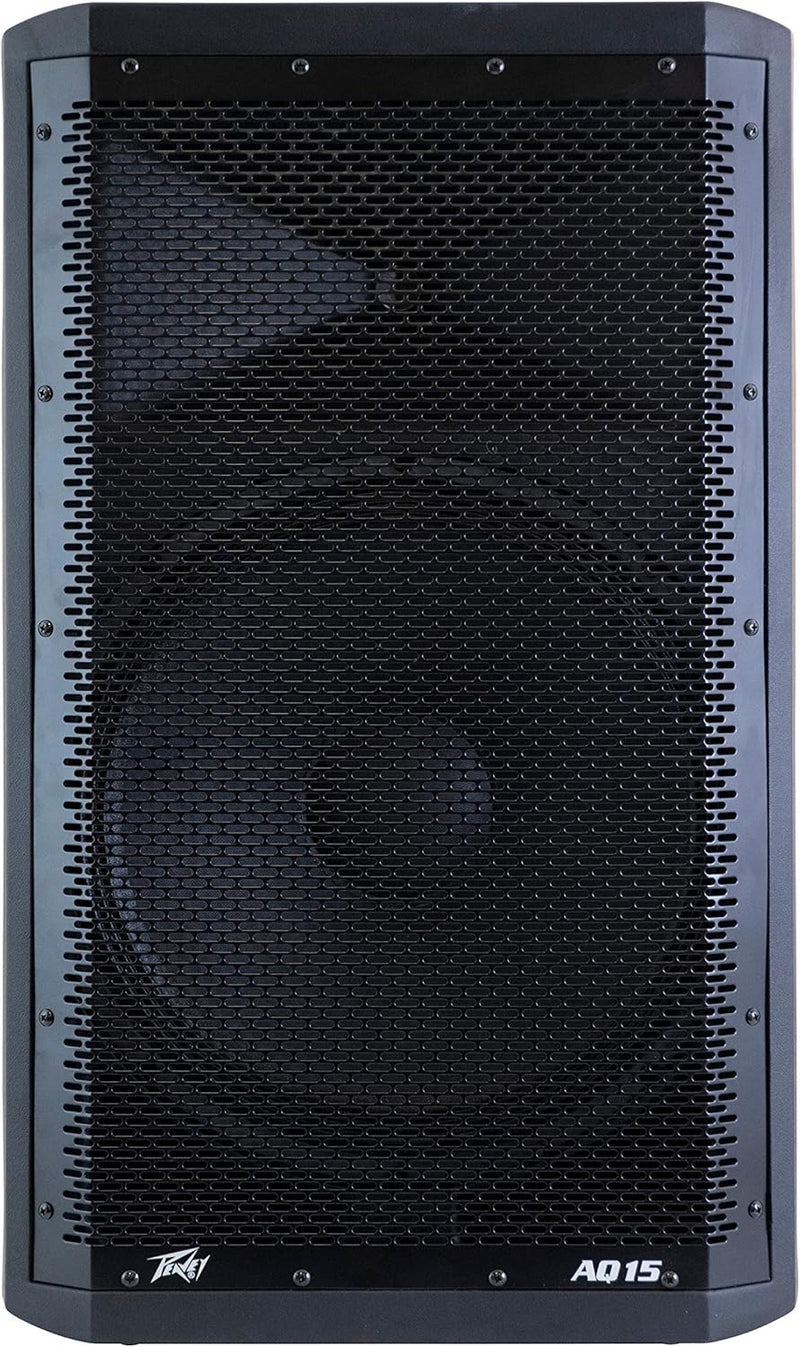
Peavey 03619840 Aquarius AQ 15" Powered Bluetooth Speaker
1.4 inch
A 1,000-watt peak bi-amplified 15-inch with Bluetooth and 56-bit DSP — the Peavey Aquarius AQ 15 is built to fill a room and keep filling it.
$499.99*
View on Amazon
✓ In Stock on Amazon.com
*Price sourced from Amazon.com. Last updated:Oct 07, 2026.Price and availability are subject to change — details.
Affiliate Disclosure: As an Amazon Associate, Studio Supplies earns from qualifying purchases made through links on this page, at no additional cost to you. This helps support our editorial team.
Notice a mistake? Let Us Know
Overview
Key Features
Two-way bi-amplified analog amp powered speaker system
15” heavy-duty woofer
DX14 compression driver, with 1.4 inch titanium diaphragm
670 watts peak dynamic woofer power, 330 watts peak dynamic tweeter power
Bluetooth streaming and pairing are supported
DSP processing is 56 bit double-precision
DSP I/O is at 48 kHz and 24 bits, with low-jitter, professional grade components
Dynamic bass boost function
Fan cooled for maximum reliability
Peavey Designed Quadratic Throat Waveguide technology, 110 by 80 degree coverage
Specifications
Brand
Peavey
Model
03619840 (Aquarius AQ 15)
Speaker Type
Two-way bi-amplified powered speaker
Woofer
15" heavy-duty woofer
Compression Driver
DX14 with 1.4" titanium diaphragm
Peak Power (Woofer)
670 watts dynamic peak
Peak Power (Tweeter)
330 watts dynamic peak
DSP Processing
56-bit double-precision
DSP I/O
48kHz / 24-bit
Coverage Pattern
110° x 80° (Quadratic Throat Waveguide)
Wireless
Bluetooth streaming and pairing
Cooling
Fan cooled
Frequently Asked Questions
What is the actual usable continuous power output, and how does that differ from the 1,000-watt peak figure?
The 1,000-watt figure (670W woofer + 330W tweeter) represents peak dynamic power — the maximum the amplifier can deliver in short transient bursts. Continuous RMS power, which governs sustained loudness over a full event, is not specified but will be substantially lower. For practical sizing, peak power should be treated as a headroom indicator, not a reliable SPL planning number.
Does the Bluetooth connection support stereo pairing with a second Aquarius AQ 15?
The AQ 15 supports Bluetooth streaming and pairing, allowing wireless audio from a phone, tablet, or laptop. Stereo pairing with a second unit depends on the specific Bluetooth implementation in the firmware — consult Peavey's documentation for multi-speaker Bluetooth link behavior.
What does the 56-bit double-precision DSP processing affect in real-world use?
The 56-bit DSP handles crossover, EQ, limiting, and dynamic bass boost calculations internally. Higher DSP bit depth reduces rounding error in those calculations, which translates to cleaner signal processing — particularly audible in low-frequency precision and limiter transparency when the speaker is pushed hard.
What does the 110 x 80 degree coverage pattern mean for positioning this speaker?
The Peavey Quadratic Throat Waveguide's 110 x 80 degree dispersion means the high-frequency output spreads 110 degrees horizontally and 80 degrees vertically. That's a wide horizontal throw — suitable for covering an audience spread across a wide area — combined with tighter vertical control that reduces ceiling bounce and reflections.
Is the fan cooling audible during quiet passages?
Fan-cooled powered speakers generally produce some fan noise, which is most audible during quiet passages at close range. In a live sound or DJ environment with ambient noise, the fan is typically inaudible to the audience. For quiet acoustic sets or speech-only applications where background noise is an issue, it's worth auditioning before committing.
Related Products


