



Peavey
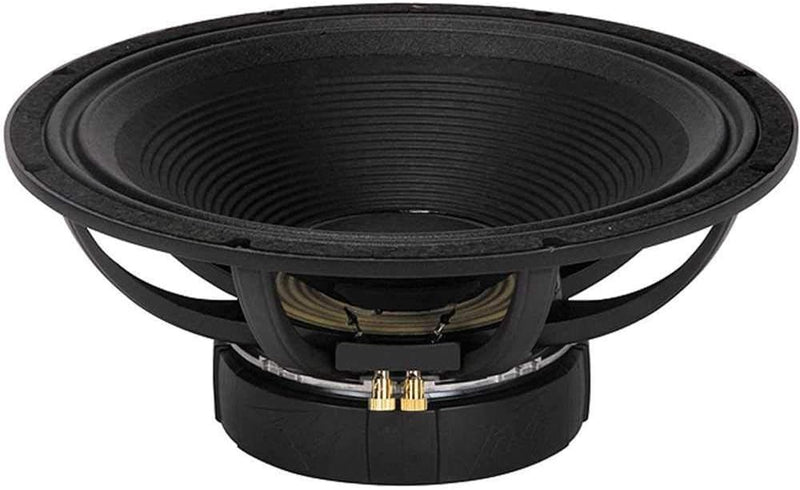
Peavey 15LOWRIDER 15" Low Rider Subwoofer
The Peavey 15" Low Rider delivers 1600W of program-rated clean bass extension down to 30Hz — built for touring rigs that need to move air night after night.
$249.99*
Check availability
*Price sourced from Amazon.com. Last updated:Oct 07, 2026.Price and availability are subject to change — details.
Affiliate Disclosure: As an Amazon Associate, Studio Supplies earns from qualifying purchases made through links on this page, at no additional cost to you. This helps support our editorial team.
Notice a mistake? Let Us Know
Overview
Key Features
Impedance: 8 Ohms
Power capacity: 3200 W Peak 1600 W Program 800 W Continuous
Sensitivity: 93.6 dB
Usable freq. range: 30 Hz ~ 1 kHz
Cone: Kevlar impregnated cellulose
Specifications
Brand
Peavey
Model
15LOWRIDER
Driver Diameter
15 inches
Impedance
8 Ohms
Peak Power Capacity
3200W
Program Power Capacity
1600W
Continuous Power Capacity
800W
Sensitivity
93.6 dB
Usable Frequency Range
30 Hz – 1 kHz
Cone Material
Kevlar impregnated cellulose
Frequently Asked Questions
What amplifier power range is appropriate for driving this subwoofer?
The 800W continuous rating is your safe ceiling for sustained program material. In practice, match it with a bridged or high-power amp delivering between 800–1600W into 8 ohms — the 1600W program rating gives you headroom for transient peaks without stressing the voice coil. Underpowering it with a weak amp is a faster way to blow a sub than overpowering with a clean signal.
How low does this driver actually reproduce usable bass?
The specified usable frequency range starts at 30Hz, which is genuine sub-bass territory — you'll feel kick drum fundamentals and synthesizer floor tones physically. In a ported enclosure tuned to that range, output below 40Hz will be present and room-filling rather than just a spec-sheet claim.
Is the Kevlar-impregnated cone construction relevant to how it sounds or just durability?
Both. The Kevlar impregnation stiffens the cone without significantly adding mass, which means better transient control and tighter bass articulation compared to plain paper cones. You'll notice it most in fast hip-hop or EDM kick patterns — the hits stay defined instead of smearing.
Can this driver be used in a full-range enclosure or is it subwoofer-only?
The usable frequency range extends up to 1kHz, so it can technically handle low-mid content, but it's engineered for subwoofer duty. Running it full-range without a crossover will stress the cone on high-frequency transients; always run it below a crossover point in a properly designed bass cabinet.
What enclosure type is recommended for this driver?
Peavey doesn't specify a required enclosure in the product data, but the long-excursion cone design is optimized for ported (bass-reflex) or bandpass cabinets. A properly tuned ported box will maximize the low-end extension to that 30Hz floor.
Related Products


