



Peavey
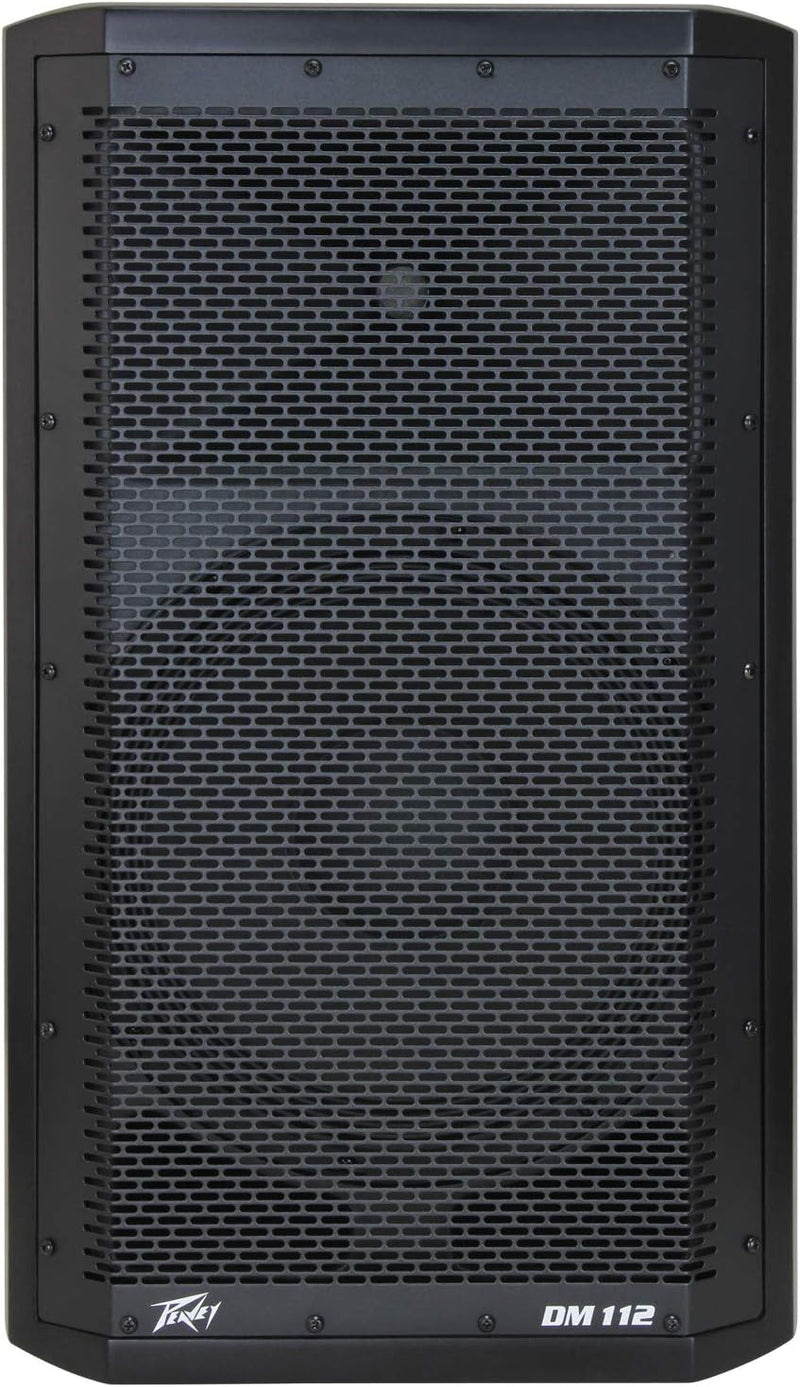
Peavey DM112 Dark Matter Powered PA Loudspeaker 660W
660W
660 watts of bi-amplified headroom with pro-grade DSP — the Peavey DM112 delivers controlled, consistent reinforcement from rehearsal rooms to mid-size live stages.
$399.99*
Check availability
*Price sourced from Amazon.com. Last updated:Oct 07, 2026.Price and availability are subject to change — details.
Affiliate Disclosure: As an Amazon Associate, Studio Supplies earns from qualifying purchases made through links on this page, at no additional cost to you. This helps support our editorial team.
Notice a mistake? Let Us Know
Overview
Key Features
Two-way bi-amplified analog amp powered speaker system; DSP I/O is at 96 kHz and 24 bits, with low-jitter, professional grade components; Fan cooled for maximum reliability
Exclusive Quadratic Throat Waveguide technology, 110 by 80 degree coverage; A Mic/Line switch provides for two different gain settings; Thru output is via a male XLR jack
Exclusive Quadratic Throat Waveguide technology, 110 by 80 degree coverage; A Mic/Line switch provides for two different gain settings; Thru output is via a male XLR jack
Full-coverage perforated steel grille, with powder coat finish; DX14 compression driver, with 1.4 inch titanium diaphragm; Pole mount molded-in for 1 3/8" diameter poles; 12" heavy-duty woofer
Input is via a combo female XLR and 1/4" TRS phone jack with balanced input; User Preset EQ storage provisions allow storing custom presets for later recall; DSP processing is 64 bit double-precision
Advanced DSP - 96K Digital Signal Processing For MAX performance
Specifications
Model
DM112 Dark Matter
Type
2-Way Bi-Amplified Powered Speaker
Total Power
660 Watts
DSP Sample Rate
96 kHz
DSP Bit Depth
24-bit
Waveguide
Quadratic Throat Waveguide
Coverage Pattern
110° x 80°
Input Gain Switch
Mic/Line
Cooling
Fan cooled
Frequently Asked Questions
What does bi-amplified mean for the DM112, and how does it affect what I hear?
Bi-amplification means separate amplifier stages power the low-frequency woofer and the high-frequency driver independently — the result is tighter transient response across the frequency range, because neither amp is compromised by the demands of the other. In practice, kick and bass notes hit cleanly without smearing the top end.
What does 96kHz/24-bit DSP I/O mean for the speaker's real-world performance?
Processing the signal at 96kHz sample rate and 24-bit depth means the onboard EQ, limiting, and crossover are computed with headroom well above the audible range — you hear the result as a cleaner, more transparent sound with fewer processing artifacts than lower-spec digital systems.
Does the DM112 require a separate amplifier?
No — it is a self-powered (active) loudspeaker with all amplification built in. You connect your mixing board or source directly to the speaker's input, making setup faster and reducing the equipment footprint on smaller gigs.
What does the Mic/Line switch on the DM112 do in a live mixing context?
The Mic/Line switch selects between two input gain stages — Line for mixer outputs and line-level sources, Mic for direct microphone connection when no mixing console is in the signal chain. Selecting the wrong setting will result in either clipping or a very weak signal, so matching this to your source is a critical gain-staging step.
How does the 110 by 80 degree coverage pattern affect speaker placement?
The Quadratic Throat Waveguide's 110x80 degree dispersion gives you wide horizontal throw to cover an audience across a full room width, with tighter vertical control to reduce floor and ceiling reflections. This means more direct sound reaching listeners and less muddy room reinforcement, even in acoustically difficult spaces.
Related Products


