



Peavey
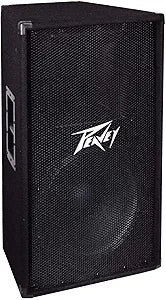
Peavey PV-115 15" 800W Passive DJ Speaker System (Pair)
15 inch8 inch800W
Dual PV-115 cabinets deliver 800W peak passive output built to fill mid-size venues with controlled, fatigue-free sound.
$799.98*
Check availability
*Price sourced from Amazon.com. Last updated:Oct 09, 2026.Price and availability are subject to change — details.
Affiliate Disclosure: As an Amazon Associate, Studio Supplies earns from qualifying purchases made through links on this page, at no additional cost to you. This helps support our editorial team.
Notice a mistake? Let Us Know
Overview
Key Features
One 15 inch premium, 2 3/8 inch voice coil woofer
400 watts program, 800 watts peak
Heavy-duty crossover
Specifications
Configuration
2-way passive PA speaker (pair)
Woofer
15-inch, 2-3/8-inch voice coil
Compression Driver
RX14, 1.4-inch titanium diaphragm
Program Power
400W per cabinet
Peak Power
800W per cabinet
Horn Type
Constant directivity
Crossover
Heavy-duty passive internal
Enclosure
Trapezoidal
Quantity
2 cabinets
Frequently Asked Questions
These are passive speakers — what amplifier power do they require?
Each PV-115 cabinet is rated at 400W program / 800W peak with an 8-ohm nominal impedance. For a pair, you need a stereo amplifier (or two mono blocks) delivering at minimum 400W per channel at 8 ohms for program-level headroom. Undersized amplification results in clipping before the drivers are taxed, which is more damaging than a properly matched amp running clean.
What does the constant-directivity horn contribute to the sound at the listening position?
The RX14 compression driver on the constant-directivity horn maintains a consistent frequency balance across a defined horizontal and vertical dispersion angle, rather than beaming high frequencies narrowly toward the center. This means listeners at the sides of a room hear a more balanced mix instead of a high-frequency drop-off — a meaningful practical advantage in rectangular venue setups.
Is the internal crossover passive or active, and at what frequency does it split?
The PV-115 uses a passive internal crossover, meaning a single full-range amplified signal drives the cabinet and the crossover network internally routes lows to the 15-inch woofer and highs to the compression driver. This simplifies setup but eliminates the ability to independently optimize amplifier gain for each driver as you would with a bi-amp configuration.
Can these be used as stage monitors?
The trapezoidal enclosure geometry is designed with monitor placement in mind — the angled cabinet face allows floor wedge positioning. However, the PV-115 is not specifically voiced as a stage monitor; its constant-directivity horn pattern and relatively forward mid-high presence are better suited to front-of-house reinforcement. Purpose-built wedges typically have tighter polar control pointed toward performers.
What is the frequency response range of the PV-115?
Peavey's published specs for this cabinet list a frequency range extending from approximately 55Hz to 18kHz, which is typical for a 15-inch two-way PA cabinet. Low-end extension below 80Hz will thin out at high SPL without subwoofer support — plan for a sub if program material has significant bass content.
Related Products


