



RCF
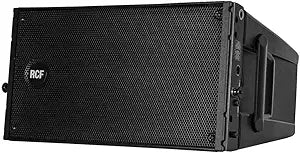
RCF HDL10A 1400W Dual 8-Inch Active Line Array Speaker
1400W400W
Dual 8-inch line array muscle with 1,400W Class D clarity — built for touring stages and demanding fixed installs.
$2,099.00*
View on Amazon
✓ In Stock on Amazon.com
*Price sourced from Amazon.com. Last updated:Aug 28, 2026.Price and availability are subject to change — details.
Affiliate Disclosure: As an Amazon Associate, Studio Supplies earns from qualifying purchases made through links on this page, at no additional cost to you. This helps support our editorial team.
Notice a mistake? Let Us Know
Overview
Key Features
1,400W Powered Line Array Speaker with Dual 8" Low-frequency Drivers
2" High-frequency Driver
DSP - Black (each)
Specifications
Type
Active Line Array Module
Amplifier Power
1,400W
Amplifier Class
Class D
Low-Frequency Drivers
Dual 8"
High-Frequency Driver
2"
Signal Processing
Onboard DSP
Color
Black
Brand
RCF
Model
HDL10A
Frequently Asked Questions
How do multiple HDL10A modules couple together, and what does that do to the low-end response?
Line array coupling is additive — each additional HDL10A module in a vertical array increases SPL by 3dB and extends low-frequency reach downward. In practice, you hear tighter, more controlled bass projection over distance compared to a single-box point source, with less energy wasted on the ceiling and floor.
What does the onboard DSP actually handle, and can I override it at the console?
The DSP manages crossover, limiting, and array alignment — functions that protect the drivers and optimize the time relationship between the dual 8" LF drivers and the 2" HF driver. You drive level and EQ from your console; the DSP handles protection and voicing. You're not fighting it — it's transparent under normal operating conditions.
Is the HDL10A suitable for outdoor festivals, or is it primarily an indoor system?
The HDL10A is built for touring-grade outdoor and indoor use. The rugged enclosure handles weather and road abuse, and the Class D amplifier manages thermal load efficiently in both hot outdoor sun and enclosed venue environments. Arrays of four or more modules per side handle mid-size festival stages without breaking a sweat.
How does the 2" HF driver hold up at high SPL over a long show?
High-frequency compression drivers in this class are designed for sustained output. The DSP-controlled limiting means you won't blow the HF driver by pushing the system hard — the processor backs off gain before thermal damage occurs. After a full night of heavy use, the highs stay articulate rather than hardening or distorting.
What amplifier topology is used, and why does it matter for a touring rig?
Class D amplification runs significantly cooler and draws less current than Class AB at equivalent output — critical on a touring rig where you're sharing distro with lighting and backline. 1,400W from a Class D stage draws a fraction of what an equivalent analog amp would, reducing both heat and power demand per box.
Related Products


