



AMD
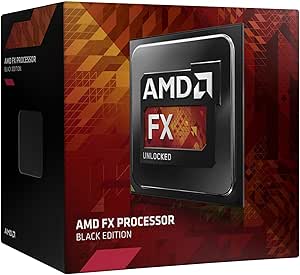
AMD FD8370FRHKBOX FX-8370 Black Edition CPU
125W
Eight unlocked cores at 4.3GHz deliver the raw multi-threaded throughput that CPU-bound workloads demand from the AM3+ platform.
$252.02*
View on Amazon
✓ In Stock on Amazon.com
*Price sourced from Amazon.com. Last updated:Oct 24, 2026.Price and availability are subject to change — details.
Affiliate Disclosure: As an Amazon Associate, Studio Supplies earns from qualifying purchases made through links on this page, at no additional cost to you. This helps support our editorial team.
Notice a mistake? Let Us Know
Overview
Key Features
4300Mhz
AM3+
125W
16MB
Specifications
Model
AMD FX-8370 Black Edition CPU
Clock Speed
4300Mhz
Socket Type
AM3+
Thermal Design Power (TDP)
125W
Cache Size
16MB
Frequently Asked Questions
What motherboard socket does the FX-8370 require, and is it backward-compatible with AM3 boards?
The FX-8370 uses the AM3+ socket. It is physically backward-compatible with AM3 motherboards in most cases, but BIOS support varies by manufacturer and board revision — not all AM3 boards will POST with Vishera-series FX processors. Check your motherboard vendor's CPU compatibility list explicitly before purchasing; some AM3 boards require a BIOS flash with an older CPU first.
What's the actual performance difference between the FX-8370 and the FX-8350 it replaces?
The FX-8370 runs at 4.3GHz base versus the FX-8350's 4.0GHz — a 7.5% clock increase. In CPU-bound workloads like video encoding, rendering, and heavily threaded compilation, you'll see a proportional gain. In lightly threaded or IPC-sensitive tasks (many games), the clock bump doesn't overcome the per-core performance gap versus contemporary Intel processors.
Does the FX-8370 include a stock cooler, and is it adequate for sustained workloads?
The retail box (FD8370FRHKBOX) includes a Wraith-style cooler. Under sustained full-load workloads, the 125W TDP pushes the stock cooler to its thermal limits — CPU temperature will climb into the high 60s°C range in warm ambient environments. For overclocking or extended encoding sessions, an aftermarket cooler is a practical necessity, not an upgrade.
Is the FX-8370's Black Edition multiplier unlock useful for overclocking on this chip specifically?
Yes — the unlocked multiplier is the primary reason to choose the Black Edition. The FX-8370 typically overclocks to 4.5–4.7GHz on a capable AM3+ board with adequate cooling and voltage headroom. Beyond that, the chip's power consumption climbs steeply and thermal management becomes the binding constraint, not the silicon ceiling.
What is the 16MB cache configuration on the FX-8370?
The 16MB figure is the combined L2+L3 cache: 8MB of L3 shared across all modules, plus 2MB of L2 per two-core module (4 modules × 2MB = 8MB L2 total). This is a Piledriver module architecture, not eight independent cores in the traditional sense — each module shares some execution resources between two integer clusters.
Related Products


