

Cooler Master
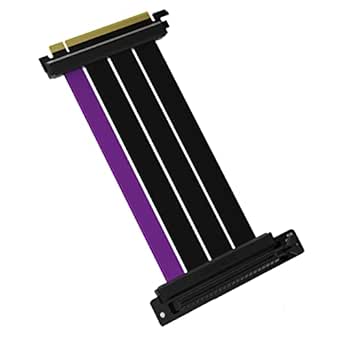
Cooler Master MCA-U000C-KPCI40-200 PCIe 4.0 x16 Riser Cable
★★★★★
Maximize Your GPU Performance with Cooler Master's PCIe 4.0 Riser Cable The Cooler Master Riser Cable PCIe 4.0 x16 Ver. 2 - 200mm allows you to reposition your GPU for improved cooling and aesthetics. Designed for maximum flexibility, durability, and signal integrity. Cable Length: 200mm ...
Check availability
Affiliate Disclosure: Studio Supplies may earn a commission from qualifying purchases made through links on this page, at no additional cost to you. This helps support our editorial team.
Notice a mistake? Let Us Know
Overview
Maximize Your GPU Performance with Cooler Master's PCIe 4.0 Riser Cable
The Cooler Master Riser Cable PCIe 4.0 x16 Ver. 2 - 200mm allows you to reposition your GPU for improved cooling and aesthetics. Designed for maximum flexibility, durability, and signal integrity.
- Cable Length: 200mm
- Connector 1: PCIe X 16 Plug
- Connector 2: PCIe X16 90° Jack
- PCIe Version: 4.0 x16
Key Features
ULTRA DURABLE PCB-The IPC4101D compliant PCB offers best-in-class performance under high thermal loads, cable flexibility and moisture resistance than any non-compliant riser cable on the market.
HEAVY DUTY SHIELDING — EMI-shielded 28/30 AWG copper wires ensure minimal signal delay and electromagnetic interference free operation.
GOLD PIN CONNECTORS —Gold PCI pins allow maximum electrical conductivity with a nominal insertion force of 110 g per contact pair for high durability.
RUST-PROOF STEEL-REINFORCED PCI slot —The nickel-plated stainless steel PCI slot increases stiffness for superior card holding even for the heaviest PCI card installations.
ULTRA-FLEXIBLE CABLE SLEEVES — TPE cable joints allow maximum flexibility and durability for the tightest cable management tasks.
Specifications
Cable Type
PCIe 4.0 x16 Riser Cable
PCB Compliance
IPC4101D
Wire Gauge
28/30 AWG copper
Shielding
EMI-shielded
Connector Material
Gold PCI pins
PCI Slot Material
Nickel-plated stainless steel
Cable Sleeve Material
TPE
Pros & Cons
👍 Pros
- Offers best-in-class performance under high thermal loads due to its IPC4101D compliant PCB
- Provides enhanced cable flexibility, making intricate cable management tasks more achievable
- Ensures minimal signal delay and electromagnetic interference-free operation with heavy-duty EMI-shielded copper wires
- Delivers high durability and maximum electrical conductivity through gold PCI pin connectors
- Features a rust-proof steel-reinforced PCI slot for superior card holding, even with heavy GPUs
- Allows for maximum flexibility and longevity in tight spaces thanks to TPE cable joints
👎 Cons
- May not be necessary for all system builds, particularly those with standard vertical GPU mounting options
- The specified 200mm length might be restrictive for larger chassis or unconventional build layouts
- Requires careful handling during installation to prevent damage to delicate components, as with any riser cable
- Performance benefits over PCIe 3.0 risers are only realized with compatible PCIe 4.0 hardware
- While flexible, extreme bending beyond design limits could still compromise internal wiring
Frequently Asked Questions
What makes the PCB of this riser cable ultra durable?
The PCB is IPC4101D compliant, which means it offers best-in-class performance under high thermal loads, enhanced flexibility, and better moisture resistance compared to non-compliant alternatives.
How does this riser cable minimize signal degradation and interference?
This riser cable employs heavy-duty EMI-shielded 28/30 AWG copper wires, which are designed to ensure minimal signal delay and electromagnetic interference-free operation, preserving signal integrity.
What are the benefits of the gold pin connectors?
The gold PCI pin connectors maximize electrical conductivity and provide a nominal insertion force of 110g per contact pair, contributing to high durability and reliable connections over time.
Is the PCI slot reinforced to support heavy graphics cards?
Yes, the PCI slot is rust-proof and steel-reinforced, increasing its stiffness to provide superior card holding capability, especially for heavier PCI card installations.
How flexible are the cable sleeves for management?
The cable sleeves feature TPE cable joints that allow for maximum flexibility and durability, making it easier to manage the cable within tight spaces for a clean build.
Is this riser cable backward compatible with PCIe 3.0 devices?
While designed for PCIe 4.0, PCIe specifications generally allow for backward compatibility, meaning it should function with PCIe 3.0 devices, though at PCIe 3.0 speeds.
Related Products


