



Crucial
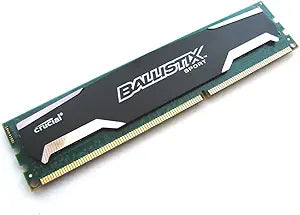
Crucial BLS4G3D1609DS1S00 4GB DDR3 1600MHz UDIMM Memory
This 4GB DDR3-1600 UDIMM brings CL9 timing and XMP profile support to aging desktops that need a quick, low-cost performance boost.
$29.00*
View on Amazon
✓ In Stock on Amazon.com
*Price sourced from Amazon.com. Last updated:Oct 23, 2026.Price and availability are subject to change — details.
Affiliate Disclosure: As an Amazon Associate, Studio Supplies earns from qualifying purchases made through links on this page, at no additional cost to you. This helps support our editorial team.
Notice a mistake? Let Us Know
Overview
Key Features
Improved performance for gamers, enthusiasts and mainstream users
Integrated Aluminum heat spreader
Certified Intel XMP profiles for easy configuration
Premium-quality RAM
Industry Standard specifications
Specifications
Capacity
4GB
Memory Type
DDR3
Speed
1600 MT/s (PC3-12800)
Latency
CL9 (9-9-9-24)
Form Factor
UDIMM, 240-Pin
Error Correction
Non-ECC
Heat Spreader
Integrated Aluminum
XMP Support
Yes (Intel XMP certified)
Brand
Crucial
Model
BLS4G3D1609DS1S00
Similar Products
Other products from the same family that visitors often consider:
 ✓ Available
Crucial BLS4G3D169DS1J 4GB DDR3 1600MHz UDIMM Memory
$34.99
View on Amazon → Currently Unavailable
Crucial CT2K25664BA160BA 4GB DDR3 1600MHz SDRAM Memory
Check on Amazon → ✓ Available
Crucial BLS4G3D169DS3 4GB DDR3 1600MHz Desktop Memory
$29.99
View on Amazon → ✓ Available
Crucial CT51264BD160BJ 4GB DDR3 1600MHz Desktop Memory
$13.88
View on Amazon → ✓ Available
Crucial CT2KIT25664BA160B 4GB DDR3 1600MHz Desktop Memory Kit
$24.99
View on Amazon →Frequently Asked Questions
Is this module compatible with Intel and AMD platforms, and what socket types does it support?
DDR3 UDIMM is a broadly compatible standard supported across Intel platforms (LGA 1150, 1155, 1156) and AMD platforms (AM3, AM3+) from that era. Confirm your motherboard's DDR3 compatibility and maximum supported speed before installing — consult your board's QVL if available.
What does CL9 latency mean in practice, and does it matter for everyday computing performance?
CL9 (9-9-9-24) represents the number of clock cycles the memory controller waits between issuing a read command and receiving data. At 1600 MHz, CL9 delivers a real latency of around 11.25 nanoseconds — functional for mainstream use, though lower-latency kits (CL8, CL7) offer marginal improvements in memory-intensive workloads.
Does the XMP profile auto-configure the speed to 1600 MHz, or does BIOS setup require manual steps?
XMP (Extreme Memory Profile) lets you enable the rated 1600 MHz speed with a single BIOS toggle rather than manual frequency and timing entry. Without enabling XMP, the module defaults to JEDEC standard speeds (typically 1333 MHz) — enable XMP to get the full 1600 MHz rated performance.
Can I use a single 4GB module, or do I need a matched pair for optimal performance?
A single module runs in single-channel mode. Pairing two identical 4GB modules enables dual-channel operation, effectively doubling memory bandwidth — a meaningful performance improvement in GPU-integrated graphics systems and memory-bandwidth-sensitive workloads. A matched pair is recommended for best performance.
Does the aluminum heat spreader affect clearance with large CPU coolers or low-profile chassis?
The integrated aluminum heat spreader adds modest height to the module. In most full-size and mid-tower builds, clearance is not an issue. In low-profile cases or with oversized tower coolers, confirm slot clearance before installation — measure against the module's installed height.
Related Products


