

Crucial
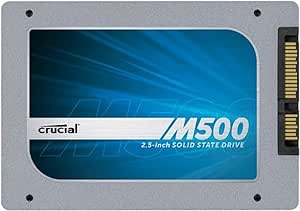
Crucial CT240M500SSD1 240GB SATA SSD
Swap your spinning hard drive for 500 MB/s reads and transform an aging system into a responsive daily driver.
$159.75*
View on Amazon
✓ In Stock on Amazon.com
*Price sourced from Amazon.com. Last updated:Oct 18, 2026.Price and availability are subject to change — details.
Affiliate Disclosure: As an Amazon Associate, Studio Supplies earns from qualifying purchases made through links on this page, at no additional cost to you. This helps support our editorial team.
Notice a mistake? Let Us Know
Overview
Key Features
Transformative performance: dramatically faster than a hard drive
Nearly instantaneous boot times
Sequential Read: 500 MB/s | Sequential Write: 250 MB/s | 4KB Random Read: 72,000 IOPS
Ample storage: available in capacities up to terabyte-class
Includes top-level hardware encryption technology
Specifications
Capacity
240GB
Interface
SATA III (6 Gb/s)
Form Factor
2.5-inch, 7mm (9.5mm adapter included)
Sequential Read
500 MB/s
Sequential Write
250 MB/s
Random Read (4K)
72,000 IOPS
Encryption
TCG Opal 2.0, IEEE 1667 Hardware Encryption
Drive Type
Internal Solid State Drive
Model
CT240M500SSD1
Similar Products
Other products from the same family that visitors often consider:
 ✓ Available
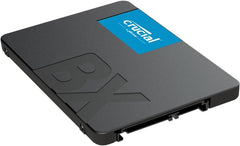
Crucial CT240BX500SSD1 240GB BX500 SATA Internal SSD
$66.89
View on Amazon →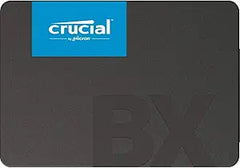 ✓ Available
Crucial CT240BX500SSD1Z 240GB SATA 3D NAND Internal SSD
View on Amazon → Currently Unavailable
Crucial CT240BX500SSD1Z BX500 240GB SATA 3D NAND SSD
Check on Amazon →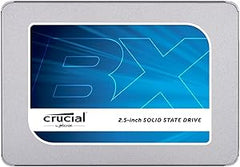 Currently Unavailable
Crucial CT240BX300SSD1 240GB BX300 SSD - 2.5 Inch Internal
Check on Amazon →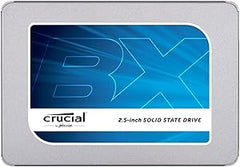 ✓ Available
Crucial BX300 240GB 3D NAND Internal SSD
$89.99
View on Amazon →Frequently Asked Questions
What interface does the CT240M500SSD1 use, and will it work in my existing laptop or desktop?
It uses a standard SATA III (6 Gb/s) interface in a 2.5-inch form factor. It fits any system with a 2.5-inch SATA bay — most laptops and, with a standard bracket, desktop 3.5-inch bays. The included 9.5mm adapter spacer ensures a snug fit in older laptop drive bays that expect a thicker drive.
What real-world speeds should I expect compared to the quoted sequential numbers?
Sequential reads hit around 500 MB/s and sequential writes around 250 MB/s on the SATA III bus. Random 4K read performance at 72,000 IOPS is where you feel the biggest everyday difference — application launches, OS boot, and file indexing all depend on random I/O far more than sequential throughput.
Does this drive support hardware encryption?
Yes. The M500 supports TCG Opal 2.0 and IEEE 1667 hardware-based encryption, enabling full-disk encryption managed at the controller level without the performance penalty of software encryption. Your system BIOS or enterprise management software must support these standards to enable it.
Is 240GB enough capacity for a primary boot drive?
For a Windows or Linux boot drive with core applications, 240GB is adequate — a typical OS installation plus productivity software and a browser consumes roughly 60–80GB, leaving meaningful headroom. If you store large media libraries or game installs locally, you will want supplemental storage.
What is the endurance rating, and how long can I expect this drive to last under normal use?
Crucial rated the M500 series with a workload tolerance suitable for typical client computing. Under normal desktop or laptop usage patterns — web browsing, office work, light content creation — the drive's NAND endurance comfortably supports years of service.
Related Products


