



Crucial
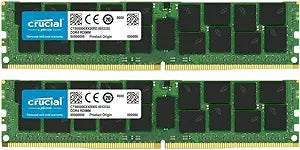
Crucial RAMKit13A 64GB (2x32GB) DDR4 2666MHz Server Memory
64GB of ECC-registered DDR4 at 2666MHz gives memory-hungry server workloads the capacity and data integrity they can't get from desktop RAM.
View price on Amazon
Affiliate Disclosure: As an Amazon Associate, Studio Supplies earns from qualifying purchases made through links on this page, at no additional cost to you. This helps support our editorial team.
Notice a mistake? Let Us Know
Overview
Specifications
Total Capacity
64GB (2x32GB)
Memory Type
DDR4
Speed
2666 MHz (PC4-21300)
Form Factor
RDIMM (Registered DIMM)
ECC
ECC Registered
Rank
Dual Ranked
Compatibility
Server only (not compatible with desktop)
Similar Products
Other products from the same family that visitors often consider:
 ✓ Available
Crucial CT4K16G4DFD8266 64GB DDR4 2666MHz Desktop Memory Kit
$497.90
View on Amazon → ✓ Available
Crucial CT2K32G4SFD832A 64GB (2x32GB) DDR4 3200MHz SODIMM Laptop RAM
$488.99
View on Amazon → ✓ Available
Crucial CT4K16G4DFD8213 64GB DDR4 2133 Memory Kit
$499.79
View on Amazon → ✓ Available
Crucial CP2K32G4DFRA32A 64GB DDR4 Pro Desktop Memory Kit
View on Amazon →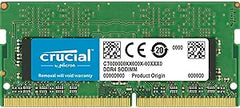 Currently Unavailable
Crucial CT4G4SFS6266 4GB DDR4 2666MHz Laptop Memory
Check on Amazon →Frequently Asked Questions
What makes RDIMM ECC memory necessary for servers, and can I use this in a desktop?
Registered (RDIMM) ECC memory uses an onboard register chip to buffer the address and command signals between the memory controller and the DRAM chips, reducing electrical load and enabling higher DIMM capacities and multi-rank configurations. The ECC layer detects and corrects single-bit errors in real time, preventing silent data corruption. This architecture requires a server-class memory controller — this kit is explicitly incompatible with desktop or consumer workstation motherboards that use unbuffered DIMMs.
What server platforms is this kit compatible with?
DDR4 PC4-21300 (2666 MHz) RDIMM is one of the most common server memory standards, broadly supported by Intel Xeon Scalable (Skylake/Cascade Lake), AMD EPYC, and their respective platform server boards. Always verify with the server's QVL (Qualified Vendor List) before purchase — Crucial's compatibility tool cross-references by server model and is the most reliable way to confirm support.
What is dual-ranked memory and does it matter for performance?
Dual-rank means each DIMM has two independent sets of DRAM chips that the memory controller accesses alternately, effectively interleaving operations for improved bandwidth. In practice, dual-rank DIMMs typically show a measurable throughput advantage over single-rank DIMMs at the same speed, which benefits workloads with high memory bandwidth demands — database queries, virtualization, and in-memory caching.
What bottleneck does upgrading to 64GB actually solve?
At 64GB, this kit addresses the threshold where memory-constrained workloads — virtual machine density, in-memory databases like MySQL or SQL Server with large working sets, or containerized application stacks — begin swapping to disk. Swapping to SSD is orders of magnitude slower than RAM access; adding physical memory eliminates the swap penalty and brings latency back into the microsecond range where it belongs.
Does ECC memory slow down performance compared to non-ECC?
The performance impact of ECC is negligible in practice — typically sub-1% in real-world server workloads. The error-checking logic operates in parallel with normal memory operations and does not add meaningful latency. For production server environments, the stability and data integrity guarantees of ECC far outweigh any theoretical overhead.
Related Products


