

Dell
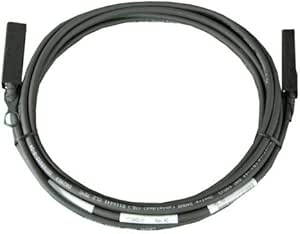
Dell 470-AAVJ SFP+ 10GbE Copper Twinax Cable 3M
Dell's 3-meter SFP+ Twinax DAC cable delivers 10GbE copper connectivity between switches and servers with zero transceivers and near-zero latency.
$84.18*
Check availability
Price history
*Price sourced from Amazon.com. Last updated:Jul 16, 2026.Price and availability are subject to change.
Affiliate Disclosure: Studio Supplies may earn a commission from qualifying purchases made through links on this page, at no additional cost to you. This helps support our editorial team.
Notice a mistake? Let Us Know
Overview
Key Features
Direct attach cable
SFP+ TO SFP+ DIRECT Attach Cable DAC - 9
SFP+ (M) to SFP+ (M) 10 ft twinaxia for PowerEdge R220
Specifications
Brand
Dell
Model
470-AAVJ
Cable Type
SFP+ 10GbE Copper Twinax
Length
3M (10 ft)
Connector Type
SFP+ (M) to SFP+ (M)
Compatibility
PowerEdge R220
Pros & Cons
👍 Pros
- Passive copper design eliminates the power draw and cost of separate optical transceivers, reducing both capital expense and per-port power consumption in the rack
- 3-meter length covers the most common top-of-rack server-to-switch interconnect distance without excess cable management burden
- Zero-driver, zero-configuration operation means the link comes up immediately in compatible Dell hardware with no IT intervention beyond physical connection
- At 10GbE, this cable removes the network bandwidth bottleneck between servers for iSCSI storage, NFS, VM migration, and high-throughput application traffic
- Passive twinax construction means no active electronics to fail — DAC cables are among the most reliable interconnect options in datacenter deployments
👎 Cons
- Vendor-coded SFP+ modules restrict practical compatibility to Dell networking equipment — non-Dell switches may reject this cable or log compatibility errors, making it unsuitable for mixed-vendor environments
- Fixed 3-meter length offers no flexibility — cable runs that require less than 3 meters cannot be shortened, and runs beyond that distance require a different solution
- 10GbE is the speed ceiling — this cable cannot be used for 25GbE or higher-speed interconnects as server and switch infrastructure scales up
- The rigid twinax construction has a minimum bend radius; aggressive cable routing in tight rack configurations risks signal degradation or connector stress
- As a passive copper DAC, this cable is not suitable for inter-rack runs or any distance beyond approximately 7 meters, making it purely a short-haul solution
Frequently Asked Questions
What is a Direct Attach Cable, and why use one instead of SFP+ optical transceivers with fiber?
A Direct Attach Cable (DAC) integrates the SFP+ transceiver electronics directly into the cable connectors, eliminating the need for separate optical modules and fiber runs. DACs are passive copper assemblies — they draw less power, cost significantly less than optical transceiver pairs, and introduce lower latency. The trade-off is fixed length and inability to route long distances through conduit.
Will this Dell 470-AAVJ cable work in non-Dell switches and servers, or is it Dell-specific?
Dell DAC cables include vendor-specific firmware coding in the SFP+ module that causes some non-Dell switches (particularly Cisco, HPE, and Juniper) to reject third-party cables with compatibility warnings or outright port disablement. This cable is listed as designed for PowerEdge R220 and Dell networking hardware — using it in non-Dell equipment carries compatibility risk.
What is the maximum throughput this cable supports?
The 470-AAVJ is rated for 10GbE — 10 Gigabit Ethernet — which provides 10Gbps full-duplex throughput between connected ports. It does not support 25GbE or 40GbE speeds.
How long is this cable, and what are the distance limitations of SFP+ Twinax DAC technology?
This cable is 3 meters in length. Passive copper twinax DAC cables are typically practical up to 5–7 meters before signal integrity degrades; beyond that, active DAC or optical alternatives are required. For top-of-rack switching and server interconnect scenarios, 3 meters is a common and appropriate length.
Does this cable require any drivers or configuration to operate?
No. DAC cables are passive devices — they require no drivers, no configuration, and no firmware updates on the cable itself. Simply seat the SFP+ connectors in compatible ports and the link negotiates automatically at 10GbE.
Related Products


