

Price history
Dell
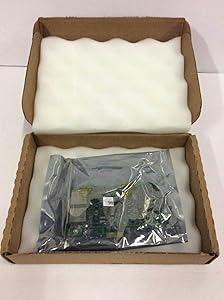
Dell 540-BBGY Broadcom 5720 Dual-Port NIC
★★★★★
Enhance Network Connectivity with Dell's Dual-Port Gigabit NIC The Dell Broadcom 5720 Dual-Port Gigabit Network Interface Card is engineered to augment your desktop and server's network connectivity. It presents dual triple-speed IEEE 802.3-compliant Media Access Controllers (MACs) alongside dual...
$89.00*
View on Amazon
✓ In Stock on Amazon.com
*Price sourced from Amazon.com. Last updated:Jul 21, 2026.Price and availability are subject to change.
Affiliate Disclosure: Studio Supplies may earn a commission from qualifying purchases made through links on this page, at no additional cost to you. This helps support our editorial team.
Notice a mistake? Let Us Know
Overview
Enhance Network Connectivity with Dell's Dual-Port Gigabit NIC
The Dell Broadcom 5720 Dual-Port Gigabit Network Interface Card is engineered to augment your desktop and server's network connectivity. It presents dual triple-speed IEEE 802.3-compliant Media Access Controllers (MACs) alongside dual 10/100/1000 Ethernet transceivers (PHYs), a PCI Express bus interface, and integrated on-chip memory buffer within a unified device. Optimized around the Broadcom BCM5720 Controller.
Specifications:
- Ports: Dual-Port Gigabit
- Interface: PCI Express
- Controller: Broadcom BCM5720
- Data Transfer Rate: 10/100/1000 Mbps
- Compliance: IEEE 802.3
Key Features
Features Dual 10/100/1000BASE-T Ethernet ports / full-duplex/half-duplex MACs Ideal for high-performance network applications
Specifications
Ports
Dual 10/100/1000BASE-T Ethernet
MAC Support
Full-duplex/half-duplex
Application
High-performance network applications
Frequently Asked Questions
How many Ethernet ports does the Dell 540-BBGY Broadcom 5720 NIC have?
This Dell Broadcom 5720 NIC features dual 10/100/1000BASE-T Ethernet ports, offering multiple connectivity options.
Does this network card support both full-duplex and half-duplex operations?
Yes, the Dell 540-BBGY Broadcom 5720 NIC is designed with full-duplex/half-duplex MACs, allowing it to operate efficiently in various network environments.
What kind of applications is this network interface card best suited for?
This NIC is ideal for high-performance network applications, providing robust and efficient data transfer capabilities.
What are the speed capabilities of the Ethernet ports on this card?
The ports support 10/100/1000BASE-T Ethernet, meaning they can handle speeds of 10 Mbps, 100 Mbps, and 1 Gigabit per second.
Is there any information on the power consumption or specific system requirements for this NIC?
Specific details regarding power consumption or detailed system requirements are not provided in the available features.
Related Products


