

Dell
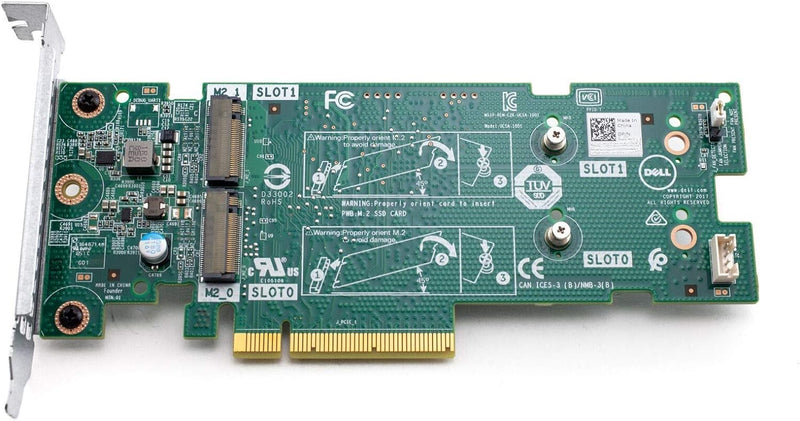
Dell 72WKY BOSS-S1 Boot Storage Controller Card M.2 SSD
★★★★★
Optimize Server Boot PerformanceThe Dell BOSS-S1 Boot Optimized Server Storage Controller Card is designed to enhance server reliability and performance. Supporting two M.2 SSDs, this controller provides a dedicated storage solution for the operating system, freeing up primary storage for critica...
$99.99*
View on Amazon
✓ In Stock on Amazon.com
*Price sourced from Amazon.com. Last updated:Jul 14, 2026.Price and availability are subject to change.
Affiliate Disclosure: Studio Supplies may earn a commission from qualifying purchases made through links on this page, at no additional cost to you. This helps support our editorial team.
Notice a mistake? Let Us Know
Overview
Optimize Server Boot Performance
The Dell BOSS-S1 Boot Optimized Server Storage Controller Card is designed to enhance server reliability and performance. Supporting two M.2 SSDs, this controller provides a dedicated storage solution for the operating system, freeing up primary storage for critical data.
Specifications:
- Brand: Dell
- Interface: PCI-E X8
- M.2 Slots: 2
- Form Factor: Low Profile
Key Features
MANUFACTURER: DELL
PART NUMBER: 72WKY-LOW PROFILE
DEVICE TYPE: PCIE TO M.2 ADAPTER
CARD INTERFACE: PCI-E X8
SLOTS: ( 2 ) TWO M.2 SLOTS
Specifications
Manufacturer
DELL
Part Number
72WKY-LOW PROFILE
Device Type
PCIE TO M.2 ADAPTER
Card Interface
PCI-E X8
M.2 Slots
( 2 ) TWO M.2 SLOTS
Pros & Cons
👍 Pros
- Specifically designed by Dell, ensuring compatibility and optimized performance within Dell systems.
- Features a low-profile form factor, making it suitable for deployment in space-constrained server chassis.
- Utilizes a PCI-E x8 card interface, providing high-bandwidth connectivity for fast data transfer rates.
- Equipped with two M.2 slots, allowing for the installation of dual M.2 SSDs for redundant or expanded boot storage.
- Offers a specialized solution for boot storage, separating the OS from data drives for improved system management.
👎 Cons
- As a Dell-specific part, its compatibility and full feature set are primarily guaranteed within Dell systems.
- The low-profile design, while beneficial for space, might limit its use in full-height expansion slots without an adapter.
- The PCI-E x8 interface occupies a valuable slot that could otherwise be used for other high-bandwidth peripherals.
- Requires M.2 SSDs, which are purchased separately, adding to the overall cost of implementing the solution.
- Its primary function is boot storage, meaning it is not intended for general-purpose data storage or large arrays.
Frequently Asked Questions
What is the Dell 72WKY BOSS-S1 designed for?
The Dell 72WKY BOSS-S1 is a boot storage controller card designed to integrate M.2 SSDs for your server's operating system.
How many M.2 SSDs can this card accommodate?
This controller card is equipped with two M.2 slots, allowing for the installation of two M.2 SSDs.
What type of interface does this controller card use?
The Dell 72WKY BOSS-S1 uses a PCI-E x8 card interface for connecting to your server's motherboard.
Is this card a low-profile design?
Yes, the part number 72WKY-LOW PROFILE indicates that this card features a low-profile form factor.
Is this component compatible with any server?
This is a Dell-manufactured part, 72WKY, meaning it is specifically designed for compatibility and optimal performance with Dell server systems.
Related Products


