



Dell
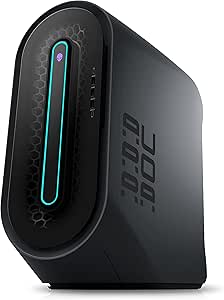
Dell Alienware Aurora R13 i7, 32GB RAM, RTX 3080 Ti Gaming Desktop (Renewed)
i7-12700F32GB RAM32GB DDR5
The Aurora R13 pairs an RTX 3080 Ti's 12GB GDDR6X with DDR5-4800 memory and a 12-core i7-12700F — a 2022-vintage gaming platform that still benchmarks above most mid-range builds.
$3,704.80*
View on Amazon
✓ In Stock on Amazon.com
*Price sourced from Amazon.com. Last updated:Jun 04, 2026.Price and availability are subject to change.
Affiliate Disclosure: Studio Supplies may earn a commission from qualifying purchases made through links on this page, at no additional cost to you. This helps support our editorial team.
Notice a mistake? Let Us Know
Overview
Key Features
[Latest And Greatest] Released in 2022 The Alienware Aurora R13 Gaming Desktop is Dell's latest release in the Alienware family and comes with all the latest technology including DDR5 Memory clocked at a whopping 4800MHz and a 12th generation Intel 12-core Processor. The Twelve cores on the Core i7-12700F processor allows for exceptional multitasking. To save power the processor will run @ 1.6Ghz under low use but will boost to 4.9GHz under heavy use for powerful performance!
[Graphics] This Alienware Aurora R13 Gaming Desktop comes with a a Dedicated Nvidia GeForce RTX 3080 Ti graphics card with 12GB of Dedicated Graphics Ram great for gaming or photo and video editing
[High Speed RAM And Enormous Space] The 32GB DDR5 RAM Running @ 4800MHz will let you smoothly run multiple applications and browser tabs all at once and a 2TB (2000GB) Hard Disk Drive and a second 256GB PCIe NVMe M.2 Solid State Drive will provide fast startup, fast data transfers, and allow for large file storage!
[Operating System] Windows 11 is Microsoft's latest Operating System released in 2022 and if you want to downgrade to the older windows 10, you can downgrade with an easy download from Microsoft's website.The Home Edition will come with everything you need but you can also upgrade to windows pro from the windows store for $100.
[Extra Details] Wifi and Bluetooth come integrated. A keyboard and Mouse are included.
Specifications
Release Year
2022
Processor
Intel Core i7-12700F
Processor Generation
12th Generation
Processor Cores
12
Base Processor Speed
1.6GHz
Max Boost Processor Speed
4.9GHz
Graphics Card
Nvidia GeForce RTX 3080 Ti
Dedicated Graphics RAM
12GB GDDR6
RAM
32GB DDR5
RAM Speed
4800MHz
Primary Storage
256GB PCIe NVMe M.2 Solid State Drive
Secondary Storage
2TB (2000GB) Hard Disk Drive
Operating System
Windows 11 Home
Wireless Connectivity
Wifi
Bluetooth
Yes
Included Peripherals
Keyboard, Mouse
Pros & Cons
👍 Pros
- RTX 3080 Ti with 12GB GDDR6X is a verified 4K-capable GPU — 12GB of high-bandwidth VRAM handles texture-heavy workloads that 8GB cards begin to stutter on at max settings
- DDR5-4800 memory provides approximately 1.5x the bandwidth of comparable DDR4 configurations, benefiting both the i7-12700F's memory controller and memory-intensive game engines
- i7-12700F's 12-core (8P+4E) hybrid architecture with 4.9GHz boost handles both gaming frame generation and background tasks without the CPU becoming a bottleneck behind the 3080 Ti
- Windows 11 Home ships pre-installed with DirectStorage support — a direct performance benefit for NVMe load time optimization in compatible titles
- Integrated Wi-Fi and Bluetooth eliminate the need for expansion cards in the proprietary chassis, preserving PCIe bandwidth for the GPU
👎 Cons
- 256GB NVMe SSD is undersized for a platform of this GPU caliber — filling the primary drive with 2–3 modern AAA titles leaves no headroom, and the M.2 slot count for expansion in the Aurora R13 chassis is limited
- Alienware's proprietary Legend 2.0 chassis restricts standard ATX component compatibility — CPU cooler, PSU, and case fan upgrades require Alienware-specific or carefully verified parts
- The i7-12700F lacks integrated graphics — the system has no display output if the discrete GPU is removed, complicating diagnosis or servicing scenarios
- As a renewed unit, the GPU's thermal interface and fan condition are unknown — the RTX 3080 Ti runs hot at load, and degraded thermal paste or worn fans will cause throttling under sustained gaming
- Power draw under full CPU+GPU load can reach 750W+ — the included PSU should be verified for rated wattage before adding any additional components
Frequently Asked Questions
What does DDR5-4800 memory mean for gaming performance versus DDR4?
DDR5 at 4800MHz delivers roughly 1.5x the peak memory bandwidth of DDR4-3200. For gaming, the direct framerate impact is typically 5–10% in memory-bandwidth-sensitive titles, but the larger benefit is headroom for the CPU's integrated memory controller under heavy multitasking — background capture, streaming, and game logic running concurrently are handled more efficiently at DDR5 bandwidths.
The storage includes a 256GB NVMe SSD and a 2TB HDD — is that enough for a gaming machine?
The 256GB NVMe M.2 drive is tight for a primary gaming SSD. Modern AAA titles routinely exceed 100GB each, meaning you will fill the SSD with two or three games. The 2TB HDD provides overflow storage at ~150 MB/s sequential read — usable for older or less-played titles, but noticeably slower than NVMe for load times. Adding a secondary NVMe drive is a common first upgrade on this platform.
Does the i7-12700F have integrated graphics, and does that matter here?
No — the "F" suffix on the i7-12700F means the processor ships without integrated graphics. This is a non-issue in the Aurora R13 because it always uses the discrete RTX 3080 Ti for display output. It does mean you cannot use the system for display output if the GPU is removed for servicing.
Can the RTX 3080 Ti in this unit run 4K gaming at high settings?
Yes. The RTX 3080 Ti with 12GB GDDR6X is rated for 4K high/ultra settings in most titles at 60fps+. In GPU-limited scenarios at 4K (e.g., Cyberpunk 2077 at ultra ray tracing), frame rates will drop below 60fps, but for the majority of titles at 4K high settings, the 3080 Ti delivers a smooth experience. At 1440p, it is effectively unconstrained by the GPU in most workloads.
What are the cooling and airflow limitations of the Aurora R13's proprietary chassis?
The Aurora R13 uses Alienware's Legend 2.0 chassis with a proprietary cooling layout — intake at the front and bottom, exhaust at the top rear. This design is thermally adequate under typical gaming loads, but the proprietary form factor means standard ATX components (coolers, PSU, some GPU lengths) are not drop-in replacements. Upgradeability is more constrained than a standard mid-tower.
Related Products


