



Dell
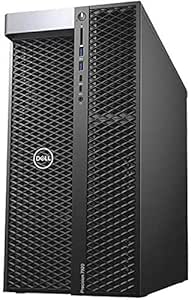
Dell Intel Xeon Precision T7920 Workstation (Renewed)
Dual Xeon Bronze 6-core CPUs and 128GB ECC RAM deliver server-grade parallel compute on a refurbished Precision platform.
$2,992.80*
View on Amazon
✓ In Stock on Amazon.com
*Price sourced from Amazon.com. Last updated:Jun 30, 2026.Price and availability are subject to change.
Affiliate Disclosure: Studio Supplies may earn a commission from qualifying purchases made through links on this page, at no additional cost to you. This helps support our editorial team.
Notice a mistake? Let Us Know
Overview
Specifications
Processor
2x Intel Xeon Bronze 3104, 6-core, 1.7GHz (no Turbo)
Total Cores
12 physical cores
Memory
128GB ECC RAM
Storage
250GB SSD
Graphics
NVIDIA NVS310
Operating System
Windows 11
Condition
Renewed (Refurbished)
Pros & Cons
👍 Pros
- Dual-socket Xeon architecture provides 12 total physical cores optimized for parallel multi-threaded professional software.
- 128GB ECC RAM eliminates memory as a bottleneck for large dataset, VM, or simulation workloads and provides hardware-level error correction.
- The Precision T7920 platform supports multiple PCIe slots, enabling significant GPU or storage expansion without chassis constraints.
- Refurbished pricing delivers enterprise-class hardware reliability at a fraction of new workstation cost.
- Windows 11 pre-installed means immediate deployment without OS licensing overhead.
👎 Cons
- Xeon Bronze 3104 has no Turbo Boost and no Hyperthreading — single-threaded performance is fixed at 1.7GHz, which will feel slow in UI-heavy or lightly-threaded applications compared to modern desktop CPUs.
- 250GB SSD is inadequate as sole storage for professional workflows — additional drives are a near-certain requirement before productive use.
- The NVS310 GPU provides only basic display output; any GPU-accelerated workflow requires a separate, additional card purchase.
- Refurbished status means no Intel or Dell OEM warranty — coverage depends entirely on the seller's refurbishment terms.
- Dual Xeon Bronze platform has high idle power draw compared to modern efficient architectures, increasing long-term operating costs.
Frequently Asked Questions
What workloads are the dual Xeon Bronze 3104 processors actually suited for?
The Xeon Bronze 3104 is a 6-core, 1.7GHz fixed-clock processor with no Turbo Boost and no Hyperthreading. In a dual-socket configuration you get 12 physical cores total. That's suited for multi-threaded professional applications — CAD, simulation, 3D rendering farms — where many parallel threads matter more than single-core burst speed.
Does 128GB RAM in a workstation like this make a measurable difference?
Yes, for specific workflows. Applications like large dataset analysis, multi-layer compositing, running multiple VMs, or simulation software frequently hit memory walls at 32–64GB. 128GB of ECC RAM means those workloads can load entirely in memory, eliminating swap and keeping throughput consistent.
What does ECC memory mean for this workstation?
ECC (Error Correcting Code) memory detects and corrects single-bit memory errors in real time. For long-running computation jobs, scientific work, or financial modeling, this prevents data corruption that standard consumer RAM cannot catch. The Xeon platform mandates ECC — it's not optional.
Is 250GB SSD sufficient for a workstation of this caliber?
For the operating system and applications, yes. For active project storage on data-heavy workflows, it will fill quickly. The T7920 supports multiple drive bays, so adding a second SSD or spinning HDD for project storage is the expected upgrade path for most users.
What GPU is included and what are its limitations?
The NVS310 is an NVIDIA professional display card with 512MB of GDDR3. It handles multi-monitor desktop output reliably but has no meaningful GPU compute capability. Users needing CUDA acceleration, viewport rendering, or ML inference should plan to add a Quadro or RTX card.
Related Products


