



Dell
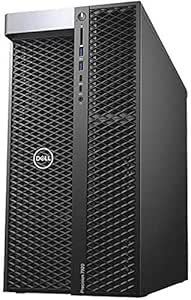
Dell Precision T7920 Workstation, Xeon Silver 4114, Renewed
A 10-core Xeon Silver, 64GB ECC RAM, and 2TB SSD give the T7920 the memory bandwidth and compute headroom professional workstation workloads demand.
$2,994.00*
View on Amazon
✓ In Stock on Amazon.com
*Price sourced from Amazon.com. Last updated:Jun 29, 2026.Price and availability are subject to change.
Affiliate Disclosure: Studio Supplies may earn a commission from qualifying purchases made through links on this page, at no additional cost to you. This helps support our editorial team.
Notice a mistake? Let Us Know
Overview
Specifications
Workstation Model
Precision T7920
Processor Model
Xeon Silver 4114
Condition
Renewed
Pros & Cons
👍 Pros
- 10-core Xeon Silver 4114 with Hyper-Threading delivers 20 threads — directly useful for multi-threaded rendering, simulation, and data workloads that desktop CPUs throttle on
- 64GB RAM provides the headroom for large CAD assemblies, open datasets, and multi-application workstation workflows without hitting swap
- 2TB SSD eliminates the mechanical drive bottleneck for project file I/O — large file loads are storage-bound on HDDs but not on this configuration
- Quadro M4000 with 8GB GDDR5 and ISV certification handles professional visualization, CAD viewport, and multi-display workloads the integrated graphics tier cannot
- T7920 dual-socket motherboard leaves a second Xeon slot vacant — a documented upgrade path to 20 physical cores without replacing the system
👎 Cons
- Xeon Silver 4114's 2.2GHz base clock is conservative — single-threaded tasks like UI responsiveness and lightly-threaded apps will feel slower than a modern high-boost consumer CPU at equivalent multi-threaded performance
- Renewed unit means the M4000 GPU and storage may have accumulated operational hours — no visibility into drive health or GPU fan wear without direct testing
- Windows 11 on 10th-gen Xeon Silver is technically unsupported by Microsoft's hardware requirements — though it operates, update delivery and long-term support status should be evaluated for production environments
- The T7920's full-tower chassis and power supply are physically large — this is a desk-side or floor workstation, not a compact unit
- No specification is provided for storage interface (SATA vs. NVMe) — sequential SSD performance varies significantly between the two, and this distinction matters for I/O-bound workloads
Frequently Asked Questions
What does the Xeon Silver 4114's 10-core architecture mean for workstation workloads compared to a high-end desktop CPU?
The Xeon Silver 4114 runs 10 cores at 2.2GHz base with Hyper-Threading, delivering 20 threads to the OS. For workloads that scale across cores — 3D rendering, video encoding, FEA simulation, data processing — this architecture provides sustained multi-threaded throughput that a 6- or 8-core desktop chip cannot match. The trade-off is a lower maximum single-core boost frequency compared to modern HEDT or consumer CPUs.
Is the 64GB RAM in this T7920 ECC or standard DDR4?
Xeon Silver 4114 platforms support ECC (Error-Correcting Code) memory by design, which is standard on the T7920 workstation class. ECC actively detects and corrects single-bit memory errors — critical for long-running simulations, financial modeling, or any workload where silent data corruption is unacceptable.
What does the Quadro M4000 GPU handle that integrated graphics cannot?
The M4000 is an 8GB GDDR5 professional graphics card with a 256-bit memory bus. It is certified for ISV workstation applications — CAD, DCC, visualization — and provides OpenGL and DirectX performance at a tier that integrated graphics cannot approach. Its 8GB VRAM handles large scene geometry, texture sets, and multi-display workloads without paging to system RAM.
Can this T7920 be configured with a second Xeon processor?
The Dell Precision T7920 motherboard supports dual Intel Xeon Scalable processors in its full tower chassis. This renewed unit ships with a single Xeon Silver 4114, but the second socket is available for expansion — adding a second 4114 doubles the core count to 20 physical cores and 40 threads.
What is the practical implication of 2TB SSD storage at the workstation class?
2TB SSD at workstation scale means large project files — CAD assemblies, video timelines, render caches — load from fast flash storage rather than spinning disk. Sequential read speeds on SATA or NVMe SSDs at this capacity are a direct bottleneck relief for applications that stream large datasets from storage, which mechanical drives cannot sustain.
Related Products


