



Dell
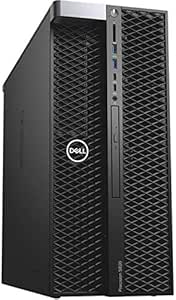
Dell Intel Xeon Precision Tower 5820 Workstation (Renewed)
Xeon W-2133 workstation performance with NVMe boot speed and P4000 pro graphics — renewed for a fraction of new pricing.
$1,140.00*
View on Amazon
✓ In Stock on Amazon.com
*Price sourced from Amazon.com. Last updated:Jun 29, 2026.Price and availability are subject to change.
Affiliate Disclosure: Studio Supplies may earn a commission from qualifying purchases made through links on this page, at no additional cost to you. This helps support our editorial team.
Notice a mistake? Let Us Know
Overview
Specifications
Series
Precision Tower 5820
Pros & Cons
👍 Pros
- Intel Xeon W-2133 delivers 6-core / 12-thread performance with 44 PCIe lanes — essential headroom for multi-GPU or high-bandwidth peripheral configurations
- NVIDIA P4000 provides 8GB ECC VRAM and certified professional OpenGL/CUDA drivers, avoiding the driver instability that plagues consumer GPUs in ISV-certified applications
- Dual storage configuration — 500GB NVMe SSD for OS/applications plus 2TB HDD for project data — eliminates the storage compromise common in single-drive workstations
- Renewed pricing delivers workstation-class hardware at a fraction of the equivalent new-build cost, making the P4000 + Xeon combination accessible to smaller studios
- Tower form factor allows full-length GPU and expansion card installation, unlike SFF workstations that limit upgrade paths
👎 Cons
- 8GB RAM is critically undersized for the platform — Xeon W + P4000 workflows routinely require 32GB minimum; plan for immediate memory expansion
- Renewed status introduces uncertainty around component history, wear, and remaining MTBF on mechanical components like the 2TB spinning HDD
- Xeon W-2133 is a previous-generation part with no upgrade path on LGA2066 beyond a modest step-up — the platform ceiling is already in view
- The P4000 is an older Quadro architecture (Pascal, 2017) without hardware RT cores or tensor acceleration — modern AI-assisted rendering workflows will hit its ceiling
- Windows 11 certification status on W-2133 hardware warrants verification, as older Xeon generations sit in a grey zone for Microsoft's official support matrix
Frequently Asked Questions
What workloads is the Xeon W-2133 actually suited for versus a consumer Core i7?
The W-2133 is a 6-core/12-thread LGA2066 processor running at 3.6GHz base — its advantage over consumer chips is ECC memory support, higher PCIe lane count (44 lanes on the platform), and validated ISV certification for professional applications like AutoCAD, SolidWorks, and DaVinci Resolve. If your software stack is certified for Xeon-class hardware, that certification matters for stability under sustained load.
Is the NVIDIA P4000 comparable to a current gaming GPU?
No — the P4000 is a professional Quadro-class card with 8GB GDDR5 and ECC VRAM, optimized for CAD, 3D rendering, and video production rather than gaming rasterization. It outperforms similarly priced consumer GPUs in OpenGL workloads and benefits from professional driver stability, but its gaming frame rates would lag a current RTX 3060 significantly.
What does "renewed" mean for a workstation at this spec level?
Renewed indicates the unit has been inspected, cleaned, and tested — typically to manufacturer functional standards. Components like RAM, storage, and GPU may have been replaced during refurbishment. The key caveat: warranty terms on renewed units vary by seller and are typically shorter than new, so confirm coverage before purchase.
Can the 8GB RAM be expanded, and what type does this platform use?
The Precision 5820 platform supports DDR4 ECC RDIMM or UDIMM — the specific supported type depends on the memory channels populated. The platform supports up to 512GB across four DIMM slots, so 8GB is a significant starting point that leaves substantial headroom for expansion.
Does the 500GB NVMe SSD plus 2TB HDD require any configuration, or is Windows pre-installed?
Windows 11 is pre-installed on the NVMe SSD per the product description, so the system boots immediately. The 2TB HDD appears as secondary storage. No RAID configuration is implied by the described setup.
Related Products


