



Dell
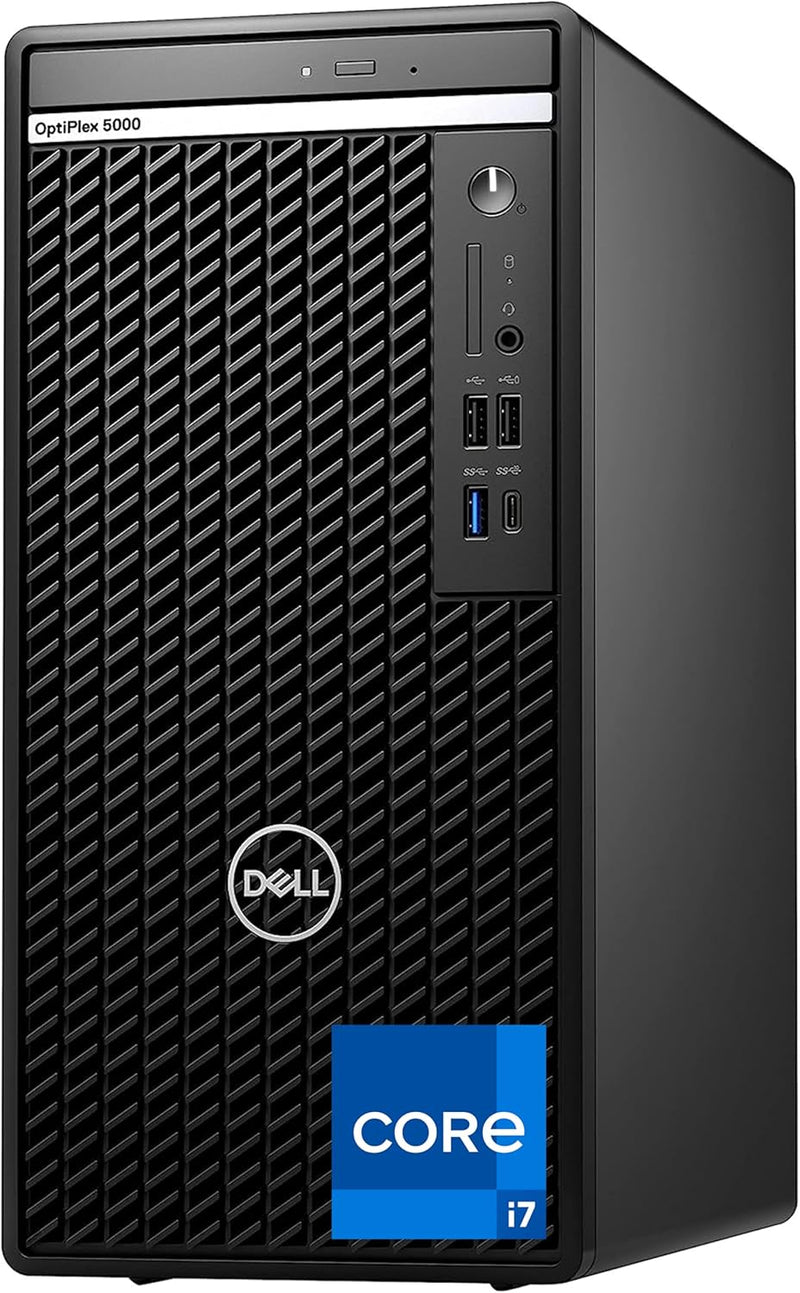
Dell Mini Tower 5000 Optiplex i7-12700K Desktop PC
★★★★★
UHDi7-12700KUSB 3.2USB 2.0USB C
Twelve-core Alder Lake horsepower in a compact tower that fits under any desk and outpaces yesterday's full-size workstations.
$2,028.40*
Check availability
*Price sourced from Amazon.com. Last updated:Jun 07, 2026.Price and availability are subject to change.
Affiliate Disclosure: Studio Supplies may earn a commission from qualifying purchases made through links on this page, at no additional cost to you. This helps support our editorial team.
Notice a mistake? Let Us Know
Overview
Key Features
Dell Optiplex Tower Desktop SFF PC
Intel Core i7-12700K 12-Core, (8 Performance- Cores: 3.60 GHz- 5.00 GHz) + (4 Efficient- Cores: 2.70GHz- 3.80GHz)
FRONT: 1x USB 3.2 Gen 2, 2x USB 2.0 port, USB C, Universal Audio Port, DVDRW |||| REAR: 2x USB 3.2 Gen 1, 2x USB 2.0 |||| INTERNAL: 1-Port PCIe Expansion x1, 2-Ports PCIe Expansion x16
Intel UHD 770 Graphics - 2-Monitor Capable- 1x Display Port 1.4, 1x HDMI
Wireless Wi-Fi, AX Dual-band connectivity Bluetooth 5.0, Gigabit Ethernet Port, Internal Speaker
Specifications
Processor
Intel Core i7-12700K (8 P-cores 3.6–5.0 GHz, 4 E-cores 2.7–3.8 GHz), 12-core / 20-thread
Memory
32GB DDR4
Storage
1TB NVMe PCIe SSD
Graphics
Intel UHD Graphics 770 (integrated), 2-monitor capable
Display Outputs
DisplayPort 1.4, HDMI
Front Ports
1x USB 3.2 Gen 2 Type-A, 2x USB 2.0, 1x USB-C 3.2, Universal Audio Jack, DVD-RW
Rear Ports
2x USB 3.2 Gen 1, 2x USB 2.0
Internal Expansion
1x PCIe x1, 2x PCIe x16
Wireless
Wi-Fi AX Dual-band, Bluetooth 5.0
Wired Networking
Gigabit Ethernet
Audio
Internal speaker, Universal Audio Port
Form Factor
Mini Tower
Pros & Cons
👍 Pros
- Twelve-core Alder Lake hybrid architecture delivers strong multi-threaded throughput for compiling, rendering, and parallel workloads at a price point well below equivalently specced custom builds.
- 32GB DDR4 is a genuinely useful out-of-box capacity for power users running VMs, large browser sessions, or memory-intensive creative applications without immediate upgrade costs.
- 1TB NVMe PCIe SSD provides fast sequential read/write speeds that eliminate the storage bottleneck that plagued HDD-based workstations, with room for an OS + large project datasets simultaneously.
- Two PCIe x16 expansion slots and one x1 slot give this system meaningful upgrade headroom — discrete GPU, capture card, or 10GbE NIC can all be added without replacing the chassis.
- Wi-Fi 6 (AX) dual-band wireless eliminates the need for a PCIe wireless card or USB dongle, preserving expansion slots and reducing cable clutter on desk deployments.
👎 Cons
- OEM PSU wattage is not publicly specified, which creates a hard unknown ceiling on GPU upgrade capability — a power-hungry discrete card may require a full PSU swap before it can be installed.
- Intel UHD 770 integrated graphics cannot hardware-accelerate demanding GPU compute tasks or run modern 3D workloads at acceptable frame rates, making a discrete GPU mandatory for those use cases.
- DDR4 rather than DDR5 memory limits maximum memory bandwidth versus Intel 12th-gen builds on DDR5 platforms — relevant for memory-bandwidth-sensitive workloads like video encoding or simulation.
- The Mini Tower form factor, while compact relative to full towers, is still a physical desktop presence — it does not achieve the true small footprint of Dell's SFF (Small Form Factor) or Micro variants.
- Conflicting specification data between the features list and description (AX vs AC wireless, DisplayPort quantity) introduces pre-purchase verification friction that a clean spec sheet would eliminate.
Frequently Asked Questions
What is the sustained single-core boost speed of the i7-12700K in this system, and does Dell throttle it in the Mini Tower chassis?
The i7-12700K boosts to 5.0 GHz on Performance cores and 3.8 GHz on Efficient cores. Dell's Mini Tower (as opposed to the SFF chassis) provides enough thermal headroom that sustained all-core performance is not significantly throttled — the larger chassis volume allows for adequate airflow compared to ultra-compact alternatives.
Can the two PCIe x16 slots accommodate a dedicated GPU, and what power constraints exist?
Yes, the two PCIe x16 internal expansion slots can accept a discrete GPU, but you are constrained by the system's OEM power supply. Before installing any add-in card, verify the PSU wattage and available power connectors — OEM prebuilt PSUs are often undersized for high-TDP graphics cards.
Does the 1TB NVMe SSD use PCIe Gen 4 or Gen 3, and does the board support additional M.2 drives?
The listed NVMe PCIe SSD does not specify Gen 4 in the product description; treat it as Gen 3 until confirmed with Dell's configuration sheet. The Alder Lake platform supports PCIe Gen 4 M.2, so a Gen 4 upgrade is electrically possible, subject to available M.2 slots on the specific board variant Dell shipped.
Is the Intel UHD 770 graphics capable of running three monitors, or is it limited to two?
The Intel UHD 770 integrated graphics in this configuration supports two simultaneous displays via the rear DisplayPort 1.4 and HDMI outputs. Three-monitor output requires an add-in GPU occupying one of the PCIe slots.
What wireless standard is included — Wi-Fi 5 (AC) or Wi-Fi 6 (AX)?
The product features list specifies AX dual-band connectivity, which corresponds to Wi-Fi 6 (802.11ax). The description text references "AC Dual-band" — there is a discrepancy between the two sources. Confirm the included wireless card with Dell's order documentation before purchase if Wi-Fi 6 is a firm requirement.
Related Products


