



Dell
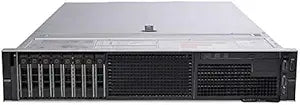
Dell PowerEdge R740 Gold 6136 Server 128GB RAM (Renewed)
Dual Gold 6136 CPUs at 3 GHz base clock and 14.4TB of 10K SAS storage give this 2U R740 the sustained throughput to anchor enterprise database and virtualization tiers.
View price on Amazon
Affiliate Disclosure: As an Amazon Associate, Studio Supplies earns from qualifying purchases made through links on this page, at no additional cost to you. This helps support our editorial team.
Notice a mistake? Let Us Know
Overview
Reliable Performance for Your Enterprise Needs
The Dell PowerEdge R740 server delivers exceptional performance and scalability for a wide range of workloads. This renewed server is designed to provide reliable computing power for your business.
Key Features:
- Scalable Architecture: Supports a variety of workloads and applications.
- Reliable Performance: Designed for consistent and dependable operation.
Specifications:
- Brand: Dell
- Model: PowerEdge R740
- Form Factor: 2.5" Hot Plug
- Processors: 2X Gold 6136 Twelve Core 3Ghz
- Memory: 128GB RAM
- Storage: 8X 1.8TB 10K
- RAID Controller: H330
Frequently Asked Questions
How does the Gold 6136 differ from mid-tier Xeon Gold processors?
The Gold 6136 is a 12-core, 24-thread Skylake-SP chip with a 3.0 GHz base clock and 3.7 GHz turbo — notably higher base clock than Gold 5100-series processors, which typically start at 2.1–2.3 GHz. For workloads where sustained base frequency matters (database engines, JVM-based applications, real-time analytics), the 3.0 GHz floor translates to more consistent latency under load. Two sockets yield 24 cores and 48 threads.
What does the H330 RAID controller support versus the H730 found on other R740 configurations?
The PERC H330 is a 12Gbps entry-level HBA/RAID controller without a RAID cache module. It supports RAID 0, 1, 5, 10, and 50 but relies on system RAM for write buffering rather than a dedicated NV cache. This is a meaningful distinction: the H330 will exhibit higher write latency under sustained I/O compared to the H730's 1GB NV cache. For read-heavy database workloads it performs adequately; for write-intensive OLTP, an H730 or H740P upgrade is recommended.
What RAID configuration is recommended for the 8x 1.8TB 10K drives?
With 8 drives, RAID 10 (4 mirrored pairs) yields approximately 7.2TB usable with excellent random I/O performance — the preferred configuration for database servers. RAID 6 yields approximately 10.8TB usable with dual-drive fault tolerance, better suited for archive or file server workloads. RAID 5 at 6 drives + 1 spare + 1 hot-spare is another viable option. The H330 supports all three.
Can the 128GB of RAM be expanded further?
The R740 supports up to 24 DIMM slots across two processors (12 per socket) and a maximum of 3TB with 3DS LRDIMMs. The 128GB shipped configuration occupies a subset of available slots, leaving substantial headroom for in-memory database workloads or high-density VM deployments that need more RAM per host.
Is this server suitable for running VMware vSphere or Microsoft Hyper-V?
Yes. The Gold 6136's virtualization extensions (Intel VT-x, VT-d) are fully supported, and 128GB RAM is sufficient to host 20–40 VMs depending on allocation. The 2.5-inch hot-plug bay configuration (not 3.5-inch as in the R540) limits individual drive capacity but allows higher spindle count in the same 2U space.
Related Products


