



Dell
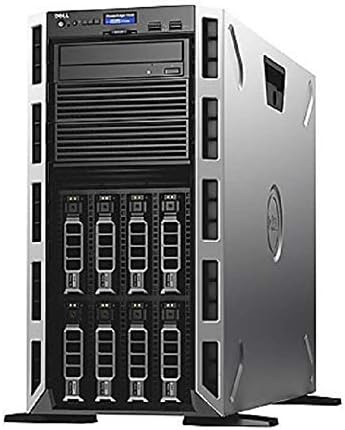
Dell PowerEdge T430 Server 2X E5-2680 V3 192GB Renewed
Dual Xeon E5-2680 V3 horsepower and 192GB DDR4 capacity make the renewed PowerEdge T430 a serious rack-free workhorse for virtualization and data-heavy workloads.
View price on Amazon
Affiliate Disclosure: Studio Supplies may earn a commission from qualifying purchases made through links on this page, at no additional cost to you. This helps support our editorial team.
Notice a mistake? Let Us Know
Overview
Powerful and Expandable Server Solution
The Dell PowerEdge T430 (Renewed) offers a robust and scalable server solution for growing businesses. Featuring dual Intel Xeon processors, extensive memory capacity, and ample storage options, this server is designed to handle demanding workloads with ease.
- Processors: 2X E5-2680 V3 Twelve Core 2.5Ghz
- Memory: 192GB DDR4 RAM
- Storage: 3X 2TB SAS
- Controller: H730
- Form Factor: 8 x 3.5 Hot Plug
Key Features
CPU Speed
2.5Ghz
192GB of RAM
CPU Manufacturer
Intel
Pros & Cons
👍 Pros
- 24 physical cores (48 threads) across dual E5-2680 V3 CPUs provides substantial parallel processing capacity for multi-tenant virtualization.
- 192GB DDR4 ECC RAM allows large in-memory datasets — viable for SQL Server, SAP, or memory-heavy containerized workloads without swapping.
- 8× 3.5" hot-plug SAS bay layout enables live drive replacement and straightforward storage expansion without downtime.
- H730 RAID controller with 1GB NV cache improves I/O throughput and protects write data during unexpected power loss.
- Tower form factor eliminates rack infrastructure costs — deployable in a server closet or office environment without dedicated rack hardware.
👎 Cons
- E5-2680 V3 is a Haswell-EP (2014) architecture — per-core IPC is measurably behind current-generation Xeon Silver/Gold, which matters for single-threaded applications.
- 500W–700W typical power draw under load makes this a significant contributor to electricity and cooling costs in a small office setting.
- DDR4 on the Haswell-EP platform is limited to 2133MHz, leaving memory bandwidth well below what modern Xeon platforms deliver.
- Renewed unit condition means drive wear state is unknown — the included SAS drives should be evaluated with diagnostic tools before production deployment.
- No NVMe support natively — PCIe-based NVMe add-in cards are possible but require slot allocation and won't benefit from the H730's RAID cache.
Frequently Asked Questions
What virtualization workloads can the dual E5-2680 V3 configuration realistically handle?
Each E5-2680 V3 delivers 12 cores / 24 threads at 2.5GHz (3.3GHz turbo), giving you 24 physical cores and 48 logical threads total. That's sufficient headroom to run 20–40 mid-weight VMs under VMware ESXi or Hyper-V without saturating the CPU, depending on guest workload density.
Is the 192GB RAM configuration expandable, and what memory type does the T430 support?
The T430 supports up to 768GB across 24 DIMM slots (12 per CPU). The existing 192GB is DDR4 registered ECC — error-correcting memory critical for server-class reliability. You can add DIMMs in matched pairs per channel to maintain optimal bandwidth.
What does the H730 RAID controller offer over a basic HBA?
The Dell PERC H730 includes a dedicated 1GB non-volatile cache and supports RAID 0, 1, 5, 6, 10, 50, and 60 in hardware — offloading parity calculations from the CPUs. For the included 3× 2TB SAS drives, you can configure RAID 5 for ~4TB usable with single-drive fault tolerance without touching CPU cycles.
Does the T430 tower form factor limit future expansion?
No — the T430 supports up to 8× 3.5" hot-plug SAS/SATA bays in this configuration, plus additional PCIe slots for NICs, HBAs, or GPU compute cards. The tower chassis also allows conversion to a rack-mount pedestal with Dell's optional rack rails.
What operating systems are supported on this hardware generation?
The E5-2680 V3 (Haswell-EP) platform has mature driver support for Windows Server 2012 R2 through 2022, VMware ESXi 6.5–8.0, and major Linux distributions including RHEL, Ubuntu Server, and Debian. Dell iDRAC 8 (integrated remote management) is present on enterprise configurations for out-of-band management.
Related Products


