



Dell
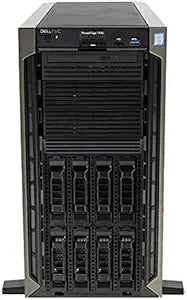
Dell PowerEdge T440 Server: 8 x 3.5, 128GB RAM (Renewed)
128GB RAM750W
Twelve-core Xeon muscle and 128GB ECC RAM give mid-market workloads serious headroom — at a fraction of new-server pricing.
View price on Amazon
Affiliate Disclosure: Studio Supplies may earn a commission from qualifying purchases made through links on this page, at no additional cost to you. This helps support our editorial team.
Notice a mistake? Let Us Know
Overview
Powerful and Reliable Server for Your Business Needs
The Dell PowerEdge T440 is a robust tower server designed to handle a variety of business workloads. Featuring a Gold 5118 processor, ample memory, and redundant power supplies, this renewed server delivers reliability and performance for your critical applications.
- Form Factor: Tower Server
- Processor: Twelve Core 2.3Ghz
- Memory: 128GB RAM
- Hard Drive Bays: 8 x 3.5 Hot Plug
- RAID Controller: H730
- Power Supply: 2X PSU
Key Features
CPU Speed
2.3Ghz
128GB of RAM
2x 750W Redundant Power Supplies
Pros & Cons
👍 Pros
- The twelve-core Gold 5118 handles concurrent virtualization, file serving, and database workloads simultaneously without the thread contention that plagues quad- or hex-core configurations.
- 128GB of ECC RAM provides generous headroom for in-memory databases, large VM fleets, or memory-intensive analytics without requiring immediate upgrade investment.
- Eight hot-plug 3.5-inch bays allow drive replacement under live load — critical for maintaining RAID parity without scheduled downtime windows.
- Dual 750W redundant PSUs eliminate power supply as a single point of failure, delivering enterprise-grade uptime assurance in a tower form factor.
- The H730 RAID controller with its own cache accelerates write operations independently of drive speed, buffering burst I/O that would otherwise bottleneck on spinning disks.
👎 Cons
- The Gold 5118's 2.3GHz base clock means single-threaded application performance — SQL queries that don't parallelize, legacy line-of-business apps — will feel constrained compared to newer consumer-grade silicon.
- Eight bays is sufficient for small deployments but limits raw storage scalability; organizations expecting rapid data growth will outgrow the bay count before the hardware is otherwise obsolete.
- As a renewed unit, the drive population is not included — you supply your own drives, meaning total cost of ownership requires adding drive budget at the outset.
- Tower form factor means this server cannot be rack-mounted without a tower-to-rack conversion kit (sold separately), limiting data center deployment flexibility.
- The H730 controller, while capable, is a previous-generation PERC — it lacks NVMe pass-through support, so direct NVMe storage requires a separate HBA or controller upgrade.
Frequently Asked Questions
What processor is installed, and what does 2.3GHz mean for multi-threaded workloads?
The T440 ships with a Gold 5118 — a twelve-core, 24-thread Xeon Scalable processor running at 2.3GHz base. For multi-threaded workloads like virtualization, database queries, or batch processing, having 24 hardware threads means the OS can schedule work across all of them simultaneously. Single-threaded performance is modest by current standards, but parallel throughput is where this chip earns its place.
How many drives can this server hold, and what RAID configurations does it support?
The T440 in this configuration supports 8 x 3.5-inch hot-plug drive bays, meaning drives can be swapped without powering down the system. The H730 RAID controller supports RAID levels 0, 1, 5, 6, 10, 50, and 60 with a 1GB non-volatile cache — giving you flexibility to balance redundancy against usable capacity depending on your workload's tolerance for drive failure.
Does 128GB of RAM handle virtualization hosting comfortably?
Yes — 128GB of ECC RAM is a strong foundation for a VMware ESXi or Hyper-V host running 8–15 moderate virtual machines, depending on per-VM RAM allocation. ECC memory is important here: it detects and corrects single-bit memory errors silently, which matters for long-running VMs where silent data corruption could propagate before anyone notices.
What does the redundant power supply configuration mean in practice?
The two 750W PSUs are configured in a hot-swap redundant arrangement — if one fails, the other carries the full load without any service interruption. For a business environment where uptime matters, this is the difference between a failed PSU being a scheduled maintenance event rather than an emergency outage.
Is this server loud enough to require a dedicated server room?
Tower servers in general run louder than rack units due to larger, slower fans, but the T440's fan profile under light load is manageable in a back-office or wiring closet environment. Under sustained heavy load, fan noise increases noticeably — a dedicated equipment room or at minimum a closed cabinet is advisable for an open office setting.
Related Products


