

Dell
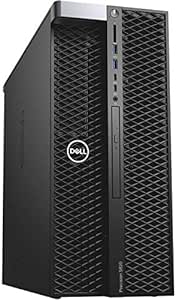
Dell Precision T5820 Workstation with NVMe SSD (Renewed)
Experience Reliable Performance with a Renewed Dell WorkstationThe Dell Precision Tower 5820 Workstation offers dependable performance for professional tasks. This renewed workstation combines a quad-core Intel Xeon processor, ample memory, and fast NVMe storage to handle demanding applications. ...
$1,200.00*
View on Amazon
✓ In Stock on Amazon.com
*Price sourced from Amazon.com. Last updated:Jun 07, 2026.Price and availability are subject to change.
Affiliate Disclosure: Studio Supplies may earn a commission from qualifying purchases made through links on this page, at no additional cost to you. This helps support our editorial team.
Notice a mistake? Let Us Know
Overview
Experience Reliable Performance with a Renewed Dell Workstation
The Dell Precision Tower 5820 Workstation offers dependable performance for professional tasks. This renewed workstation combines a quad-core Intel Xeon processor, ample memory, and fast NVMe storage to handle demanding applications. Enjoy the reliability of a professionally inspected and tested machine.
- Processor: Intel Xeon W-2123 Quad Core 3.6Ghz
- Memory: 32GB RAM
- Storage: 500GB NVMe M.2 SSD with PCIe Adapter Card, 2TB 7.2K PC SATA Drive
- Optical Drive: DVDRW
- Graphics: GeForce 210 1GB (1 HDMI, 1 DVI, 1 VGA - 2 Active Monitor Support)
- Power Supply: 425W
- Operating System: Windows 11
Specifications
Model
Dell Precision T5820 Workstation
Storage Type
NVMe SSD
Condition
Renewed
Pros & Cons
👍 Pros
- As a renewed workstation, it offers a potentially cost-effective entry into high-performance computing.
- The Dell Precision T5820 series is renowned for its robust build quality and suitability for demanding professional applications.
- Features an NVMe SSD, which provides significantly faster data access and system responsiveness compared to traditional SATA SSDs or HDDs.
- Workstations like the T5820 are designed for expandability, allowing for future upgrades to meet evolving professional needs.
- Renewed products typically undergo testing and certification to ensure they meet a functional, like-new standard.
👎 Cons
- As a renewed product, specific warranty details are not provided, which could be a concern for long-term usage.
- The listing does not specify the processor model, amount of RAM, or specific graphics card included, making it difficult to assess exact performance.
- Workstation-class machines can be larger and heavier than typical desktop PCs, which might be a consideration for space-constrained environments.
- Without details on the installed operating system, additional software costs might be incurred to get it production-ready.
- The power consumption of a high-performance workstation can be greater than that of a standard consumer desktop.
Frequently Asked Questions
What does "Renewed" signify for this Dell Precision T5820 Workstation?
"Renewed" indicates that the workstation has been inspected, tested, and restored to a functional, like-new condition.
What kind of storage does this workstation use?
This Dell Precision T5820 comes with an NVMe SSD, providing very fast storage performance for quick boot times and application loading.
Are the processor, RAM, and graphics card specifications available for this renewed unit?
No, the listing does not provide specific details regarding the processor model, RAM capacity, or graphics card included with this renewed workstation.
Is the Dell Precision T5820 suitable for demanding professional tasks?
Yes, the Dell Precision series is specifically designed for professional users who require high performance and reliability for tasks such as CAD, video editing, and scientific simulations.
What operating system is installed on this renewed workstation?
The provided information does not specify which operating system is installed on this particular Dell Precision T5820 Workstation.
Related Products


