



Dell
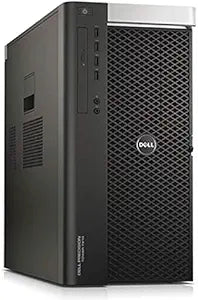
Dell Precision T7910 Workstation Dual Xeon 256GB 1TB SSD (Renewed)
Dual Xeon E5-2660 V4 processors and 256GB ECC RAM give this renewed T7910 a 28-core foundation for professional workloads that single-socket systems can't match.
$2,796.00*
View on Amazon
✓ In Stock on Amazon.com
*Price sourced from Amazon.com. Last updated:Jun 30, 2026.Price and availability are subject to change.
Affiliate Disclosure: Studio Supplies may earn a commission from qualifying purchases made through links on this page, at no additional cost to you. This helps support our editorial team.
Notice a mistake? Let Us Know
Overview
Specifications
Model
Dell Precision Tower 7910
Processors
2x Intel Xeon E5-2660 V4 (14-core, 2.0GHz base / 3.2GHz boost, 35MB cache each)
Total Cores / Threads
28 cores / 56 threads
Memory
256GB DDR4 ECC RAM
Storage
1TB SSD
Graphics
NVIDIA Quadro NVS310
Operating System
Not Included
Condition
Renewed
Pros & Cons
👍 Pros
- 28 total cores (56 threads) across dual E5-2660 V4 CPUs delivers multi-threaded throughput that single-socket workstations at similar price points cannot match.
- 256GB ECC DDR4 supports in-memory analytics, large VM environments, and simulation datasets while providing hardware-level memory error correction.
- T7910 dual-socket LGA2011-v3 platform supports up to 1TB total RAM and multiple PCIe x16 slots for substantial future GPU and storage expansion.
- 1TB SSD eliminates the mechanical storage bottleneck of the original spinning-disk T7910 configurations.
- Professional workstation platform with redundant PSU support option, tool-free chassis, and enterprise-grade component selection throughout.
👎 Cons
- E5-2660 V4 base clock of 2.0GHz means single-threaded performance lags behind modern quad-core consumer processors — applications that don't parallelize well will feel this gap.
- NVS310 is a display-only GPU — any GPU-accelerated workflow (rendering, ML inference, video encoding) requires a separate GPU upgrade and additional budget.
- No operating system included; Windows 11 Pro compatibility may require TPM module verification before purchase.
- Dual-socket platform with 28-core Xeon configuration generates significant heat and noise — thermal management in enclosed or small-space environments requires planning.
- Broadwell-EP architecture (2016) predates PCIe 4.0, AVX-512, and modern memory bandwidth standards — a gap that will be apparent in next-generation software optimized for newer ISAs.
Frequently Asked Questions
What is the total core and thread count across both E5-2660 V4 processors?
Each E5-2660 V4 is a 14-core, 28-thread Broadwell-EP chip running at 2.0GHz base with a 3.2GHz single-core boost. With both CPUs installed, the T7910 presents 28 physical cores and 56 logical threads to the operating system. That thread count is what separates this platform from single-socket workstations in rendering, simulation, and compilation workloads.
Does 256GB of ECC RAM in this configuration leave room for expansion?
The T7910 supports up to 1TB of DDR4 ECC RAM across its 16 DIMM slots. At 256GB populated, you have substantial headroom remaining — up to 768GB of additional capacity — making this platform viable for memory-intensive workloads that will grow over time.
What is the NVS310 GPU and is it adequate for productivity use?
The Quadro NVS310 is a low-power, multi-display professional GPU with 512MB DDR3 and support for up to two monitors. It is not a rendering or compute GPU — it's a display adapter. For GPU-accelerated rendering, 3D viewport work, or compute tasks, you would need to add a Quadro or RTX card in one of the T7910's PCIe slots.
Is an operating system included with this renewed unit?
No. The T7910 ships without an OS installed. Budget for a Windows 11 Pro or Linux installation. Note that Windows 11 requires TPM 2.0, which may need to be enabled in BIOS or added via a discrete module depending on the board revision.
How does the 1TB SSD in this unit connect — SATA or NVMe?
The listing specifies a 1TB SSD. The T7910 supports both SATA and NVMe M.2 storage depending on configuration. Sequential read performance will vary significantly — SATA SSDs top out around 550MB/s while NVMe drives on this platform can exceed 2,000MB/s. Verify the storage interface with the seller if this distinction matters for your workload.
Related Products


