

Dell
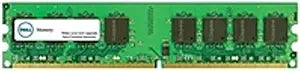
Dell SNPVR648C/8G 8GB DDR3L-1600 Unbuffered Memory
Drop-in 8GB DDR3L upgrade that cuts voltage to 1.35V and brings aging Dell systems back to snappy multitasking performance.
$24.98*
View on Amazon
✓ In Stock on Amazon.com
*Price sourced from Amazon.com. Last updated:Oct 27, 2026.Price and availability are subject to change — details.
Affiliate Disclosure: As an Amazon Associate, Studio Supplies earns from qualifying purchases made through links on this page, at no additional cost to you. This helps support our editorial team.
Notice a mistake? Let Us Know
Overview
Key Features
8GB DDR3L SDRAM - DIMM 240-pin
1600 MHz (PC3L-12800)
Non-ECC Unbuffered
Dual rank, Low Voltage 1.35 V
Specifications
Capacity
8GB
Memory Type
DDR3L SDRAM
Speed
1600MHz (PC3L-12800)
Form Factor
DIMM, 240-pin
Voltage
1.35V (Low Voltage)
Error Correction
Non-ECC
Buffering
Unbuffered
Rank
Dual Rank
Manufacturer
Dell (OEM)
Frequently Asked Questions
Will this module work in my non-Dell system?
Likely yes for the electrical spec — DDR3L at 1600MHz with a 240-pin DIMM form factor is a standard configuration. However, Dell OEM memory is validated and warranted specifically against Dell system boards. Compatibility with third-party motherboards is not guaranteed, and Dell's warranty support applies only to Dell hardware.
What does DDR3L mean versus standard DDR3, and does it matter?
The "L" stands for Low Voltage — this module runs at 1.35V instead of the standard 1.5V. Most DDR3L-capable systems also accept standard 1.5V DDR3, and this module can operate at both voltages. The practical benefit is reduced heat and power draw, which matters most in compact systems or laptops where thermals are constrained.
Does this module support ECC error correction?
No — this is a Non-ECC module. It will not function as error-correcting memory and cannot be mixed with ECC modules in ECC-enabled configurations. If your system requires ECC (typically workstation or server platforms), this is not the right module.
What speed bottleneck does upgrading to this module solve?
At 1600MHz (PC3L-12800), this module unlocks the full rated speed of DDR3L-compatible platforms. Systems running 1333MHz modules see a bandwidth increase; systems previously RAM-constrained due to insufficient capacity see the largest gains in multitasking and memory-intensive workloads.
Is this a single-rank or dual-rank module?
This is a dual-rank module. Dual-rank memory can improve memory controller throughput on compatible platforms by interleaving between ranks, though the effect is workload-dependent and system-specific.
Related Products


