



DJI
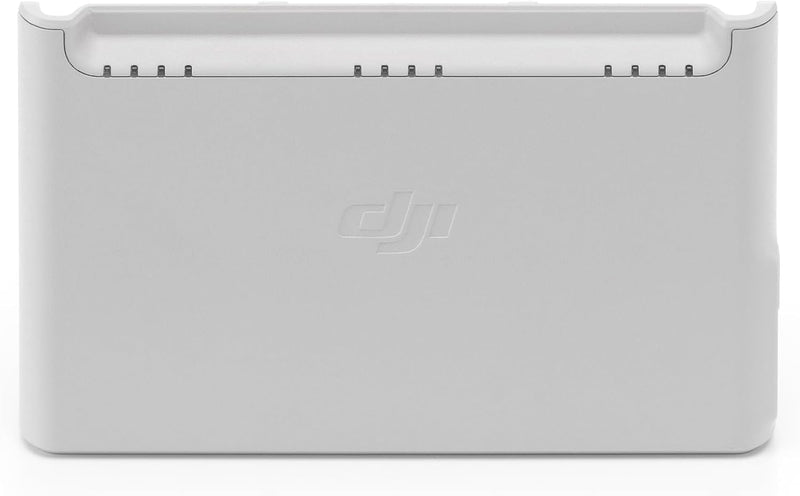
DJI Neo Two-Way Charging Hub
★★★★★
65W
Three DJI Neo batteries fully charged in 60 minutes — the Two-Way Hub eliminates flight-day battery anxiety entirely.
$35.00*
View on Amazon
✓ In Stock on Amazon.com
*Price sourced from Amazon.com. Last updated:Jun 04, 2026.Price and availability are subject to change.
Affiliate Disclosure: Studio Supplies may earn a commission from qualifying purchases made through links on this page, at no additional cost to you. This helps support our editorial team.
Notice a mistake? Let Us Know
Overview
Key Features
It can store and charge batteries. When used with the DJI 65W Portable Charger, it can fully charge three Intelligent Flight Batteries simultaneously in just 60 minutes. With at least one battery stored, it can serve as a power bank, using the remaining battery power to charge devices such as goggles or smartphones.
The number of batteries that can be charged simultaneously depends on the power of the charger used. Using a charger of more than 45 W allows for charging three batteries at once while using a charger of less than 45 W can only charge two batteries simultaneously. Refer to the charging protocols supported by the charger.
In the Box: DJI Neo Two-Way Charging Hub × 1
Compatibility: DJI Neo
Specifications: Input: 5-20 V, max 3 A. Output (Charging): 5 V, 2 A. Charging Method: Charge three batteries simultaneously (with charger of more than 45 W).
Specifications
Compatibility
DJI Neo
Input
5–20V, max 3A
Output (Charging Devices)
5V, 2A
Max Simultaneous Batteries (>45W input)
3
Max Simultaneous Batteries (<45W input)
2
Full Charge Time (3 batteries, 65W charger)
~60 minutes
Power Bank Function
Yes (requires ≥1 battery installed)
In Box
DJI Neo Two-Way Charging Hub × 1
Pros & Cons
👍 Pros
- Simultaneous three-battery charging in ~60 minutes with a 65W+ charger maximizes turnaround speed between shoots — a genuine operational advantage for time-limited sessions.
- Bidirectional power capability lets it serve as a field power bank at 5V/2A, charging goggles or smartphones directly from stored battery energy without a separate power source.
- Wide 5–20V input range enables compatibility with most USB-C PD chargers, reducing dependence on proprietary DJI charging hardware in the field.
- Compact enough to travel alongside batteries without adding meaningful bulk to a drone kit bag.
👎 Cons
- Output charging rate of 5V/2A (10W) for connected devices is modest — sufficient for phone top-ups and goggles, but slow for tablets or high-draw accessories.
- Three-battery simultaneous charging only activates above 45W input; users with lower-wattage chargers get two-battery charging at best, which meaningfully extends turnaround time.
- Compatibility is strictly limited to DJI Neo batteries — pilots operating multiple DJI drone platforms cannot consolidate charging across their fleet with this hub.
- The hub itself is not included with any DJI Neo bundle — it's an add-on purchase, and the 65W charger needed to unlock full three-battery charging is also sold separately.
Frequently Asked Questions
What charger wattage is required to charge all three batteries simultaneously?
You need a charger delivering more than 45W to charge all three batteries at once. Below 45W, the hub drops to charging two batteries simultaneously. The DJI 65W Portable Charger is the confirmed reference hardware that achieves three-battery simultaneous charging in approximately 60 minutes. Using a standard 18W or 20W USB-C adapter will limit throughput significantly.
What does "two-way" mean — can the hub discharge power to other devices?
Yes — with at least one battery installed, the hub functions as a power bank, routing stored battery energy out to connected devices like goggles or smartphones via its 5V/2A output. This bidirectional capability means the hub isn't only a charging station; it's a field power source for your wider DJI ecosystem when you're away from mains power.
What is the input voltage range and connector type for the hub?
The hub accepts 5–20V input at a maximum of 3A — a range that spans USB-C PD profiles from basic 5V charging up to 20V/3A (60W) delivery. This means broad compatibility with USB-C PD chargers. The 45W threshold for three-battery charging falls within this window; chargers at or below 45W enable two-battery charging only.
How does the hub prioritize charging order when multiple batteries are installed?
The hub charges batteries sequentially by charge level rather than all simultaneously at reduced rates — it prioritizes the highest-capacity battery first to maximize the number of flight-ready batteries in the shortest time. This is a deliberate design choice for operational efficiency when you land with mixed charge states.
Is the hub compatible with any DJI drone other than the Neo?
Compatibility is specified for the DJI Neo only. The battery form factor and charging protocol are specific to the Neo's Intelligent Flight Batteries — do not assume compatibility with Mavic, Mini, or Air series batteries, which use different connectors and charging communication protocols.
Related Products


