

Epson
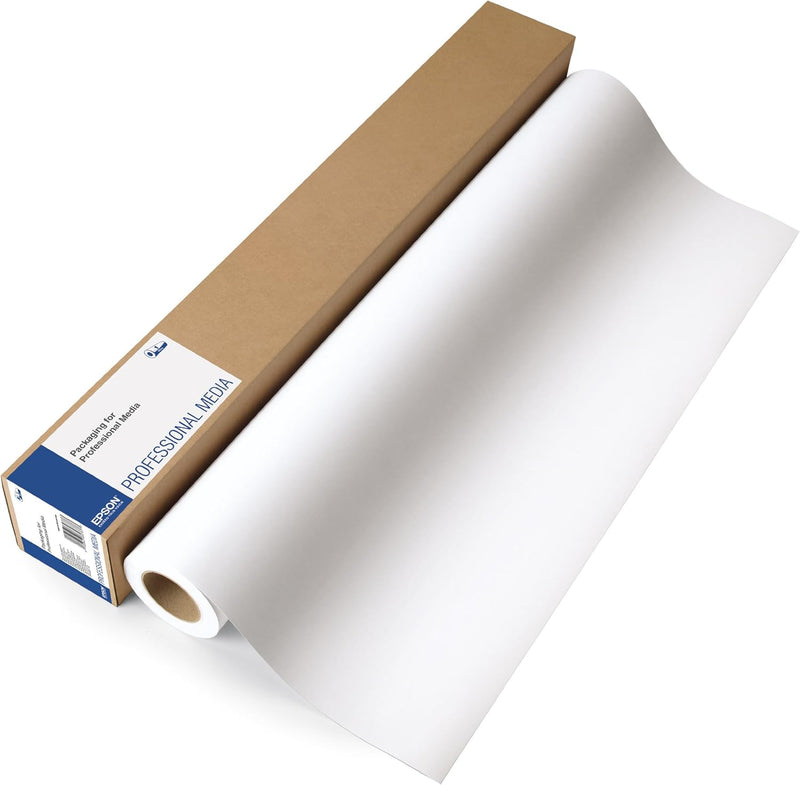
Epson S045080 Standard Proofing Semi Matte Inkjet Paper
At 205 gsm on a 24"×164' semi-matte roll, this paper delivers the color accuracy and consistency that professional proofing workflows demand.
$246.00*
View on Amazon
✓ In Stock on Amazon.com
*Price sourced from Amazon.com. Last updated:Aug 28, 2026.Price and availability are subject to change — details.
Affiliate Disclosure: As an Amazon Associate, Studio Supplies earns from qualifying purchases made through links on this page, at no additional cost to you. This helps support our editorial team.
Notice a mistake? Let Us Know
Overview
Key Features
New
EPSON - LARGE FORMAT S045080
EPSON S045080 24INX164FT ROLL STANDARD PROOFING PAPER
Specifications
Model
Epson S045080
Paper Size
24" x 164' Roll
Paper Weight
205 gsm
Paper Finish
Semi-Matte
Material Features
Biodegradable
Compatible Systems
Epson large format inkjet printers
Frequently Asked Questions
What does "standard proofing" paper mean, and when would I use this instead of a glossy media?
Standard proofing papers are calibrated to simulate the appearance of offset press output — the semi-matte surface closely mimics the dot gain and color saturation characteristics of commercial printing stock. Use this when producing contract proofs, client approvals, or press-matching output where the goal is predictable color fidelity rather than photographic gloss. Glossy photo media is optimized for maximum Dmax and visual impact; proofing media is optimized for accuracy.
Is this paper compatible with non-Epson large format printers?
The S045080 is engineered for Epson's pigment and dye inkjet systems and includes ICC profiles tuned to Epson RIPs and print drivers. It will physically feed through other manufacturers' large format printers, but color accuracy will vary depending on available ICC profile support. For Epson-to-press color matching workflows, Epson-native profiles on Epson hardware give the most predictable results.
What does 205 gsm mean for handling and output quality?
At 205 gsm, this is a medium-weight roll stock — heavier than lightweight proofing papers (around 130–160 gsm) but not as rigid as fine art media. The added weight contributes to dimensional stability under ink, reducing cockling on heavy ink coverage areas. It's heavy enough to handle and present to clients without feeling insubstantial, while still rolling and cutting efficiently from a 164' roll.
How much usable media does a 164-foot roll provide?
At 24" wide, a 164-foot roll gives you approximately 1,968 square feet of media — enough for a high-volume production run or extended proofing workflow without frequent roll changes. For a standard A1-equivalent proof (23.4" × 33.1"), you're looking at roughly 72 proofs per roll before accounting for margins and cutting waste.
Does the biodegradable designation affect shelf life or storage requirements?
Biodegradable materials typically use coatings or bases that break down under environmental exposure — heat, humidity, and UV light are the primary degradation factors. Store rolls sealed in a cool, dry environment away from direct light. Opened rolls should be used within a reasonable timeframe; long-term storage in suboptimal conditions can affect coating integrity and color response.
Related Products


