



EVGA
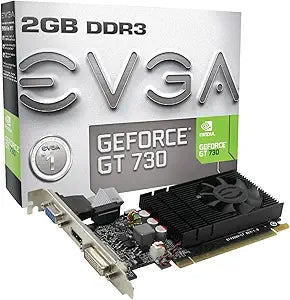
EVGA 02G-P3-2732-KR GeForce GT 730 2GB Low Profile
Low-profile 2GB dedicated GPU with a 128-bit memory bus, built to fit slim desktops that need a step up from integrated graphics.
Check availability
Affiliate Disclosure: As an Amazon Associate, Studio Supplies earns from qualifying purchases made through links on this page, at no additional cost to you. This helps support our editorial team.
Notice a mistake? Let Us Know
Overview
Key Features
EVGA GT 730 - Enjoy all your videos and pictures at HD resolutions, with faster video/photo editing, faster web browsing, and faster gaming performance compared to integrated graphics.
EVGA's 24/7 Technical Support; Base Clock: 700 MHz
Memory Clock: 1400 MHz Effective; CUDA Cores: 96.Memory Detail: 2048MB DDR3; Memory Bit Width 128 Bit / Memory Bandwidth: 22.4 GB/s
Compatible with Windows 10 32/64bit , Windows 8 32/64bit , Windows 7 32/64bit , Windows Vista 32/64bit , Windows XP 32/64bit
Recommended PSU: 300W or greater power supply
Specifications
Brand
EVGA
Model
02G-P3-2732-KR
GPU
GeForce GT 730
Form Factor
Low Profile
Base Clock
700 MHz
Memory
2048MB DDR3
Memory Clock
1400 MHz Effective
Memory Bus Width
128-bit
Memory Bandwidth
22.4 GB/s
CUDA Cores
96
Recommended PSU
300W or greater
Compatible OS
Windows 10, 8, 7, Vista, XP (32/64-bit)
Frequently Asked Questions
What makes this card different from the other EVGA GT 730 variant (02G-P3-1733-KR)?
This low-profile model runs at a lower 700 MHz base clock with 96 CUDA cores but has a wider 128-bit memory bus delivering 22.4 GB/s bandwidth, compared to the standard-profile version's 64-bit bus at 14.4 GB/s. It also includes a low-profile bracket for slim cases.
Will this card fit in a slim or small form factor PC?
Yes. This is specifically a low-profile card designed for slim desktop cases. It includes a low-profile bracket for proper installation in compact systems.
Does this card need a separate power cable from the PSU?
No. The GT 730 low-profile draws power directly from the PCIe slot. A 300W or greater power supply is recommended.
Can this card handle dual monitors?
The GT 730 supports multiple display outputs for multi-monitor setups, making it a practical choice for basic dual-monitor productivity configurations.
Is this card suitable for video editing or GPU-accelerated tasks?
The 96 CUDA cores and 2GB DDR3 memory can assist with light video editing and basic GPU acceleration, but it is not powerful enough for demanding rendering or professional editing workflows.
Related Products


