
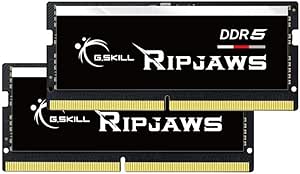


G.Skill F5-5200S3838A16GA2-RS RipJaws 32GB DDR5 SO-DIMM Laptop Memory
DDR5-5200 dual-channel speed in a SO-DIMM form factor — 32GB that transforms laptop memory bandwidth overnight.
*Price sourced from Amazon.com. Last updated:Oct 21, 2026.Price and availability are subject to change — details.
Notice a mistake? Let Us Know
Overview
Key Features
G.SKILL Ripjaws DDR5 SO-DIMM Series DDR5 SO-DIMM Memory Kit, Model: F5-5200S3838A16GA2-RS
32GB total capacity kit containing 2x16GB modules, rated for up to DDR5-5200 CL38-38-38-83 at 1.10V
Non-ECC, DDR5 SO-DIMM, 262-pin, for Laptop/Notebook
Includes JEDEC default profile, and Intel XMP 3.0 memory overclock profile
Do not mix memory kits. Memory kits are sold in matched kits that are designed to run together as a set. Mixing memory kits will result in stability issues or system failure.
Refer to G.SKILL memory QVL or RAM Configurator tool on the G.SKILL website for more details on validated motherboard and hardware.
Usage in any manner inconsistent with manufacturer specifications, warnings, designs, or recommendations will result in lower speeds, system instability, or damage to the system or its components.
Memory kits will boot at JEDEC default SPD speed at default BIOS settings with compatible hardware.
For memory kits with XMP and/or EXPO overclock profile, enable XMP/EXPO/DOCP/A-XMP profile in BIOS to reach up to the rated potential XMP or EXPO overclock speed of the memory kit, subject to the use of compatible hardware. Enabling XMP or EXPO is an act of overclocking and requires BIOS setting adjustments.
Reaching the rated XMP or EXPO overclock speed and system stability will depend on the compatibility and capability of the motherboard and CPU used.
Specifications
Frequently Asked Questions
Related Products


