
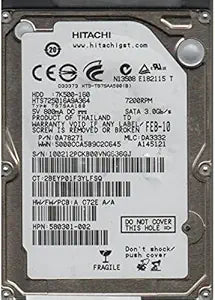

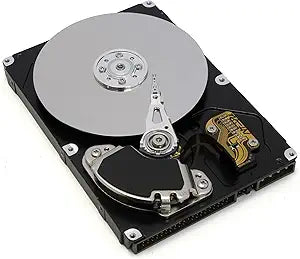
Hitachi
Hitachi 0A35389 Deskstar: 160GB IDE HDD
★★★★★
Reliable Storage for Your Legacy SystemsThe Hitachi Deskstar P7K500 HDP725016GLAT80 is a robust hard drive designed for reliable storage in ATA/IDE compatible systems. With a spindle speed of 7200 RPM and a capacity of 160GB, this hard drive provides ample space for your data and ensures quick ac...
$114.00*
View on Amazon
✓ In Stock on Amazon.com
*Price sourced from Amazon.com. Last updated:Jun 04, 2026.Price and availability are subject to change.
Affiliate Disclosure: Studio Supplies may earn a commission from qualifying purchases made through links on this page, at no additional cost to you. This helps support our editorial team.
Notice a mistake? Let Us Know
Overview
Reliable Storage for Your Legacy Systems
The Hitachi Deskstar P7K500 HDP725016GLAT80 is a robust hard drive designed for reliable storage in ATA/IDE compatible systems. With a spindle speed of 7200 RPM and a capacity of 160GB, this hard drive provides ample space for your data and ensures quick access times.
- Brand: Hitachi
- Model: 0A35389
- Interface: ATA / IDE
- Capacity: 160GB
- Speed: 7200 RPM
Key Features
Hitachi
0A35389
Internal ATA / IDE
7200 RPM
160GB
Specifications
Capacity
160GB
Interface
ATA / IDE
Rotational Speed
7200 RPM
Form Factor
Internal
Brand
Hitachi
Model
0A35389 Deskstar
Similar Products
Other products from the same family that visitors often consider:
Pros & Cons
👍 Pros
- Features a 160GB capacity, offering sufficient storage for operating systems, essential applications, and personal files.
- Utilizes an IDE/ATA interface, making it compatible with a wide range of older computer systems for upgrades or repairs.
- Operates at 7200 RPM, providing faster data access and transfer speeds compared to slower 5400 RPM drives.
- Comes from Hitachi, a reputable brand in hard drive manufacturing, known for its reliability over time.
- Identified by the model 0A35389 Deskstar, allowing for precise compatibility checks and information retrieval.
👎 Cons
- The 160GB capacity is relatively small by modern standards, which may limit its usefulness for extensive data storage.
- Uses an IDE/ATA interface, which is an older technology, meaning it will not be compatible with newer motherboards that primarily use SATA.
- As a traditional HDD, it will be significantly slower than modern Solid State Drives (SSDs) in terms of boot times and application loading.
- Generates more heat and noise compared to SSDs, which might be a consideration for system builders aiming for quiet operation.
- Power consumption will be higher than equivalent SSDs, potentially impacting energy efficiency in older systems.
Frequently Asked Questions
What type of interface does the Hitachi 0A35389 Deskstar 160GB HDD use?
This hard drive uses an Internal ATA / IDE interface, which is common in older computer systems.
What is the storage capacity of this Hitachi hard drive?
The Hitachi 0A35389 Deskstar offers a storage capacity of 160GB.
What is the rotational speed of this hard drive?
This HDD operates at 7200 RPM, providing faster data access compared to drives with lower rotational speeds.
Can this hard drive be used in newer computers?
Generally, newer computers utilize SATA interfaces. This IDE drive would require an IDE-compatible motherboard or an adapter, which is less common in modern builds.
Is this hard drive suitable for a primary operating system drive?
While it can function as an OS drive, its 160GB capacity and IDE interface are more suited for older systems or as a secondary storage drive in compatible setups.
Related Products


