



HP
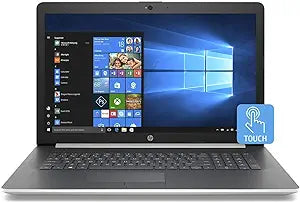
HP 17-ca 17.3" Touchscreen Laptop 20GB RAM 2TB HDD
★★★★★
1600 x 90020GB RAM20GB DDR42TB HDDBluetooth 4.2
Twenty gigabytes of DDR4 RAM and a 2TB HDD in a 17.3-inch touchscreen chassis deliver wide-screen multitasking headroom at a budget price point.
Check availability
Affiliate Disclosure: Studio Supplies may earn a commission from qualifying purchases made through links on this page, at no additional cost to you. This helps support our editorial team.
Notice a mistake? Let Us Know
Overview
Key Features
Powered by latest 7th Generation AMD Core A9-9425 Dual-Core Processor (3.1GHz Speed, turbo boost up to 3.7GHz),
17.3" diagonal HD+ SVA BrightView WLED-backlit touch screen (1600 x 900); AMD Radeon R5 with up to 4334 MB total graphics memory
20GB DDR4-1866 SDRAM Memory for full-power multitasking; 2TB 5400 rpm SATA HDD offers a compact warehouse for storing all your favourite movies, music, photos, and more in one convenient place
802.11b/g/n (1x1) Wi-Fi and Bluetooth 4.2 combo; 2 USB 3.1 Gen 1 (Data transfer only); 1 USB 2.0; 1 HDMI 1.4b; 1 RJ-45; 1 headphone/microphone combo
Windows 10 Home 64-Bit, Battery Life up to 7.25 Hours, Weight: 5.42 lbs, Thin 0.96-Inch, Color: Natural Silver
Specifications
Processor
AMD A9-9425 Dual-Core, 3.1GHz base / 3.7GHz Turbo
Memory
20GB DDR4-1866 SDRAM
Storage
2TB 5400RPM SATA HDD
Display
17.3-inch HD+ SVA BrightView WLED Touchscreen, 1600x900
Graphics
AMD Radeon R5, up to 4334MB total memory
Wi-Fi
802.11b/g/n (1x1)
Bluetooth
4.2
USB
2x USB 3.1 Gen 1, 1x USB 2.0
Video Output
HDMI 1.4b
Operating System
Windows 10 Home 64-bit
Battery Life
Up to 7.25 hours
Weight
5.42 lbs
Thickness
0.96 inches
Pros & Cons
👍 Pros
- 20GB DDR4 provides substantial RAM headroom for keeping many browser tabs and applications open simultaneously, even if single-channel bandwidth limits raw throughput.
- 2TB HDD storage capacity means local media libraries, large project files, and application installations are unlikely to fill the drive in normal use.
- The 17.3-inch touchscreen at HD+ resolution offers a large work surface that suits users who prefer screen size over pixel density.
- AMD Radeon R5 integrated graphics with up to 4334MB total memory (shared) handles HD video playback and casual 2D tasks without supplemental hardware.
- The 7.25-hour rated battery life is competitive for a 17-inch laptop in this class, where large displays typically incur higher power consumption.
👎 Cons
- The A9-9425's asymmetric 20GB RAM configuration forces single-channel memory operation, cutting DDR4-1866 bandwidth from a theoretical ~29.8GB/s (dual-channel) to approximately 14.9GB/s — directly limiting the integrated GPU and CPU performance.
- 5400RPM HDD sequential read speeds of ~100MB/s mean Windows 10 cold boot can exceed 90 seconds; no NVMe or even SATA SSD option is included at this tier.
- 1600x900 resolution on a 17.3-inch panel produces a pixel density of ~106 PPI, which is noticeably soft for text-heavy work compared to 1080p panels in the same size class.
- 802.11n (1x1) Wi-Fi tops out at a theoretical 150Mbps on 2.4GHz only — this antenna configuration will not connect to 5GHz networks and will underperform on congested 2.4GHz channels.
- The AMD A9-9425's Bristol Ridge architecture is a 28nm design from 2016, meaning it is significantly behind current-generation efficiency curves in both performance-per-watt and compute throughput.
Frequently Asked Questions
What processor powers this HP 17-ca, and what does that mean for day-to-day performance?
It runs an AMD A9-9425 dual-core at 3.1GHz base with Turbo up to 3.7GHz. The A9-9425 is a Bristol Ridge APU — a 28nm design that competes with Intel's older Celeron/Pentium tier. It handles office applications, streaming, and light multitasking without issue, but it will struggle with video encoding, modern AAA gaming, or running multiple resource-intensive apps simultaneously.
Why does this laptop have 20GB of RAM when standard configurations are 8GB or 16GB?
The 20GB configuration (typically 4GB soldered + 16GB SO-DIMM, or a non-standard 4GB+16GB pairing) is an unusual allocation. The AMD A9-9425 supports dual-channel DDR4 only when both channels are populated equally — a 20GB asymmetric configuration will run in single-channel mode, cutting effective memory bandwidth roughly in half compared to a matched 16GB dual-channel setup.
What is the real-world storage performance of the 2TB HDD?
At 5400RPM over SATA, expect sequential reads around 80–110MB/s and random 4K read performance of roughly 0.5–1MB/s. Boot times will be measured in minutes, not seconds, and application launch times are proportionally slow. An SSD upgrade would be the single highest-impact performance modification for this machine.
Does the 1600x900 touchscreen support stylus input?
No stylus support is listed for this model. The touch panel is finger-touch only, designed for Windows 10 touch navigation rather than precision input.
What is the display resolution, and is it adequate at 17.3 inches?
The panel runs at 1600x900 (HD+), which at 17.3 inches yields approximately 106 PPI. By comparison, a 1920x1080 panel at the same size delivers 127 PPI. Text and images will appear noticeably softer than a full HD display, which is a meaningful trade-off on a screen this large.
Related Products


