



HP
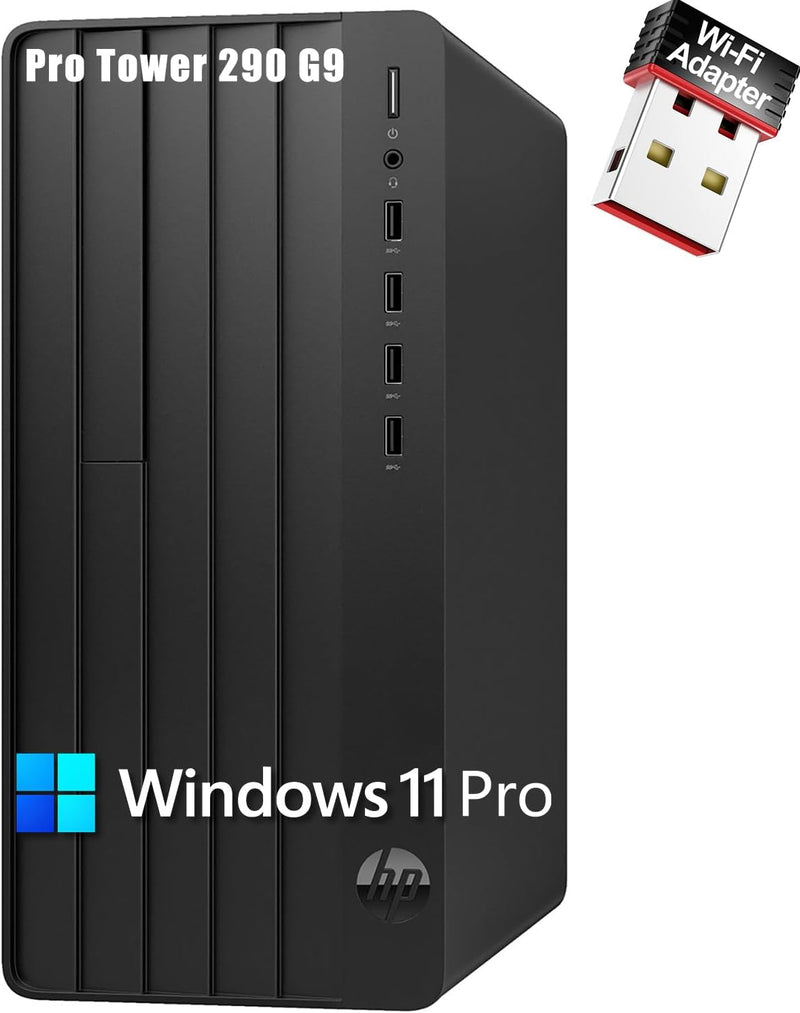
HP 290 G9 Pro Tower Desktop PC Core i3 WiFi
★★★★★
UHDi3-1310032GB DDR4USB 2.0
A 13th-gen Core i3 on a 1TB NVMe SSD delivers responsive Windows 11 business performance without the enterprise price tag.
$519.00*
Check availability
*Price sourced from Amazon.com. Last updated:Jun 07, 2026.Price and availability are subject to change.
Affiliate Disclosure: Studio Supplies may earn a commission from qualifying purchases made through links on this page, at no additional cost to you. This helps support our editorial team.
Notice a mistake? Let Us Know
Overview
Key Features
Powered by a 13th Generation Intel Core i3-13100 (4 Cores, 8 Threads, 12MB Intel Smart Cache, 5 MB L2 Cache, Base Frequency at 3.4GHz, Up to 4.5GHz at Max Turbo Frequency) Processor, delivering unparalleled speed and efficiency for heavy workloads, multitasking, and professional applications.
RAM: 32GB DDR4 SDRAM; Hard Drive: 1TB PCIe SSD; Optical Drive: No.
Graphics: Intel UHD Graphics 730 with shared graphics memory
【Note: No W-i-F-i】 Wireless USB WiFi Adapter for PC; Front Port: 4 USB Type-A 5Gbps signaling rate; 1 headphone/microphone combo. Rear Port: 4 USB 2.0 Type-A; 1 HDMI; 1 RJ-45; 1 VGA; 1 power connector; 1 line in; 1 line out.
OS: Windows 11 Home English 64bit, giving you additional benefits suitable for professional users. Wired Keyboard and Mouse. Designed for aesthetics and durability, they'll not only keep your workspace tidy but also provide comfort and convenience for work and entertainment. This perfect combination of accessories promises to revolutionize your computing experience, leaving you captivated and utterly satisfied!
Specifications
Processor
Intel Core i3-13100, 4 Cores / 8 Threads, 3.4GHz Base / 4.5GHz Turbo
Cache
12MB Intel Smart Cache, 5MB L2 Cache
Chipset
Intel H670
RAM
32GB DDR4 SDRAM
Storage
1TB PCIe NVMe SSD
Graphics
Intel UHD Graphics 730 (shared memory)
Operating System
Windows 11 Home 64-bit
Front Ports
4x USB Type-A 5Gbps, 1x headphone/mic combo
Rear Ports
4x USB 2.0 Type-A, 1x HDMI, 1x VGA, 1x RJ-45, 1x line-in, 1x line-out
Wireless
USB Wi-Fi adapter (included)
Power Supply
180W external adapter, up to 90% efficiency
Dimensions
11.92 x 6.10 x 13.27 inches
Weight
Starting at 10.5 lbs
Security
TPM 2.0, padlock loop, cable lock slot
Pros & Cons
👍 Pros
- The 13th-gen Core i3-13100 boosts to 4.5GHz under turbo load, outperforming 12th-gen i3 equivalents by a meaningful margin on single-threaded office and business tasks.
- 32GB of DDR4 RAM is unusually generous for an i3-class machine — it eliminates RAM as a bottleneck for heavy browser-based workloads, multiple open Office apps, and light data processing.
- A 1TB PCIe NVMe SSD delivers dramatically faster OS and application load times compared to SATA-based competitors at the same price tier.
- Four front-facing USB 3.2 Gen 1 Type-A ports (5Gbps) provide fast-access connectivity for peripherals without routing cables to the rear.
- The 180W 90%-efficient external power adapter is notably compact and efficient for a desktop, reducing heat load in rack or cabinet deployments.
👎 Cons
- Wi-Fi is delivered via a USB adapter rather than integrated wireless — a less reliable and port-consuming solution compared to a built-in M.2 Wi-Fi card standard on most competing business desktops.
- The Intel UHD Graphics 730 is integrated graphics with shared memory — any workload beyond dual-display productivity (video encoding, 3D rendering, CAD) will require a discrete GPU, which may require verifying chassis PCIe slot availability.
- Rear connectivity is limited to USB 2.0 Type-A ports — users connecting high-speed external storage or peripherals to the rear will hit a 480Mbps ceiling.
- The i3-13100 has no overclocking headroom and a modest boost core count — it will saturate under parallel compute tasks like video transcoding or large spreadsheet recalculation faster than i5 or Ryzen 5 alternatives.
Frequently Asked Questions
Is Wi-Fi built into the HP 290 G9, or does it require an adapter?
Wi-Fi is not natively integrated into the motherboard. The listing includes a wireless USB WiFi adapter to provide wireless connectivity, which plugs into one of the USB Type-A ports. This approach works, but it sacrifices a port and is less elegant than an M.2 or PCIe Wi-Fi card.
What bottleneck does the 1TB PCIe SSD solve compared to older business desktop configurations?
The PCIe NVMe SSD replaces the SATA SSDs and spinning HDDs that defined the previous generation of budget business desktops. SATA tops out around 550MB/s; PCIe NVMe drives in this tier typically deliver 2,000–3,500MB/s sequential read speeds. Boot times, application launch, and large file operations are dramatically faster — this is the single largest real-world performance upgrade over entry-level business machines from even two years ago.
Does the Intel UHD Graphics 730 support dual-monitor output?
Yes — the rear panel includes both HDMI and VGA outputs, enabling a two-display configuration. The UHD 730 supports up to three displays in total via the integrated graphics pipeline, but driving high-resolution or high-refresh-rate displays beyond basic productivity use will expose the limits of integrated graphics quickly.
How much RAM can the HP 290 G9 support, and is it user-upgradeable?
The unit ships with 32GB DDR4 SDRAM. The HP 290 G9 platform is designed around the Intel H670 chipset, which supports DDR4 in a standard DIMM configuration — slots are accessible and user-upgradeable, though total maximum capacity and slot count should be confirmed against HP's official spec sheet for this model.
Is this machine suitable for virtualization or running multiple concurrent applications?
The i3-13100's 4 cores and 8 threads give it meaningful multithreading capability for an entry-level processor, and 32GB of DDR4 RAM is substantial for this tier. Light virtualization workloads (a single Windows or Linux VM running alongside the host OS) are feasible, though sustained compute-heavy VM workloads will saturate the i3's limits faster than a Core i5 or i7 configuration.
Related Products


