

HP
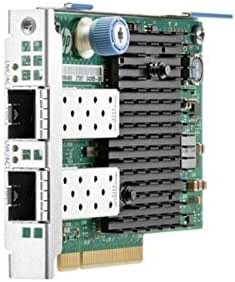
HP 727054-B21 Ethernet 10Gb 2-Port Adapter
Two SFP+ ports at 10GbE over a PCIe 3.0 x8 interface — the adapter that eliminates the bandwidth bottleneck between your server and the rest of your network.
$44.00*
View on Amazon
✓ In Stock on Amazon.com
*Price sourced from Amazon.com. Last updated:Aug 30, 2026.Price and availability are subject to change — details.
Affiliate Disclosure: As an Amazon Associate, Studio Supplies earns from qualifying purchases made through links on this page, at no additional cost to you. This helps support our editorial team.
Notice a mistake? Let Us Know
Overview
Key Features
Hp Ethernet 10gb 2-port 562flr-sfp+ Adapter - Pci Express 3.0 X8 - 2 Port(s) - Optical Fiber
Specifications
Brand
HP / HPE
Model
727054-B21
Interface
PCI Express 3.0 x8
Ports
2
Port Type
SFP+
Speed per Port
10 Gbps
Media Type
Optical Fiber (SFP+ transceiver-based)
Aggregate Throughput
20 Gbps (dual port)
Frequently Asked Questions
What PCIe slot does this adapter require, and will it work in an x16 slot?
It requires a PCIe 3.0 x8 slot and is physically compatible with larger x16 slots — PCIe is backward and forward compatible by slot size. However, for rated 10GbE throughput on both ports simultaneously, the x8 interface provides sufficient bandwidth; an x4 or x1 slot would bottleneck the adapter.
What type of cabling does this adapter use, and what transceivers are compatible?
The 727054-B21 uses SFP+ cage interfaces — it does not have built-in RJ45 ports. Connectivity depends on SFP+ transceivers: 10GBASE-SR for multimode fiber, 10GBASE-LR for single-mode fiber, or Direct Attach Copper (DAC) cables for short rack-to-rack runs. Transceivers are not included.
Is this adapter compatible with non-HPE servers, or is it locked to HPE firmware environments?
The 727054-B21 is an HPE OEM card, meaning HPE servers may display health warnings in iLO if non-certified adapters are used. Conversely, this card is optimized for HPE ProLiant environments and may have limited driver support or feature access in non-HPE server platforms. Verify compatibility before deployment in third-party hardware.
What is the maximum throughput this adapter delivers across both ports simultaneously?
Each port operates at 10Gbps full-duplex, delivering up to 20Gbps aggregate bidirectional throughput across both ports. The PCIe 3.0 x8 interface provides approximately 64 Gbps of theoretical bandwidth — well above what the dual 10GbE ports require, meaning PCIe is not the limiting factor.
What use cases does dual 10GbE actually solve versus a single 10GbE port?
The second port enables either NIC teaming (bonding both ports for up to 20Gbps to a single destination with failover) or connecting the server to two separate network segments simultaneously — production and management, or storage fabric and client network. For database servers, NAS appliances, or virtualization hosts with multiple VLANs, dual-port cards eliminate the need for a second adapter.
Related Products


