

HP
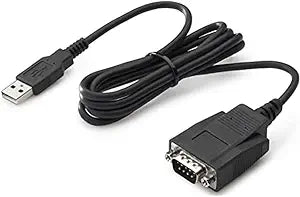
HP 943CC4U USB to Serial Port Adapter
★★★★★
USB 3.0
The HP 943CC4U adds a DB-9 RS-232 serial port to any USB 3.0 Type-A host in 3.94 feet — straightforward legacy serial connectivity without expansion cards or driver hunting on supported systems.
$39.22*
View on Amazon
✓ In Stock on Amazon.com
*Price sourced from Amazon.com. Last updated:Jul 16, 2026.Price and availability are subject to change.
Affiliate Disclosure: Studio Supplies may earn a commission from qualifying purchases made through links on this page, at no additional cost to you. This helps support our editorial team.
Notice a mistake? Let Us Know
Overview
Key Features
Cable Type: Serial/USB
Cable Length: 3.94 ft
Connector Type on First End: USB 3.0 Type A - Male
Connector on First End Details: 1 x USB 3.0 Type A - Male
Connector Type on Second End: DB-9 RS-232 Serial - Female
Specifications
Cable Type
Serial/USB
Cable Length
3.94 ft
First End Connector Type
USB 3.0 Type A - Male
Second End Connector Type
DB-9 RS-232 Serial - Female
Pros & Cons
👍 Pros
- USB 3.0 Type-A host connector ensures compatibility with all modern desktop and laptop USB ports, including backward-compatible operation on USB 2.0 and USB 1.1 hosts
- DB-9 RS-232 female connector addresses the overwhelming majority of legacy serial devices — industrial controllers, lab instruments, POS hardware, and networking console connections — without additional adapters
- 3.94-foot fixed cable length is adequate for desk and workbench deployments without the excess slack that adds cable management overhead
- HP branding provides manufacturer accountability and quality baseline in an accessory category dominated by unbranded commodity hardware with inconsistent chipset quality
- Fixed-cable form factor with molded strain relief at both connector ends reduces wear at the termination points under repeated daily connect/disconnect cycles
👎 Cons
- No published chipset identification from HP, making driver compatibility research on macOS, Linux, and older Windows versions impossible without purchasing and physically inspecting the unit
- 3.94 feet is insufficient for rack-mounted configurations where the host system is more than a meter from the connected serial device without adding a USB extension
- The DB-9 female connector requires a male DB-9 pin on the target device — a gender mismatch requires an additional DB-9 gender changer adapter not included with the unit
- As a bus-powered passive adapter, the 943CC4U cannot supply the full ±12V RS-232 signaling that some industrial serial devices require — it produces reduced-level RS-232 typical of USB adapters, which most devices accept but some legacy industrial hardware may not
- No LED activity indicators on the cable to confirm signal transmission — basic TX/RX troubleshooting requires a software COM port monitor rather than visual inspection of the adapter itself
Frequently Asked Questions
What serial standard does the DB-9 connector on the HP 943CC4U implement?
The DB-9 female connector implements RS-232 serial communication — the protocol used by the vast majority of legacy serial devices including industrial controllers, POS terminals, networking equipment console ports, GPS receivers, and scientific instruments. RS-232 over DB-9 is the standard the HP 943CC4U is built to address.
Does the USB 3.0 Type-A host connector provide any throughput advantage over USB 2.0 for serial communication?
No. RS-232 serial operates at speeds up to 115,200 bps in standard configurations — a fraction of USB 2.0's 480 Mbps ceiling. The USB 3.0 host connector provides compatibility with USB 3.0 ports on modern systems, but delivers zero throughput benefit for RS-232 data rates. The bottleneck is always the serial protocol, not the USB bus.
Will the HP 943CC4U work on macOS and Linux, or only Windows?
USB-to-serial adapters depend on a chipset-level driver to create the virtual COM port the OS addresses. Driver availability for the internal chipset varies by OS. Windows systems with current USB drivers may enumerate it automatically; macOS and Linux compatibility depends on the specific chipset inside the HP 943CC4U, which HP does not publish. Verify OS support before purchasing for non-Windows deployments.
Can this adapter be used to access a Cisco or similar network device console port?
The adapter handles the USB-to-RS-232 signal conversion. Accessing a Cisco console port (which uses an RJ-45 physical connector) additionally requires an RJ-45 to DB-9 rollover cable between the adapter's DB-9 female end and the device's console port. The adapter itself does not include this cable.
Is 3.94 feet long enough for typical rack or bench deployments?
For desk and workbench configurations where the host computer sits within arm's reach of the serial device, 3.94 feet (approximately 1.2 meters) is adequate. For rack-mounted environments where the host computer is in a separate rack unit at distance, a USB extension cable or a longer USB-to-serial adapter will be required.
Related Products


