



HP
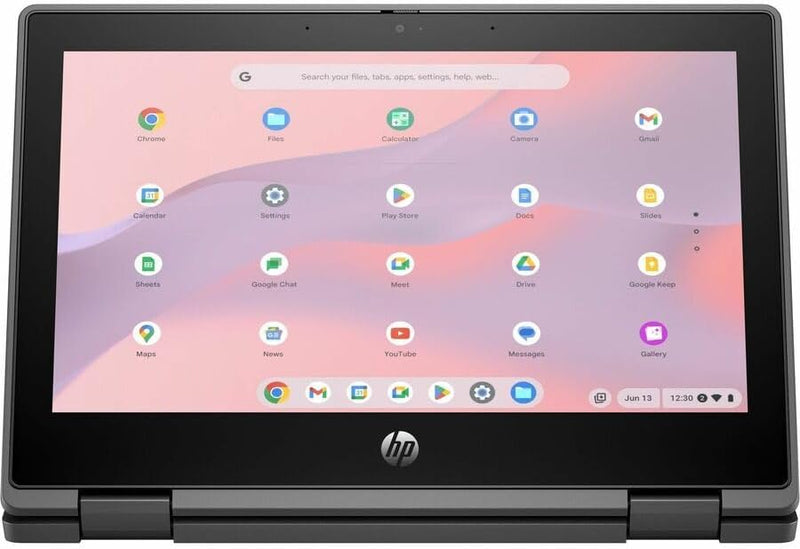
HP A12VHUT#ABA Pro x360 Fortis Chromebook Touchscreen
Intel N100 quad-core efficiency and Wi-Fi 6E connectivity in a military-grade ruggedized 2-in-1 Chromebook built for full-day student deployment.
$461.87*
Check availability
*Price sourced from Amazon.com. Last updated:Jun 04, 2026.Price and availability are subject to change.
Affiliate Disclosure: Studio Supplies may earn a commission from qualifying purchases made through links on this page, at no additional cost to you. This helps support our editorial team.
Notice a mistake? Let Us Know
Overview
Key Features
Processor Manufacturer: Intel
Processor Type: N-Series
Processor Model: N100
Processor Core: Quad-core (4 Core)
Processor Speed: 800 MHz
Specifications
Processor Manufacturer
Intel
Processor Type
N-Series
Processor Model
N100
Processor Core
Quad-core (4 Core)
Processor Speed
800 MHz
Pros & Cons
👍 Pros
- MIL-STD-810H ruggedization enables deployment in K-12 and field environments where consumer-grade laptops would not survive daily transport and handling abuse.
- 8GB LPDDR5X RAM provides sufficient headroom for Chrome OS multitasking with multiple browser tabs, Android apps, and web-based classroom platforms running concurrently.
- Wi-Fi 6E connectivity future-proofs wireless performance in schools and organizations deploying 6GHz infrastructure, while maintaining full backward compatibility.
- 360-degree hinge with active touchscreen enables flexible classroom configurations — tablet mode for digital annotation, tent mode for shared viewing — without mode-switching friction.
- 64GB onboard flash storage is adequate for Chrome OS, which offloads storage demands to cloud services by design, keeping the cost-per-unit competitive for volume education deployment.
👎 Cons
- 11.6-inch 1366x768 (HD) display resolution is below the 1080p standard increasingly expected on premium education devices, resulting in a less sharp image than FHD-equipped competitors.
- 64GB onboard storage becomes a meaningful constraint if Linux (Crostini) is enabled or if Android app data accumulates — there is no user-expandable storage path mentioned for this configuration.
- Intel N100's efficiency-core architecture, while power-efficient, delivers noticeably lower peak processing performance compared to U-series or P-series Intel processors in compute-intensive tasks.
- 700:1 contrast ratio on the IPS panel — while typical for this display tier — renders deep blacks as gray in standard room lighting, which affects readability of dark-themed applications.
- 8ms response time is adequate for productivity but reflects a panel optimized for cost and power efficiency, not visual performance; motion clarity during video playback shows visible blur on fast movement.
Frequently Asked Questions
What does the 360-degree hinge on the HP Pro x360 Fortis enable, and what form factors does it support?
The 360-degree hinge allows the Fortis to operate in four configurations: clamshell laptop mode, tent mode (inverted V for presentations), stand mode (display-forward), and tablet mode (fully folded flat). The 11.6-inch touchscreen remains active in all four orientations, enabling stylus use and touch input in tablet and tent modes without mode-switching in Chrome OS.
What does "Fortis" mean for this Chromebook's durability, and what abuse can it withstand?
The Fortis designation indicates MIL-STD-810H testing compliance, which subjects devices to drop, vibration, humidity, and temperature stress tests. The chassis is designed to survive drops to hard surfaces from operational heights. This makes it purpose-built for K-12 education environments where devices are transported in backpacks, dropped, and used in conditions that would damage consumer-grade hardware.
What does Wi-Fi 6E support mean for this device, and does it require a Wi-Fi 6E router to benefit?
Wi-Fi 6E extends Wi-Fi 6 capabilities into the 6GHz band, offering lower congestion and higher throughput potential where 6GHz infrastructure is deployed. The Fortis will function on Wi-Fi 5 and Wi-Fi 6 (2.4GHz/5GHz) networks at the appropriate speeds for those standards — Wi-Fi 6E is backward-compatible. The 6GHz band benefit is only realized when connected to a Wi-Fi 6E access point.
How does the Intel N100 processor's 800MHz listed speed relate to real-world performance?
The 800MHz figure represents the base clock — the N100's all-core boost reaches 3.4GHz under sustained load, which is the operationally relevant speed for Chrome OS workloads. Intel's N-series efficiency core architecture is optimized for light multitasking and web-based applications. Don't judge this CPU by its base clock; sustained boost performance in Chrome OS tasks is significantly higher and appropriate for the device's educational use case.
Does the Fortis support Android apps, and can it run Linux applications?
Chrome OS on the HP Pro x360 Fortis supports Android app installation via the Google Play Store natively. Linux (Crostini) environment availability depends on Chrome OS version and device management policy — in enterprise or education MDM deployments, Linux may be disabled by the administrator. Android apps run well given the 8GB LPDDR5X RAM allocation on this configuration.
Related Products


