



HP
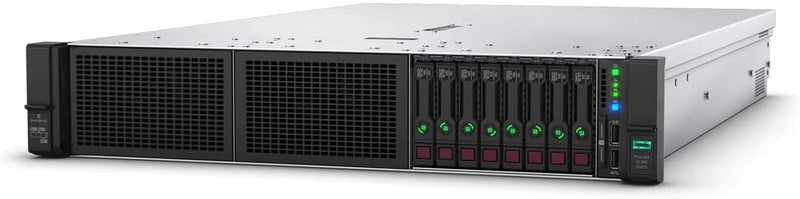
HP DL380 G10 Virtualization Server 512GB RAM Renewed
★★★★★
512GB RAM512GB DDR4500W
A 32-core, 512GB RAM renewed rack server delivering enterprise-grade virtualization density with 8TB of all-SSD storage
View price on Amazon
Affiliate Disclosure: Studio Supplies may earn a commission from qualifying purchases made through links on this page, at no additional cost to you. This helps support our editorial team.
Notice a mistake? Let Us Know
Overview
High-Performance Virtualization Server for Demanding Environments
The HP ProLiant DL380 G10 is a renewed, high-end virtualization server designed to deliver exceptional performance and reliability. Equipped with dual processors, extensive memory, and ample storage, this server is ready to tackle your most demanding workloads.
- Processors: 2x Gold 6130 2.1GHz 16-Core CPUs (32 Cores Total)
- Memory: 512GB DDR4 RAM
- Storage: 8x 1TB SATA III 2.5" SSDs (8TB Total)
- RAID Controller: Smart Array S100i SR
- Network: 2x 10GbE NIC
- Power Supplies: 2x 500W PSU
- Operating System: Windows Server 2019 Standard Evaluation
Key Features
HP Proliant DL380 G10 8-Bay SFF Server | 2x Gold 6130 2.1GHz 16-Core CPU (32-Cores Total)
512GB DDR4 RAM | 8x 1TB SATA III 2.5" SSD
Smart Array S100i SR | 2x10GbE NIC
2x 500W PSU | Windows Server 2019 Standard Evaluation
Pros & Cons
👍 Pros
- Dual Xeon Gold 6130 processors deliver 32 physical cores and 64 threads, providing substantial compute headroom for dense virtualization workloads
- 512GB DDR4 RAM eliminates memory as the primary bottleneck for VM density, supporting dozens of concurrent virtual machines
- 8TB total SSD storage across eight 1TB SATA drives enables flexible RAID configurations with meaningful capacity and faster I/O than spinning disks
- Dual 10GbE networking provides the bandwidth required for live VM migration, storage traffic, and high-throughput multi-tenant network loads
- Redundant 500W power supplies ensure continued operation during a single PSU failure, a critical reliability feature for always-on server workloads
👎 Cons
- The S100i SR is a software RAID controller that offloads parity calculations to the CPU, reducing performance compared to a dedicated hardware RAID card under heavy RAID 5/6 workloads
- SATA SSDs in the drive bays cap storage I/O well below what NVMe drives could deliver, creating a potential bottleneck for I/O-intensive VM workloads
- Renewed status means unknown prior usage hours on CPUs, memory, and drives — SSD write endurance and thermal compound degradation are specific concerns
- Dual 500W PSUs are modest for a fully loaded dual-socket server; under peak CPU and storage load, power headroom may be tighter than with higher-wattage supplies
- Windows Server 2019 Standard Evaluation is a time-limited license that will require replacement with a production license for sustained deployment
Frequently Asked Questions
How many virtual machines can this server realistically support with 512GB of RAM?
With 512GB DDR4 RAM, you can comfortably run 25-50 virtual machines depending on memory allocation per VM. A typical Windows Server VM at 8GB RAM yields roughly 60 VMs at the memory level, though CPU and storage I/O will become the practical constraint before memory in most workloads.
What hypervisors are compatible with this hardware configuration?
The DL380 G10 platform is certified for VMware ESXi, Microsoft Hyper-V, and most Linux-based hypervisors including Proxmox and KVM. The included Windows Server 2019 Standard Evaluation supports Hyper-V out of the box, though the evaluation license is time-limited and will require a full license for production use.
Does the S100i RAID controller support hardware RAID for the SSDs?
The Smart Array S100i SR is a software-based RAID controller, not a full hardware RAID card. It supports RAID 0, 1, 5, and 10 but relies on the host CPU for parity calculations. For heavy RAID 5/6 workloads, a dedicated hardware RAID controller like the P408i would be a meaningful upgrade.
What is the dual 10GbE NIC capable of in terms of network throughput?
The two 10GbE ports provide 20Gbps of aggregate network bandwidth, which is essential for virtualization workloads where multiple VMs generate concurrent network traffic. This eliminates the 1GbE bottleneck that constrains VM density on lower-spec servers, particularly for storage traffic and live migration.
What are the risks of buying a renewed server versus new?
Renewed servers carry inherent uncertainty around component wear — particularly drive endurance on the SSDs and thermal paste degradation on the CPUs. This unit includes 8x 1TB SATA SSDs whose prior write endurance consumption is unknown. Verify warranty terms carefully, and consider running extended stress tests upon receipt to identify any marginal components early.
Related Products


