



HP
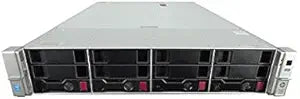
HP DL380G9-P240-2699V4-256GB-16TB-0R-0B Xeon Server 16TB Renewed
256GB DDR4
Dual 22-core Xeon E5-2699 V4 processors and 256GB DDR4 deliver 44 threads of server muscle for compute-intensive workloads.
View price on Amazon
Affiliate Disclosure: As an Amazon Associate, Studio Supplies earns from qualifying purchases made through links on this page, at no additional cost to you. This helps support our editorial team.
Notice a mistake? Let Us Know
Overview
Power and Performance: HP DL380 G9 4-Bay 3.5 Server
The HP DL380 G9 4-Bay 3.5 Server delivers exceptional performance and storage capacity in a reliable, renewed package. Featuring dual Intel Xeon E5-2699 V4 22-Core processors, 256GB of DDR4 REG RAM, and 16TB of storage across four 4TB SAS drives, this server is built for demanding applications. The HPE Smart Array P240 ensures high-speed data access. Comes with dual power supplies for redundancy.
- System: HP DL380 G9 4-Bay 3.5 Server
- Processors: 2x Intel Xeon E5-2699 V4 22-Core 2.2Ghz
- Memory: 256GB DDR4 REG RAM
- Controller: HPE Smart Array P240 12Gb/s
- Hard Drives: 16TB (4x 4TB SAS 12Gb/s 3.5")
- Power Supplies: Dual PSU
- Warranty: 90 Days Hardware Warranty
- Renewed: Yes
Key Features
HP DL380 G9 4-Bay 3.5 Server
2x Intel Xeon E5-2699 V4 22-Core 2.2Ghz
256GB DDR4 REG RAM
HPE Smart Array P240 12Gb/s
16TB (4x 4TB SAS 12Gb/s 3.5")
Frequently Asked Questions
What makes the dual E5-2699 V4 configuration significant?
Two Xeon E5-2699 V4 processors give you 44 physical cores and 88 threads total. At 2.2GHz base and 3.6GHz turbo, this configuration handles massively parallel workloads — large database queries, virtualization with many concurrent VMs, or rendering and transcoding jobs — with headroom to spare.
What does the HPE Smart Array P240 controller support?
The P240ar is a 12Gb/s SAS controller that supports RAID 0, 1, 5, 6, 10, 50, and 60. At 12Gb/s, it removes the SAS bus as a bottleneck for the 4TB SAS drives installed, particularly under sequential read workloads.
Is 16TB of SAS storage expandable on this unit?
The DL380 G9 in a 4-bay 3.5" configuration ships with four populated bays. If the chassis has additional unpopulated bays or supports a drive cage expansion, capacity can be added — but verify the specific chassis configuration before planning storage expansion.
What does the 90-day hardware warranty cover on a renewed unit?
The 90-day warranty covers hardware defects identified after purchase. It does not replace an active HPE support contract for production environments — organizations with uptime SLAs should factor in extended warranty or support options.
Is 256GB DDR4 sufficient for heavy virtualization?
For most mid-scale virtualization deployments, yes. 256GB supports dozens of typical VMs comfortably. The DL380 G9 supports up to 3TB of DDR4 RAM, so there is extensive headroom to scale memory as VM density increases.
Related Products


