



HP
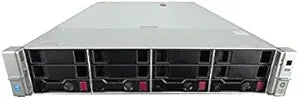
HP DL380G9-P840-2670V3-256GB-24TB-0R-0B DL380 G9 Server E5-2670 V3
256GB DDR4
24 cores of Haswell-EP compute and 256GB of DDR4 ECC RAM make this DL380 G9 a capable workhorse for virtualization and storage-heavy workloads at a fraction of new-server cost.
View price on Amazon
Affiliate Disclosure: As an Amazon Associate, Studio Supplies earns from qualifying purchases made through links on this page, at no additional cost to you. This helps support our editorial team.
Notice a mistake? Let Us Know
Overview
High-Performance Computing: HP DL380 G9 Server
The HP DL380 G9 4-Bay 3.5" Server delivers exceptional performance and scalability for demanding workloads. Featuring dual Intel Xeon E5-2670 V3 processors, ample DDR4 memory, and a high-speed HPE Smart Array controller, this renewed server is designed for reliability and efficiency in any data center environment. Comes with a large storage capacity using SAS drives.
Detailed Specifications:
- Processors: 2 x Intel Xeon E5-2670 V3 12-Core 2.3Ghz
- Memory: 256GB DDR4 REG RAM
- Storage: 24TB (4 x 6TB SAS 12Gb/s 3.5")
- RAID Controller: HPE Smart Array P840 12Gb/s
- Power Supply: Dual PSU
- Form Factor: 4-Bay 3.5"
Key Features
HP DL380 G9 4-Bay 3.5 Server
2x Intel Xeon E5-2670 V3 12-Core 2.3Ghz
256GB DDR4 REG RAM
HPE Smart Array P840 12Gb/s
24TB (4x 6TB SAS 12Gb/s 3.5")
Frequently Asked Questions
What RAID levels does the HPE Smart Array P840 controller support?
The P840 supports RAID 0, 1, 5, 6, 10, 50, and 60. It connects via 12Gb/s SAS, which doubles the throughput ceiling of previous 6Gb/s controllers — meaningful when running multiple large SAS drives simultaneously.
Can the 256GB DDR4 RAM be expanded further?
The DL380 G9 supports up to 768GB of DDR4 LRDIMM across 24 DIMM slots. The current 256GB configuration uses a portion of that capacity, so expansion is possible by adding or replacing modules — but confirm DIMM type and speed compatibility before purchasing additional memory.
Is this server rack-mountable?
Yes. The DL380 G9 is a 2U rack server. Standard 19-inch rack rails are required; HPE rail kits (sold separately) are needed if not included with the unit.
What is the real-world throughput of the 12Gb/s SAS drives in this configuration?
Each 6TB SAS 12Gb/s 3.5-inch drive delivers sustained sequential read/write in the 200–250 MB/s range. With four drives and the P840 in RAID 5, you get approximately 18TB usable capacity with combined read throughput that can saturate a single 10GbE network link.
Does this server include operating system licenses?
No OS is listed in the configuration. Plan to install Windows Server, VMware ESXi, or a Linux distribution separately. The dual-processor configuration qualifies for enterprise OS licensing tiers.
Related Products


