

HP
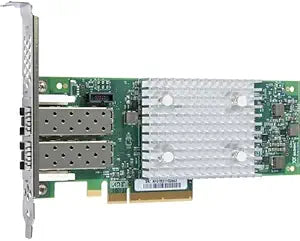
HP P9D94A-2 SN1100Q 16Gb 2p FC HBA
★★★★★
Boost Storage Connectivity with the HP SN1100Q 16Gb FC HBA Enhance your server's storage connectivity with the HP SN1100Q 16Gb 2p FC HBA. This host bus adapter provides high-speed Fibre Channel connectivity for demanding storage environments. Specifications: Model: SN1100Q Connectivity: 1...
$190.12*
View on Amazon
✓ In Stock on Amazon.com
*Price sourced from Amazon.com. Last updated:Jun 04, 2026.Price and availability are subject to change.
Affiliate Disclosure: Studio Supplies may earn a commission from qualifying purchases made through links on this page, at no additional cost to you. This helps support our editorial team.
Notice a mistake? Let Us Know
Overview
Boost Storage Connectivity with the HP SN1100Q 16Gb FC HBA
Enhance your server's storage connectivity with the HP SN1100Q 16Gb 2p FC HBA. This host bus adapter provides high-speed Fibre Channel connectivity for demanding storage environments.
Specifications:
- Model: SN1100Q
- Connectivity: 16Gb 2p FC HBA
- Compatibility: Proliant Gen9 Proliant DL Series: DL360 (G10) DL380 (G10) DL385 (G10) DL560 (G10) DL580 (G10)
Key Features
Total Number of Fibre Channel Ports: 2
Number of LC Ports: 2
Host Interface: PCI Express 3.0
Fiber Mode Supported: Multi-mode
Data Transfer Rate: 16 Gbit/s
Specifications
Model
SN1100Q
Fibre Channel Ports
2
LC Ports
2
Host Interface
PCI Express 3.0
Fiber Mode Supported
Multi-mode
Data Transfer Rate
16 Gbit/s
Pros & Cons
👍 Pros
- Features two Fibre Channel ports, allowing for robust and redundant connections in storage area networks (SANs).
- Supports 16 Gbit/s data transfer rates, enabling high-speed data flow for demanding enterprise applications.
- Equipped with two LC ports, ensuring compatibility with standard fiber optic cabling for reliable connections.
- Utilizes a PCI Express 3.0 host interface, providing a high-bandwidth connection to the server for optimal performance.
- Supports multi-mode fiber, which is commonly used for short to medium-distance connections in data centers.
👎 Cons
- The 16 Gbit/s data transfer rate, while fast, is not the absolute fastest available, as some newer HBAs support 32 Gbit/s Fibre Channel.
- Designed specifically for Fibre Channel, meaning it cannot be used for Ethernet-based network storage without additional adapters.
- Requires a PCI Express 3.0 slot on the host server, which may not be available on older server hardware.
- Supports only multi-mode fiber, which limits its use cases compared to HBAs that also support single-mode fiber for longer distances.
- As an enterprise-grade HBA, its cost and complexity may be excessive for smaller businesses or non-SAN environments.
Frequently Asked Questions
What is the primary use of this HP SN1100Q HBA?
This HBA is primarily used to connect servers to Fibre Channel storage area networks (SANs), facilitating high-speed data transfer between the server and storage devices.
What data transfer speeds does this HBA support?
The HP P9D94A-2 SN1100Q supports a data transfer rate of 16 Gbit/s per port, enabling fast access to storage resources.
What type of fiber optic cable is compatible with this HBA?
This HBA supports multi-mode fiber optic cables, which are commonly used for connections within data centers.
How many Fibre Channel ports does this HBA have?
This HBA is equipped with two Fibre Channel ports, allowing for redundant or multi-path connections to a SAN.
Will this HBA work with any server?
This HBA requires a server with an available PCI Express 3.0 slot for installation, so compatibility depends on the server's available expansion slots.
Are the LC ports included, or do I need to buy them separately?
The HBA features two LC ports integrated into the card for connecting fiber optic cables.
Related Products


