



HP
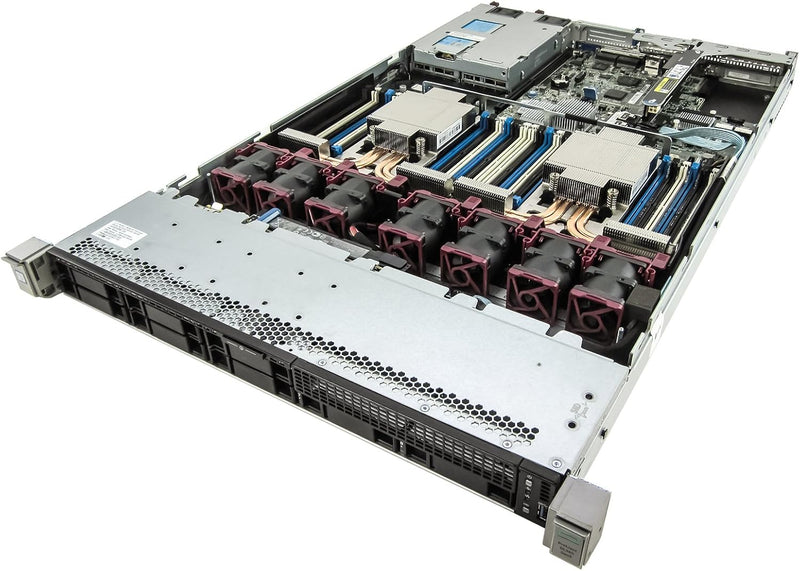
HP ProLiant DL360 G9 Server - 2x E5-2690v3, 256GB RAM (Renewed)
★★★★★
Dual Xeon E5-2690v3 muscle and 256GB of RAM in a 1U chassis — serious compute density for labs, VMs, and enterprise workloads at a fraction of new-server pricing.
View price on Amazon
Affiliate Disclosure: Studio Supplies may earn a commission from qualifying purchases made through links on this page, at no additional cost to you. This helps support our editorial team.
Notice a mistake? Let Us Know
Overview
High-Performance Computing: HP ProLiant DL360 G9 Server
The HP ProLiant DL360 G9 is a powerful server solution, equipped with dual Intel Xeon E5-2690v3 processors and substantial memory. Ideal for demanding workloads and enterprise environments.
Specifications:
- Brand: HP
- Model: ProLiant DL360 G9
- Processor: 2X Intel Xeon E5-2690v3 2.60Ghz (24-Core Total)
- Memory: 256GB RAM
- Raid Controller: P440ar
Pros & Cons
👍 Pros
- 24 physical cores (48 logical threads) across dual E5-2690v3 processors handle dense VM workloads without breaking a sweat
- 256GB DDR4 ECC RAM provides substantial headroom for memory-hungry workloads like SQL Server, ESXi, or in-memory caching layers
- P440ar Smart Array Controller with flash-backed write cache delivers hardware RAID with real I/O performance benefits over software alternatives
- 1U form factor maximizes rack density — full enterprise compute in the smallest possible footprint
- HP iLO 4 enables full out-of-band management, remote console, and hardware health monitoring without needing physical access
👎 Cons
- The E5-2690v3 is a Haswell-EP processor — two generations behind current Xeon Scalable, with no AVX-512 support, which matters for certain ML inference or compression workloads
- As a renewed unit, drive bays ship empty or with unspecified drives; budget for NVMe or SAS drives separately
- Power draw under full load is significant — dual high-core Xeons in a 1U chassis can pull 300W+ sustained, relevant for co-lo or home-lab power budgets
- Memory bandwidth is DDR4 but limited by the Haswell platform's max memory channels; won't match current-gen platforms for bandwidth-sensitive workloads
- No NVMe boot drive support natively — the G9 platform predates PCIe NVMe as a mainstream option without an additional adapter
Frequently Asked Questions
What does the dual E5-2690v3 configuration actually give me in terms of core count and clock speed?
You get 24 physical cores total (2 × 12-core processors) running at a base clock of 2.60GHz with Turbo Boost up to 3.50GHz. With Hyper-Threading enabled, the OS sees 48 logical threads — which translates directly into dense VM hosting, parallel builds, or multi-threaded database workloads running simultaneously without contention.
Is 256GB of RAM the maximum this server supports, or can it be expanded?
The DL360 G9 supports up to 768GB of DDR4 ECC RAM across 24 DIMM slots. This unit ships with 256GB populated, meaning there is headroom to expand significantly if your workload demands it — though you'll need to verify the specific DIMM configuration to add matching modules.
What RAID controller is included and what does that mean for storage options?
This unit includes the HP P440ar Smart Array Controller. That's an enterprise-grade controller with 2GB of flash-backed write cache, supporting RAID 0, 1, 5, 6, 10, and 50. It enables hardware RAID with read/write caching — meaningfully better than software RAID for I/O-intensive workloads like SQL Server or virtualization datastores.
Does 'Renewed' mean I'm taking on reliability risk?
Renewed units have been inspected and tested, but as with any refurbished enterprise hardware, you should verify drive health with diagnostics (HP iLO 4 is built in for out-of-band management), confirm BIOS/firmware versions, and treat it as production-ready only after your own burn-in testing. For labs, dev environments, or cost-sensitive deployments, the value proposition is strong.
What hypervisors and operating systems are certified on this hardware?
The G9 generation has certified support for VMware ESXi (6.x and 7.x), Microsoft Hyper-V (Windows Server 2016/2019), and major Linux distributions including RHEL and Ubuntu Server. HP's Service Pack for ProLiant (SPP) handles firmware updates across all components.
Related Products


