



HP
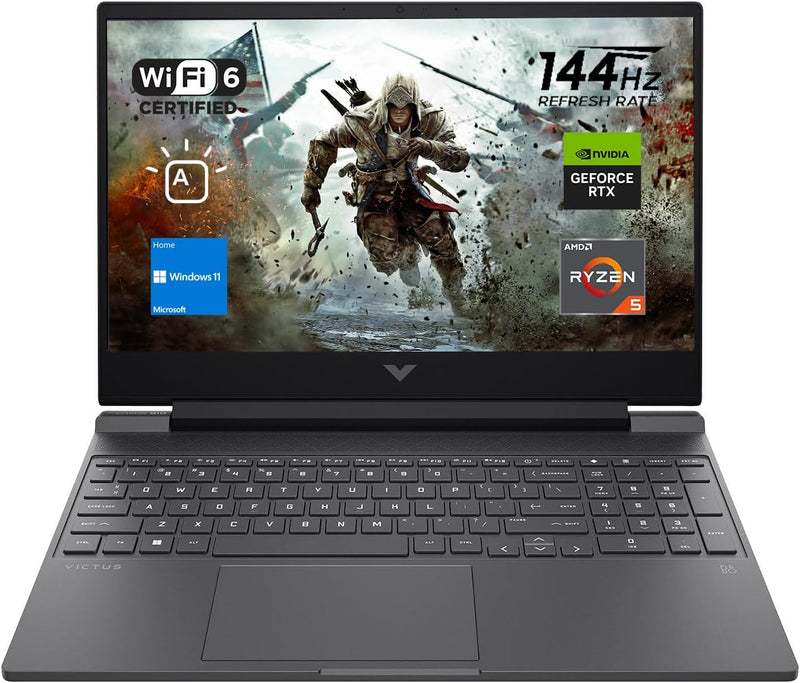
HP TPN-Q279_598U1AV Victus 15 Ryzen 5 RTX 2050 Gaming Laptop
★★★★★
FHD1080p1920 x 1080Ryzen 5 7535HSHDMI 2.1
AMD Ryzen 5 power and RTX 2050 graphics in a sub-1-inch chassis make the HP Victus 15 the most capable entry point into GPU-accelerated gaming under $700.
$729.00*
View on Amazon
✓ In Stock on Amazon.com
*Price sourced from Amazon.com. Last updated:Jun 06, 2026.Price and availability are subject to change.
Affiliate Disclosure: Studio Supplies may earn a commission from qualifying purchases made through links on this page, at no additional cost to you. This helps support our editorial team.
Notice a mistake? Let Us Know
Overview
Key Features
【Memory & Storage】16GB high-bandwidth DDR5 RAM to smoothly run multiple applications and browser tabs all at once; 512GB PCIe M.2 Solid State Drive allows to fast bootup and speedy data transfer
【AMD Processor】AMD Ryzen 5 7535HS ( 3.3 GHz base clock, up to 4.55 GHz max boost clock, 16 MB cache, 6 cores, 12 threads)
【Display】15.6" diagonal, FHD (1920 x 1080) 144Hz Anti-Glare, 1080p Full High Definition resolution for smooth, crisp gameplay, supported by NVIDIA GeForce RTX 2050 4GB GDDR6
【Tech Specs】2 x SuperSpeed USB Type-A , 1 x SuperSpeed USB Type-C, 1 x HDMI 2.1, 1 x RJ-45, 1 x headphone/microphone combo, Backlit keyboard with Numeric Keypad & mouse; Wi-Fi 6 and Bluetooth combo
【Operating System】Windows 11 Home - Beautiful, more consistent new design, Great window layout options, Better multi-monitor functionality
Specifications
Processor
AMD Ryzen 5 7535HS
Base Clock Speed
3.3 GHz
Max Boost Clock Speed
4.55 GHz
Processor Cores
6
Processor Threads
12
Cache
16 MB
RAM
16GB DDR5
Storage
512GB PCIe M.2 Solid State Drive
Display Size
15.6"
Display Resolution
FHD (1920 x 1080)
Refresh Rate
144Hz
Graphics Card
NVIDIA GeForce RTX 2050 4GB GDDR6
Operating System
Windows 11 Home
USB Type-A Ports
2
USB Type-C Ports
1
HDMI Port
1 (HDMI 2.1)
Ethernet Port
1 (RJ-45)
Audio Port
1 (headphone/microphone combo)
Wireless Connectivity
Wi-Fi 6 and Bluetooth combo
Keyboard Feature
Backlit with Numeric Keypad
Pros & Cons
👍 Pros
- The 144Hz FHD IPS panel delivers smooth motion at a refresh rate that matches the RTX 2050's sustained output in esports and competitive titles without screen-tearing artifacts.
- DDR5 memory provides higher per-module bandwidth than DDR4 at equivalent capacities, future-proofing the platform for memory-intensive workloads.
- HDMI 2.1 output supports 4K/120Hz to an external display — a meaningful port spec upgrade over HDMI 1.4 found on competing budget gaming laptops.
- Wi-Fi 6 reduces latency and improves throughput on congested networks compared to Wi-Fi 5, a direct competitive advantage in online gaming environments.
- The PCIe M.2 SSD delivers NVMe-class load times at a price tier where SATA SSDs are still common, keeping OS and game launches consistently fast.
👎 Cons
- The RTX 2050 4GB VRAM ceiling becomes a hard bottleneck in modern AAA titles at high texture settings, forcing resolution or quality trade-offs in games released after 2023.
- At 5.06 pounds with a thin chassis, sustained gaming workloads can drive the Ryzen 5 7535HS into thermal throttling, reducing effective clock speeds below the 4.55 GHz boost spec.
- The 512GB SSD capacity is constrained for a gaming-primary machine where individual titles commonly consume 50–150GB, requiring frequent storage management.
- USB-C capabilities (Thunderbolt, DisplayPort Alt Mode) are unconfirmed in the spec sheet, limiting docking station and multi-monitor workflow expansion.
- The integrated webcam is 720p HD — functional but below the 1080p standard increasingly expected for streaming and video calls on a 2024 gaming laptop.
Frequently Asked Questions
What does the RTX 2050 4GB GDDR6 actually deliver in terms of gaming performance?
The RTX 2050 is positioned one tier below the RTX 3050, delivering playable framerates at 1080p in mid-demand titles — expect 60+ fps in esports games and 30–50 fps in AAA titles at medium settings. The 144Hz display is most useful for competitive games where the GPU can sustain high framerates; in heavier open-world titles you'll be GPU-limited before the display becomes the bottleneck.
Is the 16GB DDR5 RAM upgradeable, and does it run in dual-channel?
HP's Victus 15 ships with DDR5 in a single-channel configuration in some configurations, which can reduce memory bandwidth by up to 40% versus dual-channel — a meaningful CPU performance impact for the Ryzen 5 7535HS which shares memory bandwidth with its integrated graphics. Confirm dual-channel slot population before purchase if memory bandwidth is a priority for your workloads.
What does the Ryzen 5 7535HS's boost clock of 4.55 GHz mean for gaming?
The 4.55 GHz max boost applies to a single core under light load — all-core sustained gaming performance will be lower due to thermal and power limits in a thin chassis. The 6-core/12-thread configuration handles modern game engines and background tasks without CPU bottlenecking the RTX 2050 in most scenarios.
Does the USB-C port support display output or charging?
The USB Type-C port is listed as SuperSpeed (USB 3.2), but HP's spec sheet for this configuration does not confirm Thunderbolt 4 or DisplayPort Alt Mode. Verify display output capability before using it as a docking station hub; the HDMI 2.1 port is the confirmed external display output.
How does the 512GB PCIe M.2 SSD affect day-to-day usability?
PCIe NVMe delivers sequential read speeds typically in the 2,000–3,500 MB/s range versus ~550 MB/s on SATA — boot times and game load times are noticeably faster than last-generation budget laptops. At 512GB, heavy game libraries will require external storage or selective installation management.
Related Products


