

HP
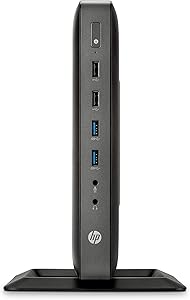
HP T620 Thin Client AMD 4GB/16GB WES7E Desktop
★★★★★
Efficient and Secure Computing with the HP T620 Thin Client The HP T620 Thin Client offers a secure and energy-efficient computing solution for virtualized environments. Powered by an AMD quad-core processor and equipped with essential connectivity options, it's ideal for cloud-based applications...
View price on Amazon
Affiliate Disclosure: Studio Supplies may earn a commission from qualifying purchases made through links on this page, at no additional cost to you. This helps support our editorial team.
Notice a mistake? Let Us Know
Overview
Efficient and Secure Computing with the HP T620 Thin Client
The HP T620 Thin Client offers a secure and energy-efficient computing solution for virtualized environments. Powered by an AMD quad-core processor and equipped with essential connectivity options, it's ideal for cloud-based applications and remote desktop access.
Specifications:
- Operating System: Windows Embedded Standard 7E (32-bit)
- Processor: AMD GX-415GA Quad-Core 1.50 GHz
- Memory: 4 GB RAM
- Storage: 16 GB Solid State Drive (SSD)
- Graphics: AMD Radeon HD 8330E (Up to 512 MB Shared Memory)
- Ethernet: Gigabit Ethernet
- Wireless: 802.11ac + Bluetooth
- Ports: 2 USB 3.0, 6 USB 2.0 (2 Internal), 1 Headphone, 1 Microphone In, 1 Audio In, 1 Audio Out, 1 RJ-45, 2 PS/2 (Keyboard & Mouse), 2 DisplayPort 1.2, 1 Optional Port (Serial, VGA, or Fiber SC)
- Environmental Certifications: ENERGY STAR, IT Eco Declaration, RoHS, EU RoHS, WEEE, EU WEEE, EPEAT Gold
Specifications
Model
T620
Processor Brand
AMD
RAM
4GB
Storage
16GB
Operating System
WES7E (Windows Embedded Standard 7)
Type
Thin Client Desktop
Pros & Cons
👍 Pros
- Offers a compact and efficient solution for virtual desktop environments, saving space
- Designed for business use, suggesting reliability and stability for professional tasks
- Likely consumes less power than a traditional desktop PC, contributing to lower operating costs
- Can be easily integrated into existing network infrastructures, streamlining deployment
- The "Thin Client" nature implies simplified management and enhanced security by centralizing data
- Provides an economical alternative to full desktop computers for specific business applications
👎 Cons
- Limited to a "Thin Client" architecture, meaning processing power and local storage are minimal for standalone tasks
- The AMD processor model is not specified, making it difficult to assess its exact performance capabilities
- Specific RAM and storage configurations (e.g., flash memory type) are not detailed beyond 4GB/16GB, limiting understanding of its speed
- The Windows Embedded Standard 7 (WES7E) operating system is older, potentially presenting compatibility issues with newer applications or security concerns
- Lacks comprehensive port information, which could be a limitation for connecting various peripherals
- The term "Thin Client" indicates it is not designed for heavy local computation, gaming, or complex multimedia editing
Frequently Asked Questions
What is the primary purpose of the HP T620 Thin Client?
The HP T620 Thin Client is designed for business environments to access virtual desktops or cloud-based applications, providing a streamlined and managed computing experience.
What operating system does the HP T620 Thin Client use?
This HP T620 Thin Client comes with Windows Embedded Standard 7 (WES7E) as its operating system.
How much RAM does this thin client have?
The HP T620 Thin Client is equipped with 4GB of RAM, suitable for running its intended virtual desktop and cloud applications.
What is the storage capacity of the HP T620 Thin Client?
It provides 16GB of storage, which is typical for a thin client as most data and applications are accessed remotely.
What kind of processor is in the HP T620 Thin Client?
The HP T620 Thin Client utilizes an AMD processor; specific model details are not provided in the listing.
Can I install full desktop applications directly on this thin client?
As a thin client running an embedded operating system, it is primarily designed for accessing centralized resources rather than running demanding local applications, which may be limited by its hardware.
Is the HP T620 suitable for heavy-duty computing tasks?
No, thin clients like the HP T620 are optimized for efficiency and security in virtualized environments and are not intended for heavy local processing, intensive applications, or complex multimedia tasks.
Related Products


