



Intel
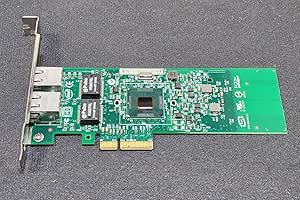
Intel 8541587825 Gigabit ET Dual Port Server Adapter
Dual-port Gigabit Ethernet on a single PCIe 2.0 x4 card gives servers a redundant, load-balanced network path without occupying two slots.
$59.35*
View on Amazon
✓ In Stock on Amazon.com
*Price sourced from Amazon.com. Last updated:Aug 30, 2026.Price and availability are subject to change — details.
Affiliate Disclosure: As an Amazon Associate, Studio Supplies earns from qualifying purchases made through links on this page, at no additional cost to you. This helps support our editorial team.
Notice a mistake? Let Us Know
Overview
Specifications
Interface
PCI Express 2.0 x4, low profile
Ports
2 x RJ-45 Ethernet
Ethernet Standards
10Base-T, 100Base-TX, 1000Base-T
Max Speed per Port
1 Gbps (Gigabit Ethernet)
Cabling Type
Copper (Cat5e/Cat6 compatible)
Form Factor
Low profile
Brand
Intel
Model
8541587825
Frequently Asked Questions
What PCIe slot does this adapter require and is it compatible with current server motherboards?
The adapter uses a PCIe 2.0 x4 interface in a low-profile form factor. PCIe 2.0 x4 is backward and forward compatible with PCIe 3.0 and 4.0 slots of x4 size or larger — it will fit and function in virtually any server motherboard with an available x4 or wider PCIe slot.
What cabling standard do the two Ethernet ports use?
Both ports support 10Base-T, 100Base-TX, and 1000Base-T — standard RJ-45 copper Ethernet cabling. You do not need fiber or specialized cabling; standard Cat5e or Cat6 patch cables are appropriate for Gigabit operation.
Can this adapter be used for NIC teaming or link aggregation to increase bandwidth beyond 1 Gbps?
Yes — with both ports active under NIC teaming (IEEE 802.3ad LACP or similar), the adapter can aggregate bandwidth and provide failover redundancy. The actual throughput depends on your switch's LACP support, but active-active bonding allows distribution of traffic across both 1 Gbps links.
Does this adapter require dedicated driver installation or does it work out of the box with Windows Server and Linux?
Intel's 82576-based controllers (which this adapter uses) have native driver support built into Windows Server 2012 and later, and into Linux kernels via the igb driver. Most deployments will auto-detect and configure the adapter without manual driver installation, though Intel's PROSet utility is recommended for advanced NIC teaming configuration.
What is the maximum theoretical throughput per port on this adapter?
Each port supports Gigabit Ethernet — 1000 Mbps (1 Gbps) per port, for a total potential throughput of 2 Gbps across both ports under load-balanced NIC teaming. This is appropriate for standard file serving, database traffic, and backup workloads; it is not a 10GbE adapter and will bottleneck at very high-bandwidth storage or video streaming loads.
Related Products


