



Intel
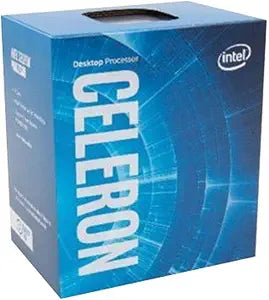
Intel BX80677G3930 7th Gen Celeron Desktop Processor
The Celeron G3930 delivers a power-efficient dual-core LGA 1151 foundation for budget builds, NAS servers, and dedicated single-task platforms where core count is secondary to platform cost.
$45.99*
View on Amazon
✓ In Stock on Amazon.com
*Price sourced from Amazon.com. Last updated:Oct 23, 2026.Price and availability are subject to change — details.
Affiliate Disclosure: As an Amazon Associate, Studio Supplies earns from qualifying purchases made through links on this page, at no additional cost to you. This helps support our editorial team.
Notice a mistake? Let Us Know
Overview
Key Features
Socket LGA 1151
Intel 200/1001 Series Chipset Compatibility (1. Excludes Intel Octane Technology support)
Intel HD Graphics 610
Specifications
Processor Family
Intel Celeron (7th Gen, Kaby Lake)
Model Number
BX80677G3930
Socket
LGA 1151
Cores / Threads
2 / 2 (no hyperthreading)
Base Clock Speed
2.9GHz (no Turbo Boost)
Integrated Graphics
Intel HD Graphics 610
TDP
51W
Chipset Compatibility
Intel 200-series and 100-series (excludes Optane support)
Memory Support
DDR4 2133MHz, dual-channel
Type
Desktop processor, boxed
Similar Products
Other products from the same family that visitors often consider:
 ✓ Available
Intel i3-7100 7th Gen Desktop Processor
$65.00
View on Amazon →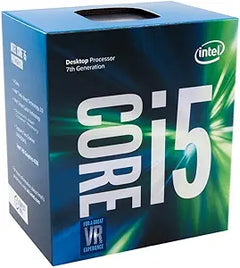 ✓ Available
Intel Core 7th Gen Desktop CPU Processor Renewed
$65.00
View on Amazon → ✓ Available
Intel BX80677I37320 7th Gen Core i3 Desktop Processor
$99.00
View on Amazon → ✓ Available
Intel SR337 Core i5-7500T Processor 7th Gen OEM Renewed
$48.91
View on Amazon → ✓ Available
Intel BX80684G4930 Celeron G4930 Desktop Processor
$14.99
View on Amazon →Frequently Asked Questions
What socket does the G3930 use, and which motherboards are compatible?
The G3930 uses the LGA 1151 socket and is compatible with Intel 200-series (B250, H270, Z270) and 100-series (H110, B150, H170, Z170) chipset motherboards. It is not compatible with 300-series (Z370/Z390) boards, which require an 8th Gen or later CPU. Always verify the motherboard's CPU support list before purchasing.
Does the G3930 support dual-channel memory?
Yes. The G3930 supports dual-channel DDR4 memory at up to 2133MHz (official spec), providing a peak memory bandwidth of approximately 34 GB/s — sufficient for the processor's computational throughput. Populating two matching DIMM slots in the correct slots (typically A2/B2) is necessary to activate dual-channel mode.
What integrated graphics does the G3930 include, and can it drive a 4K display?
The G3930 integrates Intel HD Graphics 610 with 350MHz base and 950MHz boost clock. It supports 4K output at 60Hz via DisplayPort or HDMI 1.4 (with the right motherboard I/O). For basic display output, HTPC use, or digital signage, it is capable — 3D gaming and GPU-intensive workloads will expose its limitations immediately at any resolution.
Does this CPU support overclocking?
No. The Celeron G3930 is not an unlocked processor and cannot be overclocked. The clock speed is fixed at 2.9GHz with no Turbo Boost support — what you see on the spec sheet is the operating frequency at all times. For overclocking capability, Intel's K-suffix SKUs (e.g., i5-7600K) on a Z270 board are required.
What is the TDP, and does it require an aftermarket cooler?
The G3930 carries a 51W TDP. It ships with Intel's standard boxed cooler, which is adequate for the processor's thermal output under all load conditions. Aftermarket cooling is unnecessary for this TDP envelope.
Related Products


